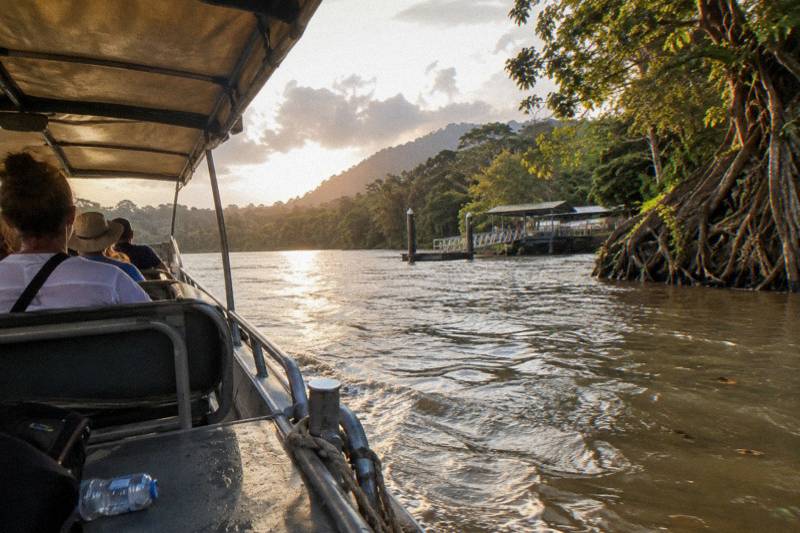
Wildlife On The Barron River Cruise: Crocodiles, Turtles And Birds
The 45-minute Barron River cruise at Kuranda runs on a river the operator says holds freshwater crocodiles, turtles, snakes, water dragons, fish and over 100 species of tropical birds. What the operator names, and what it refuses to promise, is the whole story of wildlife on this trip.
Short answer
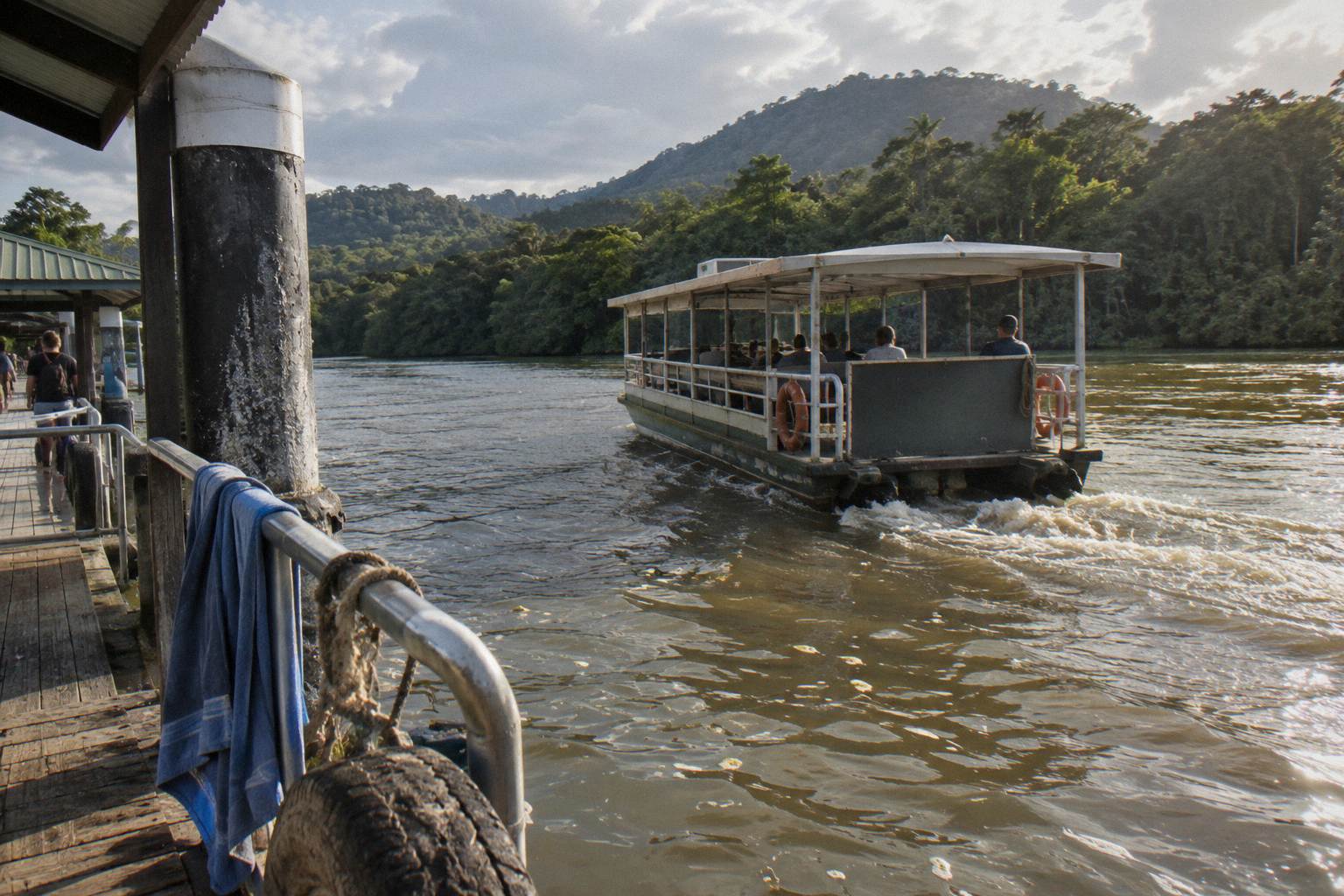
The operator, Kuranda Riverboat, names freshwater crocodiles, turtles, snakes, water dragons, fish and over 100 species of tropical birds on the 45-minute cruise, and says cassowaries are sometimes seen on the far side. It also states plainly that no sighting is guaranteed. Wildlife on this cruise is a genuine possibility, never a promise.
The Barron River above Kuranda is a calm, forested stretch of water on the Atherton Tablelands side of the range, and the wildlife story around it is unusually well documented, because the cruise operator publishes its own cautious species list rather than a marketing one. Kuranda Riverboat, established in 1982, runs a 45-minute calm-water cruise from the jetty below the Kuranda Railway Station footbridge, five sailings a day, seven days a week, at 10:45am, 11:45am, 12:30pm, 1:30pm and 2:30pm. Here is exactly what the operator names on that cruise, what it explicitly will not promise, and how river conditions, the wet season and the wider Wet Tropics environment shape what a passenger might reasonably expect to encounter.
What Wildlife Does The Operator Name On The Barron River Cruise?
The species list comes from the operator's own pages for the riverboat tour and its Explorer Package, which pairs the cruise with Koala Gardens and Birdworld Kuranda. The commentary during the trip covers the ancient rainforest, river life and Kuranda history, so the wildlife talk sits inside a broader story about the river and its past rather than a running animal-spotting commentary. The named list is short and worth repeating in the operator's own framing: freshwater crocodiles, turtles, snakes, water dragons, fish, "over 100 species of tropical birds", and cassowaries, which the operator says are sometimes seen on the far side of the river, or in the package page's words, "occasionally a wild cassowary may be spotted".
The operator gives no detail on how any animal looks or behaves beyond the bare names.
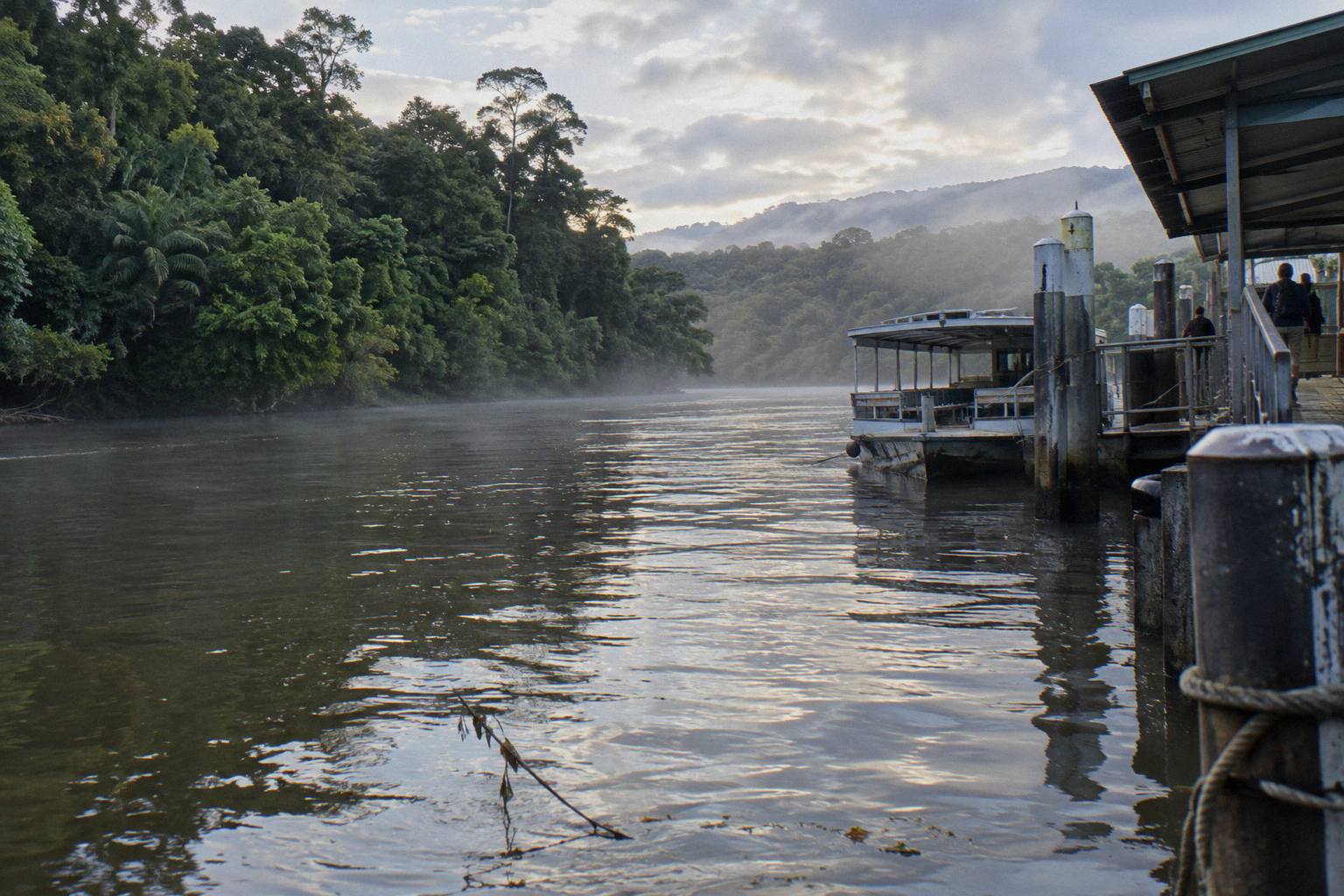
What the list quietly tells a reader is that this is a quiet river through private, thickly vegetated banks, not a zoo channel. Birds are the constant: a tally of over 100 tropical bird species is the operator's own count for the river environment, and birdlife is the category a passenger is most likely to notice on any given sailing. The larger animals, crocodiles and cassowaries especially, appear in the operator's wording as possibilities, sometimes seen, occasionally spotted, never scheduled.
There is a practical reason the operator can keep its list so tight. The cruise is a calm-water trip on the upland Barron River in Kuranda only, in a single vessel capped at 30 passengers, on the same short stretch of water every day of the week. The crew reads the same river constantly, which is why the named list is credible, and also why the disclaimer is credible: an operator that runs five sailings a day, seven days a week, knows exactly how often the river hides its animals. A one-line species list from a business with that much water time is worth more than a long list from a business with none.
Can You See Crocodiles On The Barron River Cruise?
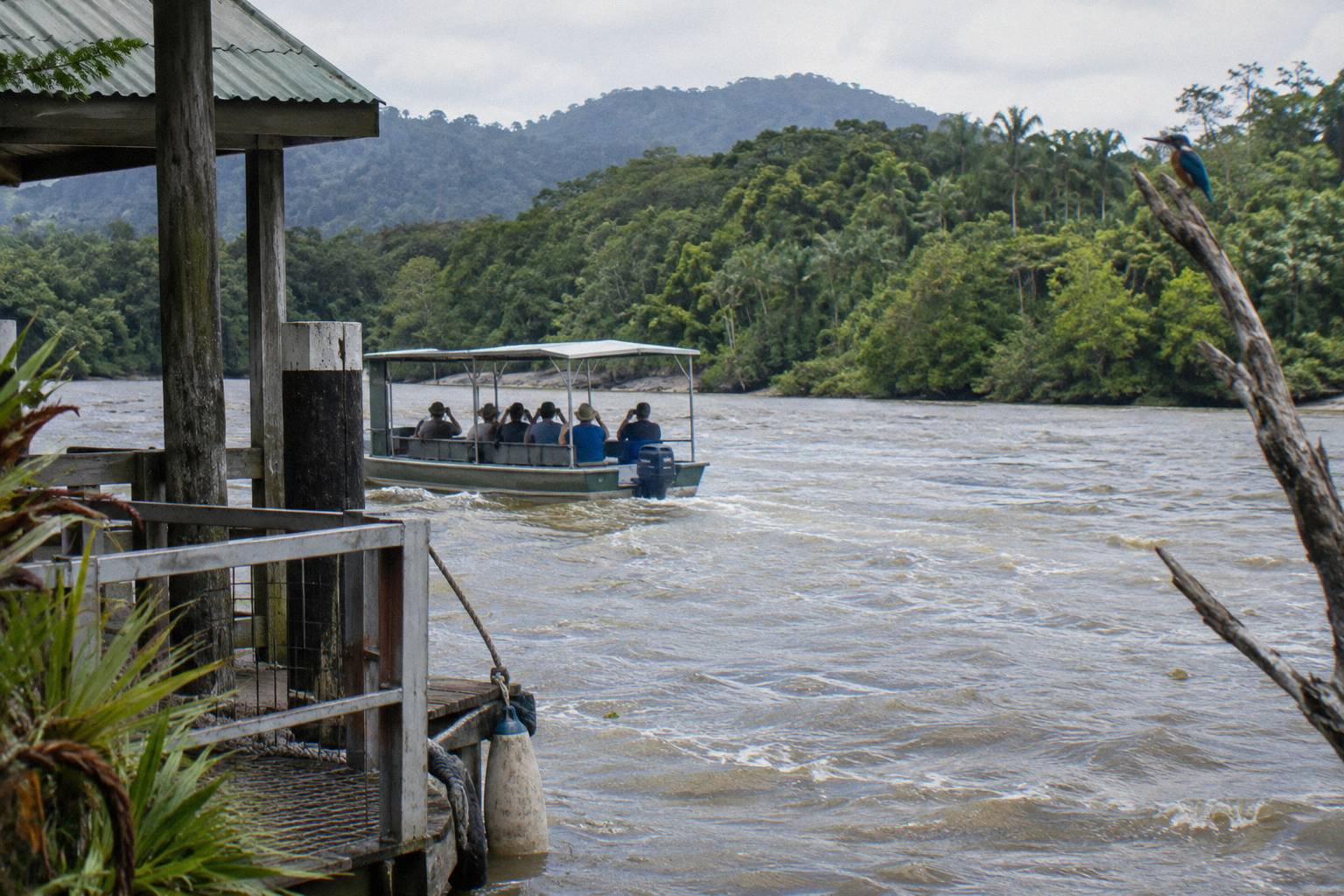
Freshwater crocodiles live in this stretch of the Barron River, and the operator says so directly, but it also states that it cannot guarantee they will be visible. The exact wording is: "There are freshwater crocodiles in the river. We cannot guarantee that they will be visible ... wild creatures." Some sailings will pass a basking crocodile, others will not, and neither outcome is a fault of the cruise.
Read that two-part statement as written. The presence of the animal is fact. Its appearance is luck. A booking decision built on the first half of that sentence, that the river genuinely holds freshwater crocodiles, stands on solid ground. A decision built on an expectation of seeing one does not, and the operator is explicit about why: they are wild creatures on an unhunted river, and they surface, bask and hide on their own schedule.
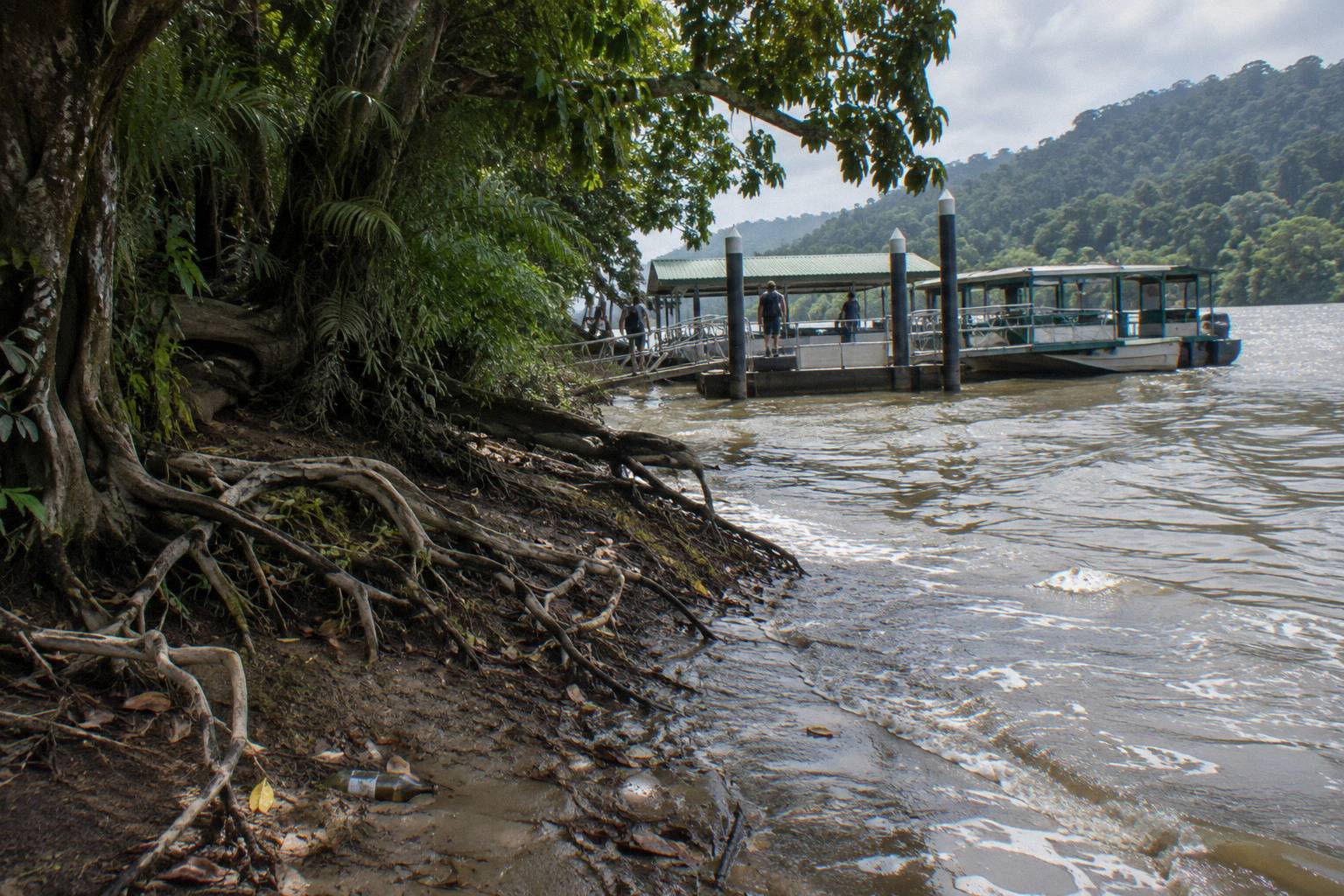
For the fuller crocodile picture around Kuranda, there is a dedicated page on crocodiles on the Barron River, which handles the safety and habitat questions in detail. Two boundaries matter here. First, the operator speaks only of freshwater crocodiles in the river, and there is no official statement on whether estuarine, or saltwater, crocodiles are or are not present in the Kuranda stretch. Second, the park service notes that estuarine crocodiles live in the lower section of Barron Gorge National Park, a statement about the gorge below the power station, not about the village reach the cruise uses.
The Queensland Government's crocodile page sets out the general picture, that estuarine crocodiles occur between Gladstone and Cape York Peninsula and in the Gulf, along with its Be Crocwise guidance, and that general guidance is worth following near any Queensland waterway: Queensland Government, living with crocodiles. On the boat itself, the crew's instructions are the operative ones.
The cruise itself is the Barron River Riverboat Tour, rated 4.7 from 343 reviews, running 45 minutes from the Kuranda jetty with free cancellation up to 24 hours before start on the live listing. Readers assembling a full Kuranda day can compare it against the Kuranda Skyrail And Scenic Railway Day Trip, 8.5 hours with Cairns hotel pickup, rated 4.3, or the Small-Group Skyrail And Scenic Railway Day Trip, 7 hours, rated 4.8, remembering that neither of those day trips includes the river cruise.
What Birds And Other Animals Appear On The Species List?
Beyond crocodiles, the operator's list names turtles, snakes, water dragons, fish and over 100 species of tropical birds, with cassowaries as an occasional far-bank sighting. Turtles and water dragons are the kinds of animals that suit a calm 45-minute river circuit, and the bird count is the operator's own figure for the river environment rather than a per-trip promise.
Turtles are a natural fit for a slow, calm-water cruise on a warm northern river, and they are named without caveat as part of the river's life. Water dragons and fish belong to the same picture: riverside animals that a slow boat with commentary gives a passenger a reasonable chance of noticing. Snakes round out the list, again as named residents of the river rather than as a scheduled appearance. The operator adds no detail about size, colour or behaviour for any of these. More of these guides are collected on Kuranda River Boat Cruises.
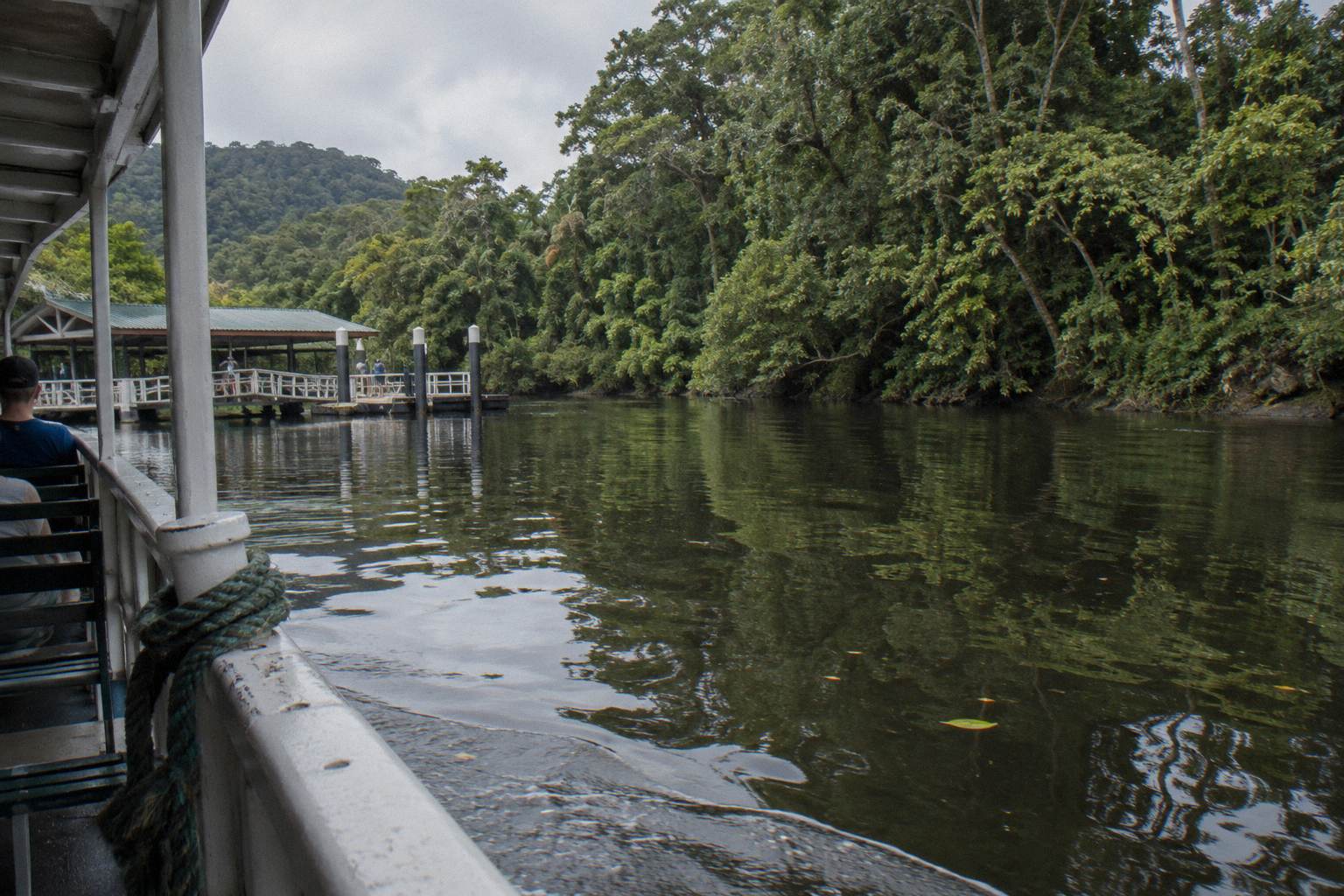
The bird tally deserves its own paragraph. "Over 100 species of tropical birds" is the operator's count, and it is the kind of figure that reflects a whole river corridor through rainforest rather than one morning's log. Birds are also the wildlife category least affected by a slow day: a cruise that shows no crocodile will still move through bird habitat for its full 45 minutes. The cassowary, the Wet Tropics' most famous resident, appears in the list in its most guarded form, sometimes seen on the far side of the river, occasionally spotted. A cassowary on the bank would be a genuine event, not a standard feature.
The wider setting explains why the list is credible at all. The cruise runs inside the Wet Tropics World Heritage Area, listed in 1988, stretching about 450 km from Cooktown to Townsville and covering 894,420 ha, figures published on the operator's own Wet Tropics page, which also credits the area with more than 3,000 vascular plant species. A river running through forest of that scale carries a real bird and reptile fauna; that is geography, not marketing.
Does The Cruise Guarantee Wildlife Sightings?
No. The operator guarantees nothing about wildlife, and says so in writing: the animals in the river are wild creatures and their visibility cannot be guaranteed. The only things actually guaranteed on the ticket are the 45-minute calm-water cruise, the onboard commentary on rainforest, river life and Kuranda history, and a maximum of 30 passengers per sailing.
The contrast between what is named and what is promised is worth setting out in one place, because it is the heart of this cruise.
| What the operator names | What the operator promises |
|---|---|
| Freshwater crocodiles in the river | No guarantee they will be visible |
| Turtles, snakes, water dragons, fish | Named as river wildlife, no sighting promise |
| Over 100 species of tropical birds | Operator's count for the river environment, not a per-trip tally |
| Cassowaries sometimes on the far side | "Occasionally a wild cassowary may be spotted" |
| Commentary on rainforest, river life, history | This is part of the cruise itself |
A buyer reading that table correctly weighs the decision. The cruise sells a river, a forest and a commentary; the animals come with the territory at their own discretion. Passengers who treat any sighting as a bonus tend to rate the trip well, and the review pool is substantial: 4.7 from 343 reviews for the cruise itself. The 45-minute format also matters for expectations: this is a short, calm loop on a small river, not an expedition, and the practical questions of timing are covered in the site's guide to how long the riverboat cruise runs.
Two more booking facts belong here. Children under four travel free, with a child rate for ages 4 to 15, per the operator's own page. And the operator's adult fare for the cruise is A$30 until 30 March 2027 and A$35 from 1 April 2027, amounts in Australian dollars. Check the live booking listing for the current price before you book. The full price picture, including how the cruise sits alongside rail and Skyrail fares, is in the guide to riverboat cruise prices and tickets.
How Do River Conditions And The Wet Season Affect The Cruise?
The operator publishes exactly one line on this: "Tours are subject to river conditions and group bookings." There is no published flood threshold, no wet-season closure rule and no official refund policy beyond the live listing's free cancellation up to 24 hours before start. Whether any given sailing runs is a question for the operator and the live listing, not for a guide page.
The Barron River at Kuranda is cooler and wetter than the Cairns coast, sitting on the range at about 340 m, and its flow varies with the seasons, as the park service says of the falls downstream, where floodwaters in the wetter months regularly create a spectacular sight. By Cairns rainfall records, the wet season runs December to March, with February the wettest month at 436.1 mm on the 1991 to 2020 average and August the driest at 26.9 mm, and cyclone season officially spans 1 November to 30 April.
| River and season fact | Figure | Source |
|---|---|---|
| Operator's whole published condition rule | "Tours are subject to river conditions and group bookings" | Kuranda Riverboat |
| Wet season by Cairns rainfall | December to March | Bureau of Meteorology |
| Wettest month, Cairns 1991-2020 average | February, 436.1 mm | Bureau of Meteorology |
| Driest month, Cairns 1991-2020 average | August, 26.9 mm | Bureau of Meteorology |
| Cyclone season | 1 November to 30 April | Bureau of Meteorology |
| Kuranda's elevation | About 340 m on the range | Site research |
What that means for wildlife expectations is inference: a river whose flow swings between those monthly averages is a river that changes character across the year, and no operator page claims any season as the sighting season. Treat any source promising "the best month for crocodiles" on this cruise with scepticism. If you are planning around the wet months, see the piece on whether the riverboat cruise runs in the wet season.
The rainfall record itself is worth a moment of attention, because it explains why no operator in this climate would promise a river schedule months ahead. Cairns averages 2,019.1 mm of rain a year on the 1991 to 2020 table, spread over roughly 120 rain days, with the four wettest months, January through April plus December, carrying the bulk of it and August almost dry at 26.9 mm. A river fed by that pattern rises and falls hard. The operator's one-line condition clause is not vagueness; it is the only realistic thing a business on this river can publish.
Practical preparedness helps whatever the month. The site's packing guide for what to bring on the Barron River cruise covers the sensible basics, and the meeting point itself is fixed: the jetty with red flags below the Kuranda Railway Station footbridge, reached on foot, since you cannot drive down to the river.
Can You Add The River Cruise To A Kuranda Day Trip?
Yes, but always as a separate booking. The four other tours, the Skyrail and Scenic Railway day trips and the Rainforestation day trip, do not include the river cruise in their tickets, and none of their operators sells it as part of the fare. The cruise is a 45-minute add-on a visitor books and pays for on its own, slotted into free time in the village between transport legs.
The pairing question comes up constantly because the timetables interlock so neatly. The Kuranda Scenic Railway arrives from Cairns at 10:40am and 11:25am, and the Skyrail's last one-way boarding from Kuranda is 3:15pm, which leaves a midday window that fits one or two of the riverboat's five set sailings. The mechanics of sequencing are covered in the site's guide to combining the riverboat with the Scenic Railway and Skyrail.
| Day trip | Operator | Duration | Cruise included? |
|---|---|---|---|
| Kuranda Skyrail And Scenic Railway Day Trip | Down Under Tours | 8.5 hours | No, separate booking |
| Kuranda Army Duck And Rainforestation Day Trip | Tropic Wings Cairns Tours & Charters | 10 hours | No, separate booking |
| Small-Group Skyrail And Scenic Railway Day Trip | Infinity Fun Travel | 7 hours | No, separate booking |
| Self-Guided Scenic Railway And Skyrail Day Trip | Global Travel Services | 7 hours | No, separate booking |
Each of those trips has its own character. The Kuranda Skyrail And Scenic Railway Day Trip, rated 4.3, picks up at Cairns hotels and gives a full day built around the two famous transport legs, with village time in between where the cruise fits. The Small-Group Skyrail And Scenic Railway Day Trip, rated 4.8, covers the same two legs in 7 hours with door-to-door service from Cairns City, the Northern Beaches up to Palm Cove, the airport and the cruise terminal, a tighter format for anyone who values a small vehicle and a shorter day.
The Kuranda Army Duck And Rainforestation Day Trip, rated 4.5 from 442 reviews over 10 hours, is built around Rainforestation Nature Park on the Kennedy Highway, with its own amphibious Army Duck rides through the forest, a wildlife-park experience rather than a wild river one. It pairs naturally with the riverboat for visitors who want both a curated animal park and a wild river, again as two separate bookings, a comparison developed in the site's piece on Rainforestation versus a river cruise.
The Self-Guided Scenic Railway And Skyrail Day Trip, 7 hours with pickup from most central Cairns hotels, suits independent travellers who want the transport booked but the day unscheduled, which is exactly the traveller most likely to slot a 45-minute cruise into a free hour at the jetty. Note its pickup boundary: it does not cover the northern beaches, Palm Cove or Port Douglas. All five tours carry free cancellation up to 24 hours before start on their live listings, and every price is on the listing.
How Do You Book The Cruise And Meet The Boat?
Book the Barron River Riverboat Tour through its live listing or contact the operator directly, then walk: there is no pickup, and you cannot drive to the river. The jetty sits below the Kuranda Railway Station footbridge, down a number of stairs, so the cruise is not wheelchair accessible, and the standard sailings are the five set times from 10:45am to 2:30pm, with other times, including sunset cruises, arranged only by contacting the operator.
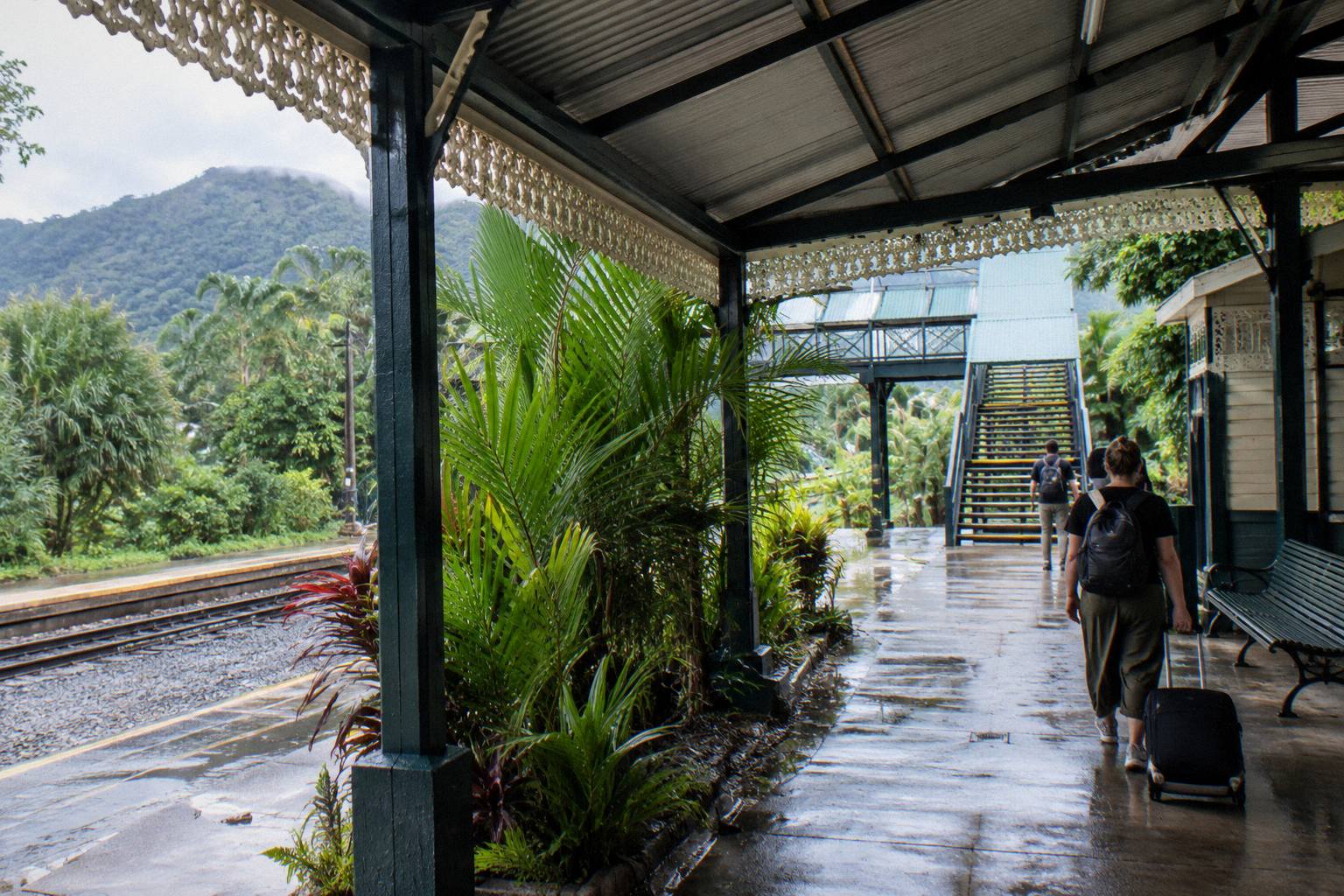
The meeting instructions are the operator's own, and they surprise first-time visitors. Kuranda village sits on top of the gorge; the river sits at the bottom of it. You park or arrive in the village, walk across the railway station footbridge and descend the stairs to the jetty with the red flags, and climb back up afterwards. The stairs rule out wheelchair access, and the descent is worth knowing about before booking for anyone with knee or mobility concerns, a topic the site covers fully in its riverboat cruise accessibility guide.
Booking itself is flexible. The live listing carries free cancellation up to 24 hours before start, and the operator sells gift vouchers and takes direct enquiries, including requests for cruises outside the five set times. Sunset cruises exist in that sense, as arranged departures, never as a standard ticket option. The cruise itself is commentary only: no walk, no meal, no pickup, just 45 minutes on calm water, which is precisely why the wildlife list and the no-guarantee policy are the whole of what a buyer is choosing.
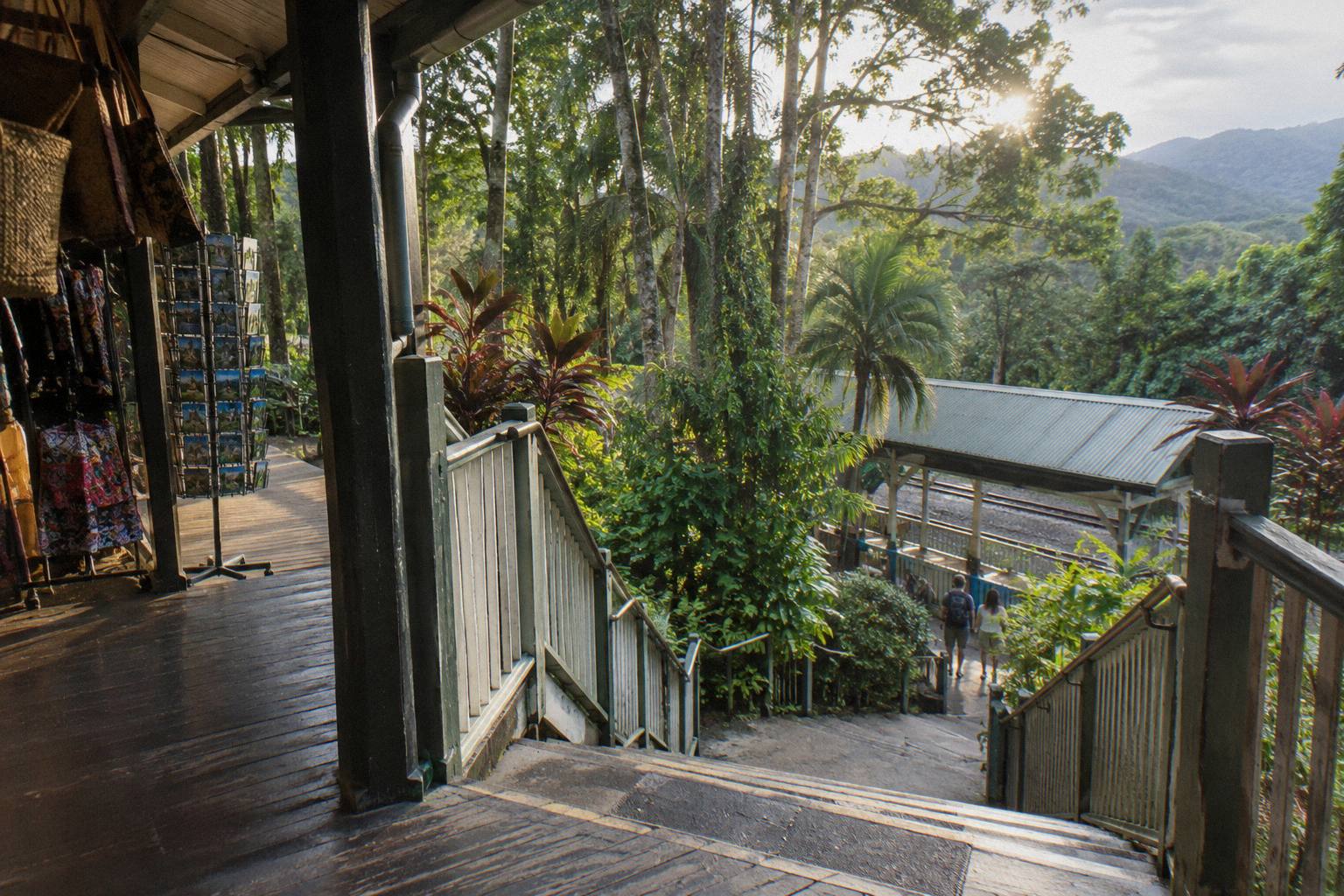
Weighing everything together, the decision usually comes down to whether a short, plainly framed wild-river cruise belongs in the day, and the companion assessment of whether the riverboat cruise is worth it works through that question with the same facts used here. Families weighing the same call can also read the guide to whether the riverboat cruise is good for kids and prams. Whatever the verdict, the wildlife is the reason most people are on the boat, and the operator's two-part answer, a real species list and a firm no-promise policy, is the fairest summary anyone can give of it.
Common Questions About Wildlife On The Barron River Cruise
Are Crocodiles Guaranteed On The Barron River Cruise?
No. The operator states that freshwater crocodiles are in the river and that it cannot guarantee they will be visible, because they are wild creatures. Some sailings pass one, others do not.
What Animals Does The Operator Name On The Cruise?
Freshwater crocodiles, turtles, snakes, water dragons, fish and over 100 species of tropical birds, with cassowaries sometimes seen on the far side of the river. No sighting of any of them is promised.
Can You See A Cassowary From The Riverboat?
Occasionally, per the operator's own wording: "occasionally a wild cassowary may be spotted", sometimes on the far side of the river. It is a rare event, never a scheduled one.
Does The Cruise Run In The Wet Season?
The operator publishes only that tours are subject to river conditions and group bookings, with no wet-season threshold or closure rule. Check the live listing or contact the operator about any specific date.
Is The Wildlife Cruise Suitable For Children?
Yes. The operator calls the cruise suitable for all ages, with children under four free and a child rate for ages 4 to 15, and the 45-minute duration suits young attention spans.