Riverboat Cruise In The Wet Season: Rain And River Levels
Kuranda is cooler and wetter than the Cairns coast, and from December to March the rain shapes everything about a river day, including the riverboat cruise. Here is what the records actually show and what the operator does and does not promise.
Short answer
The wet season in this region runs December to March, with February the wettest month in Bureau of Meteorology records for Cairns Airport at 436.1 mm. The operator publishes no flood rule, only that tours are subject to river conditions. The listing carries free cancellation up to 24 hours before start.
Rain shapes the Kuranda calendar more than any timetable does. The village sits on the range at about 340 metres, cooler and wetter than the Cairns coast, and the Barron River that the riverboat cruises is the same river that swells over Barron Falls downstream every summer. A traveller searching for Kuranda weather is usually asking one practical question underneath it: will the rain ruin a river cruise, and is there any protection if it does?
What follows covers what the official records show, what the operator of the Barron River Riverboat Tour says about river conditions, how the falls and the surrounding park behave through the season, and how cancellation works on the live listing. Every rainfall figure comes from the Bureau of Meteorology records for Cairns Airport, because that is the only official climate table for the area. Kuranda's own numbers are not published, so none appear.
What Is The Wet Season In Kuranda?
The wet season in this region runs from December to March, judged by Cairns rainfall. Bureau of Meteorology records for Cairns Airport show February is the wettest month at 436.1 mm on average, March close behind at 424.3 mm and January at 404.8 mm. The driest month, August, averages just 26.9 mm. Kuranda itself is cooler and wetter than the Cairns coast, and no official Kuranda temperature or rainfall table exists.
That December to March window is the whole story of the wet season. April still carries 201.7 mm in the Cairns Airport averages, and December 193.8 mm, so the shoulders of the season are not dry either. The annual total is 2,019.1 mm spread over 119.9 rain days a year, which means roughly one day in three has some rain, in an average year, at the coast station.
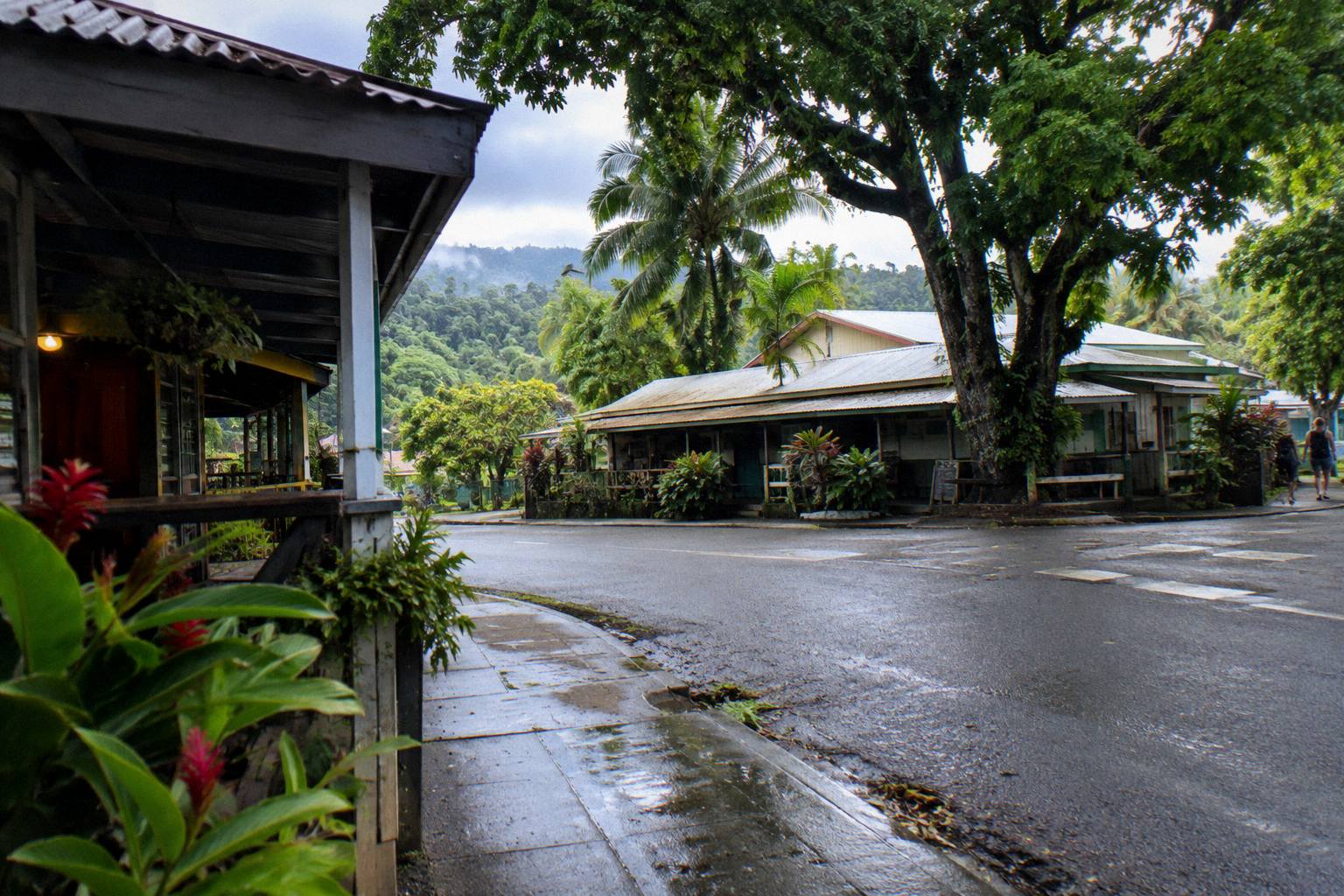
Two things follow for a Kuranda visit. First, a wet season trip is not a washed out trip by definition: rain in the tropics often arrives in heavy bursts rather than all-day drizzle, and the averages hide enormous variation between days. Second, the numbers above are Cairns Airport figures, the nearest official station with a full 1991 to 2020 table. Kuranda, up on the range, runs cooler and wetter, so a day that looks merely cloudy in Cairns can be dripping in the village.
If you are weighing the cruise against the calendar at all, the deeper comparison is in our guide to the best time of year for a riverboat cruise, which looks at the whole year rather than just the wet months.
Does The Riverboat Cruise Run In The Wet Season?
Kuranda Riverboat, established in 1982, runs calm water cruises on the upland Barron River with five set sailings a day, seven days a week, at 10:45am, 11:45am, 12:30pm, 1:30pm and 2:30pm. The operator publishes no wet season rule at all: its only wording is that tours are subject to river conditions and group bookings, and times may vary with conditions.
That single sentence is the entire published policy, and it deserves to be read plainly. There is no published flood threshold, no published river height at which cruises stop, and no published refund rule from the operator for weather cancellations. Any page that tells you the cruise definitely runs all wet season, or definitely stops when the river rises, is filling a gap the operator has left open.
The practical answer is that the five set sailings exist year round on paper, cruises outside those times can be arranged by contacting the operator, and whether a particular sailing goes ahead on a particular day is a river conditions question. The live listing shows what is actually bookable for your date, and the operator can be contacted directly about conditions. The listing carries free cancellation up to 24 hours before start, which matters more in the wet season than at any other time of year.
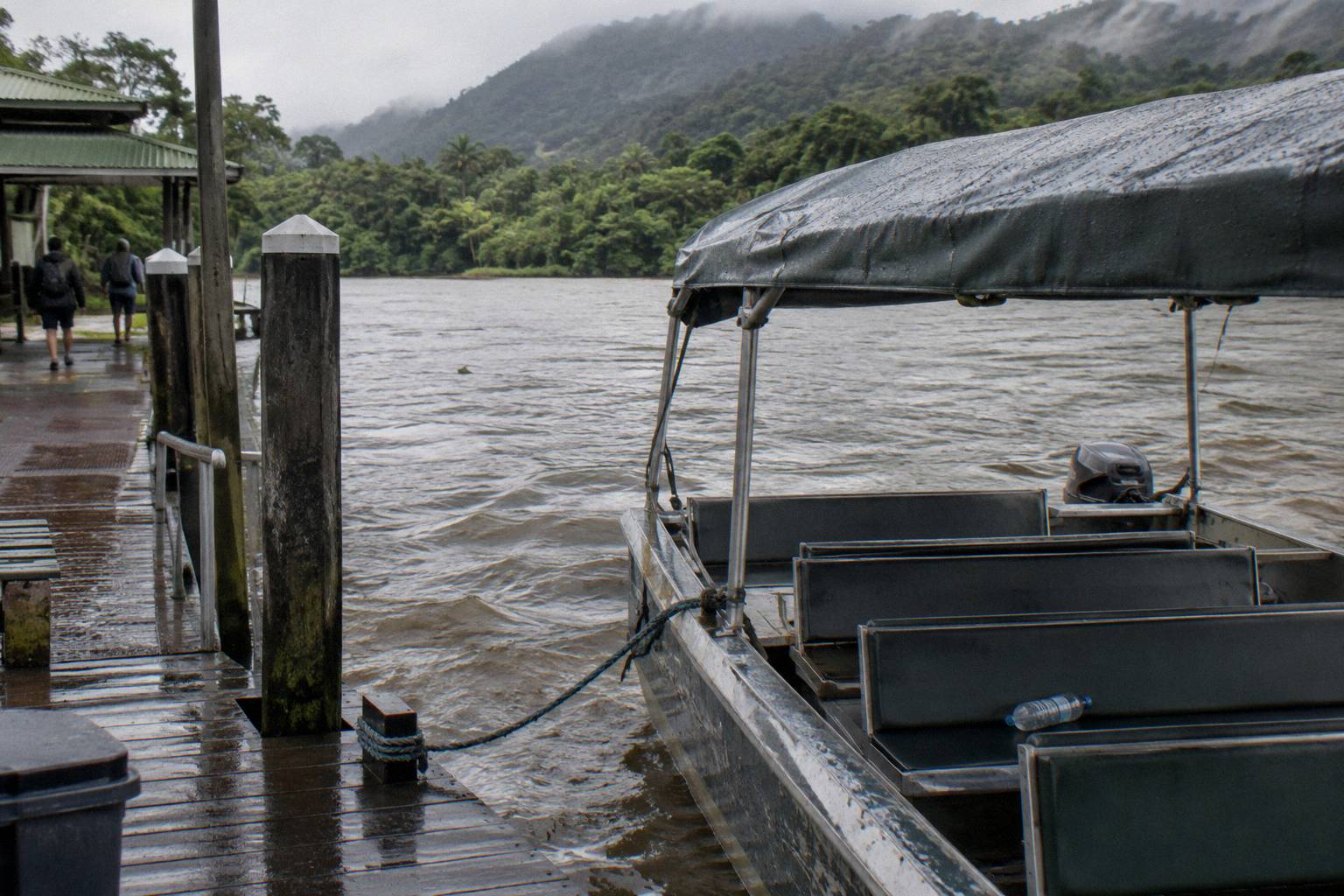
It is also worth separating the rain falling on you from the river under you. The cruise is a 45 minute calm water trip, rated 4.7 from 343 reviews, with commentary on the rainforest, river life and Kuranda history. Rain in Kuranda on the day does not tell you the river level, because the Barron drains a large catchment and conditions reflect what fell upstream, sometimes days earlier. This is exactly why the operator's wording is about river conditions rather than weather.
What Happens To The River After Heavy Rain?
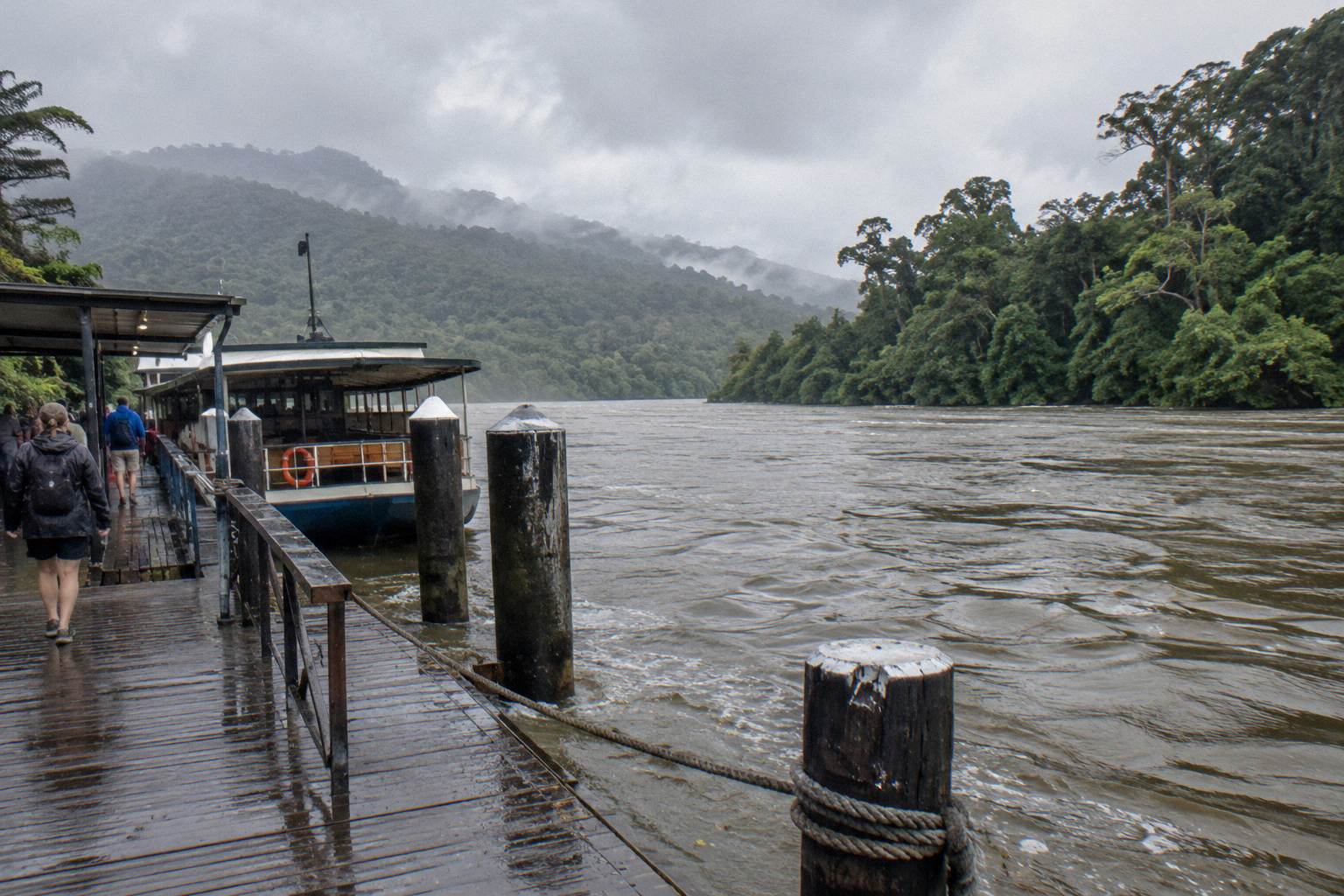
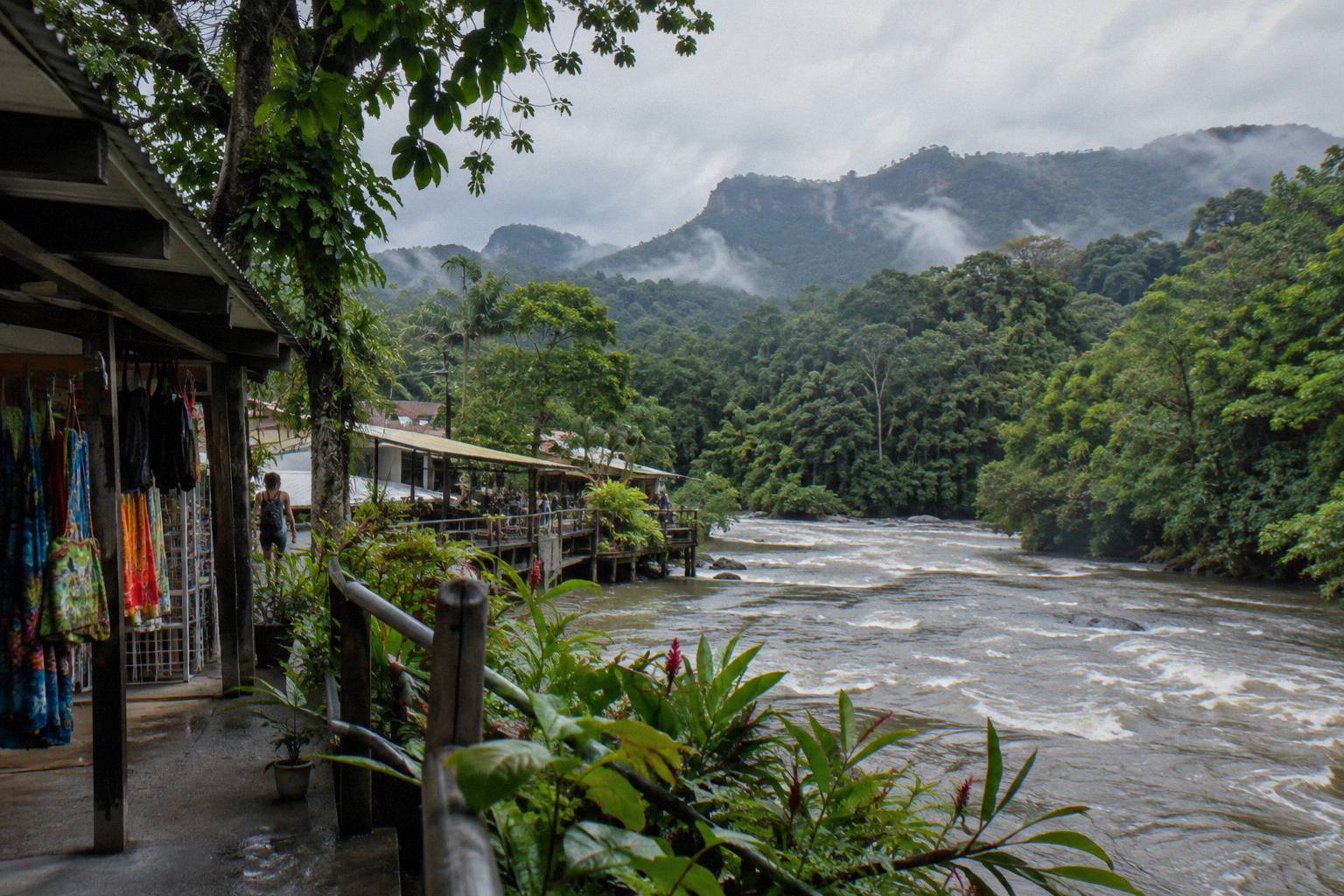
After heavy rain the Barron River rises and carries more debris and darker water, and the upstream catchment decides the level rather than the rain over Kuranda itself. The operator's calm water cruise is subject to those river conditions, and no official source publishes a level at which sailings are affected. Contact the operator or check the live listing for the day you plan to travel.
The Barron above Kuranda is an upland river, and the stretch the riverboat uses is calm water, not the gorge below the falls. That distinction matters when reading dramatic footage of Barron Falls in flood: what is spectacular in the gorge is a different section of the river from the one the cruise uses, though both respond to the same catchment.
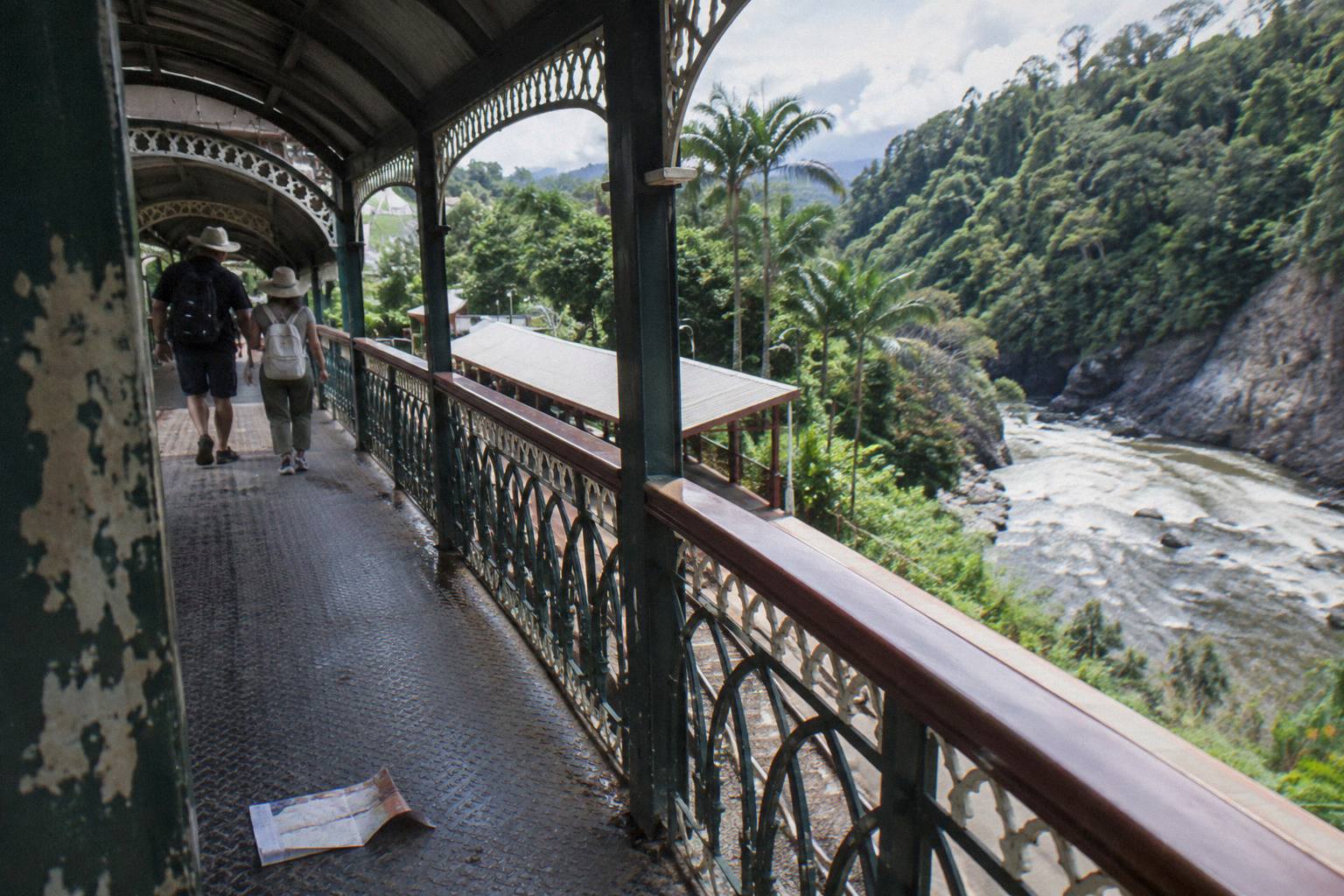
No walking time between the Kuranda Railway Station, the footbridge, the stairs and the jetty is published, so none is given here, but the access route is fixed: you cannot drive down to the river. You park in the village, walk across the railway station footbridge and down the stairs to the jetty with the red flags. On a wet day those stairs are the part of the journey most affected by weather, so decent footwear earns its place.
The Queensland park service manages Barron Gorge National Park with the Djabugay people, and its guidance on the wider park is the authoritative background for river behaviour in the gorge. The park service notes that during the wetter months floodwaters regularly create a spectacular sight at Barron Falls, and that flow varies with the seasons, which is the plain summary of the whole system: seasonal, variable, never guaranteed.
Barron Falls In The Wet Season: What You Will Actually See
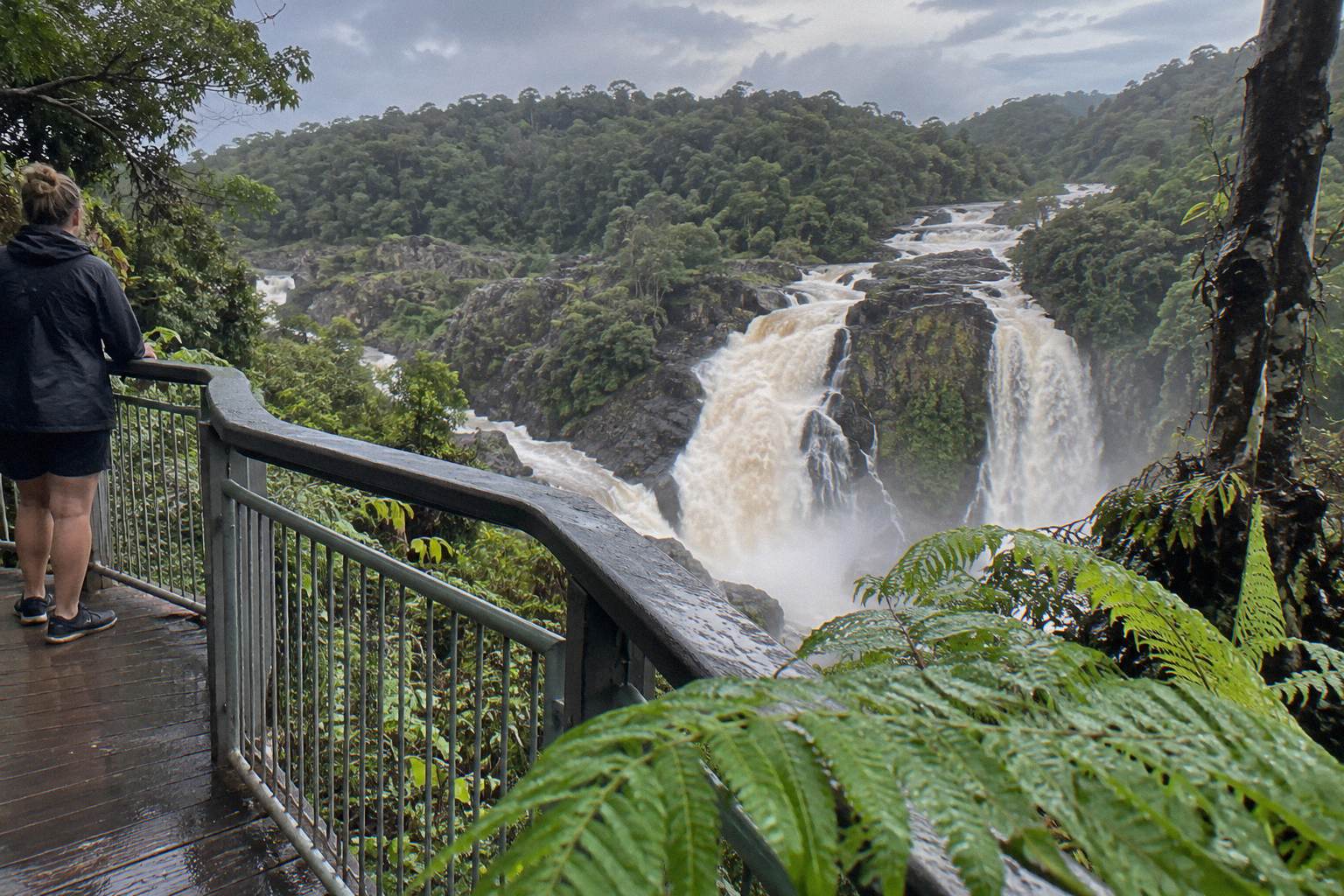
The Queensland park service says that during the wetter months floodwaters regularly create a spectacular sight at Barron Falls, and that flow varies with the seasons. In the dry months a trickle is possible. No source promises a thundering waterfall on any given date, and the falls are best treated as a seasonal bonus rather than a certainty.
The falls are the region's barometer. Visitors who arrive in the weeks after good wet season rain often catch the gorge at its most dramatic, with the falls spreading across the rock face. Visitors in the dry season spring sometimes find a narrow ribbon and wonder what the postcards were about. Both experiences are normal, so hold any expectation of a big waterfall to the operator and park wording and treat it as possible rather than promised.
There are three realistic ways to see the falls from a Kuranda day, and the wet season affects each differently:
| Viewing option | Wet season notes |
|---|---|
| Din Din Barron Falls lookout track | 800 m easy walk from the Barron Falls Road car park; the track and day-use area are closed for planned maintenance from 23 November to 4 December 2026 per the Queensland park alert |
| Skyrail Barron Falls station | Gorge and waterfall views from the station boardwalk, per official Skyrail information; the cableway runs in most weather but is subject to its own operations |
| Railway platform lookout | The park pointer says a railway platform lookout stays open via the train; whether a given service stops for passengers there is not confirmed in the timetable, so check the Queensland Rail page |
The falls question on a riverboat day is covered in full in Barron Falls on a river cruise day. The short version for the wet season: the falls are the one thing that gets better with rain, while your comfort on the day gets worse, and both can be true on the same afternoon.
What The Rainfall Records Actually Show
The table below is the full set of monthly rainfall figures from the official Bureau of Meteorology averages for Cairns Airport.
| Month (averages) | Rainfall figure |
|---|---|
| February | 436.1 mm |
| March | 424.3 mm |
| January | 404.8 mm |
| April | 201.7 mm |
| December | 193.8 mm |
| August | 26.9 mm |
| July | 33.2 mm |
| September | 34.8 mm |
| Annual total | 2,019.1 mm across 119.9 rain days |
The months between the wet season peaks and the dry winter, such as May, June, October and November, fall in between. The pattern that matters for planning is the shape: a hard December to March wet season, a very dry July to September winter, and shoulders in between.
Temperature and humidity complete the picture. Mean minimums sit at 23.8 °C in January against 17.2 °C in July, and 9am humidity averages 72% across the year at the coast station. Kuranda, being on the range, runs cooler and wetter than Cairns.
Cyclone Season And What It Means For Your Booking
Cyclone season in this region runs from 1 November to 30 April, according to the Bureau of Meteorology. That window covers the whole wet season plus both shoulders. Cyclones are rare events rather than weekly ones, but a cyclone or flood event can close roads, the railway and the cableway, and no tour operator publishes a blanket weather guarantee.
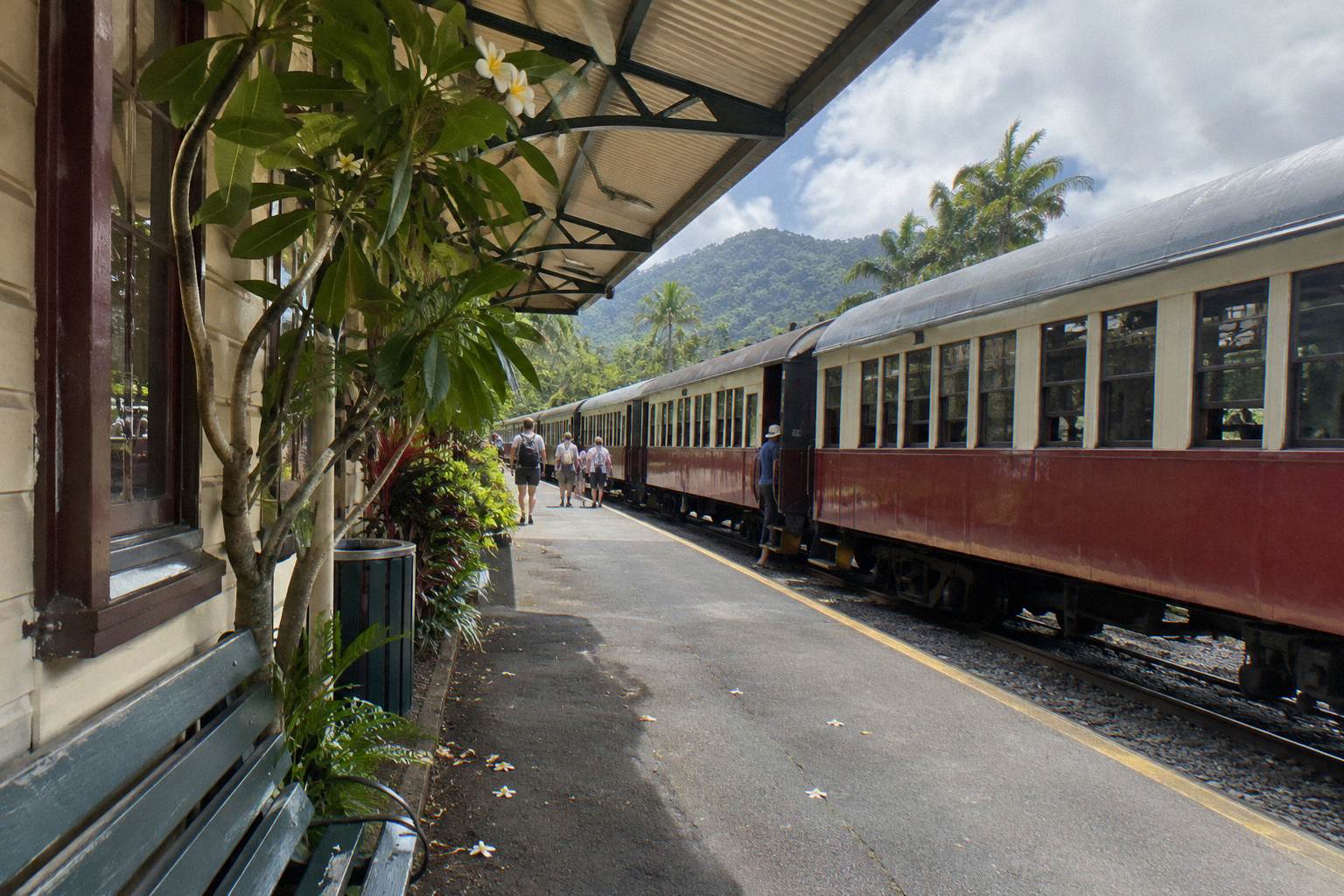
For a Kuranda day trip the practical exposure is transport. The Kuranda Scenic Railway and the Skyrail Rainforest Cableway both run through the gorge, and severe weather affects them before it affects a village street. Queensland Rail's own closure page lists planned maintenance stoppages, currently 1 to 3 December 2026 and blocks in May, June, October and November 2027, alongside its normal Christmas Day closure, and weather events are announced separately. Other pages covering the same trip are gathered on Kuranda River Boat Cruises.
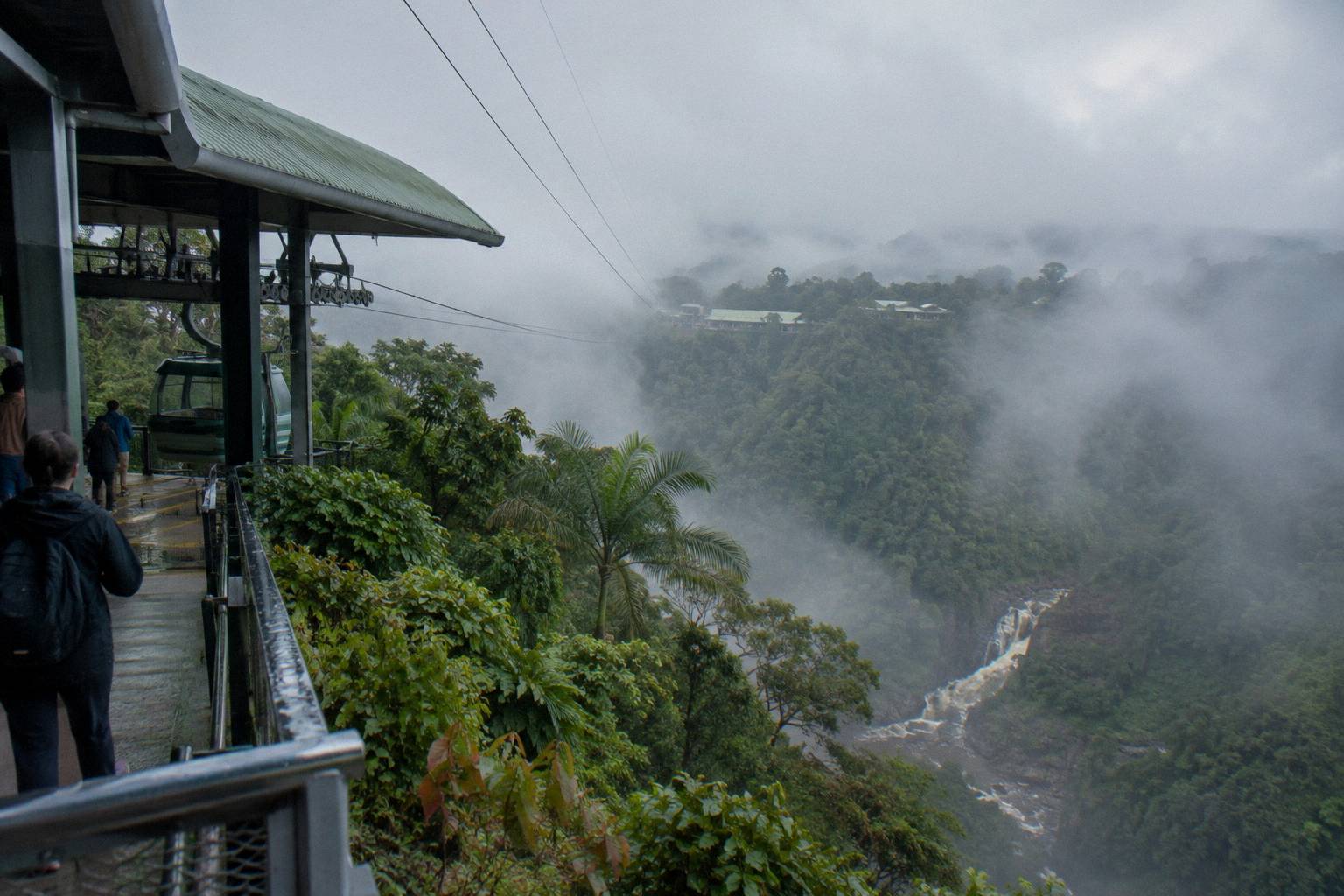
Skyrail has its own schedule of works to check: after normal Smithfield to Kuranda operation resumes from 4 November 2026, the Kuranda line between Red Peak and Kuranda is planned to close from July to November 2027, with round trips running Smithfield to Red Peak only and shuttle buses covering the rest. The official Skyrail upgrade page carries the dates, all subject to change, and any wet season travel in late 2027 should start there.
Every one of the five tours carries free cancellation up to 24 hours before start on the live listing. A cyclone watch forming a week out is exactly the scenario that clause exists for. It does not cover everything, a cancellation inside 24 hours is a different matter, so the wet season rewards travellers who decide early rather than the night before.
Cancellation, Refunds And What The Listing Promises
That distinction, between the listing's cancellation window and the operator's silence on its own cancellations, is worth sitting with. If you cancel more than 24 hours out, you are covered on the listing. If the operator cancels a sailing because of river conditions, you can expect a refund or a rescheduled date, but check this on the booking page before you go.
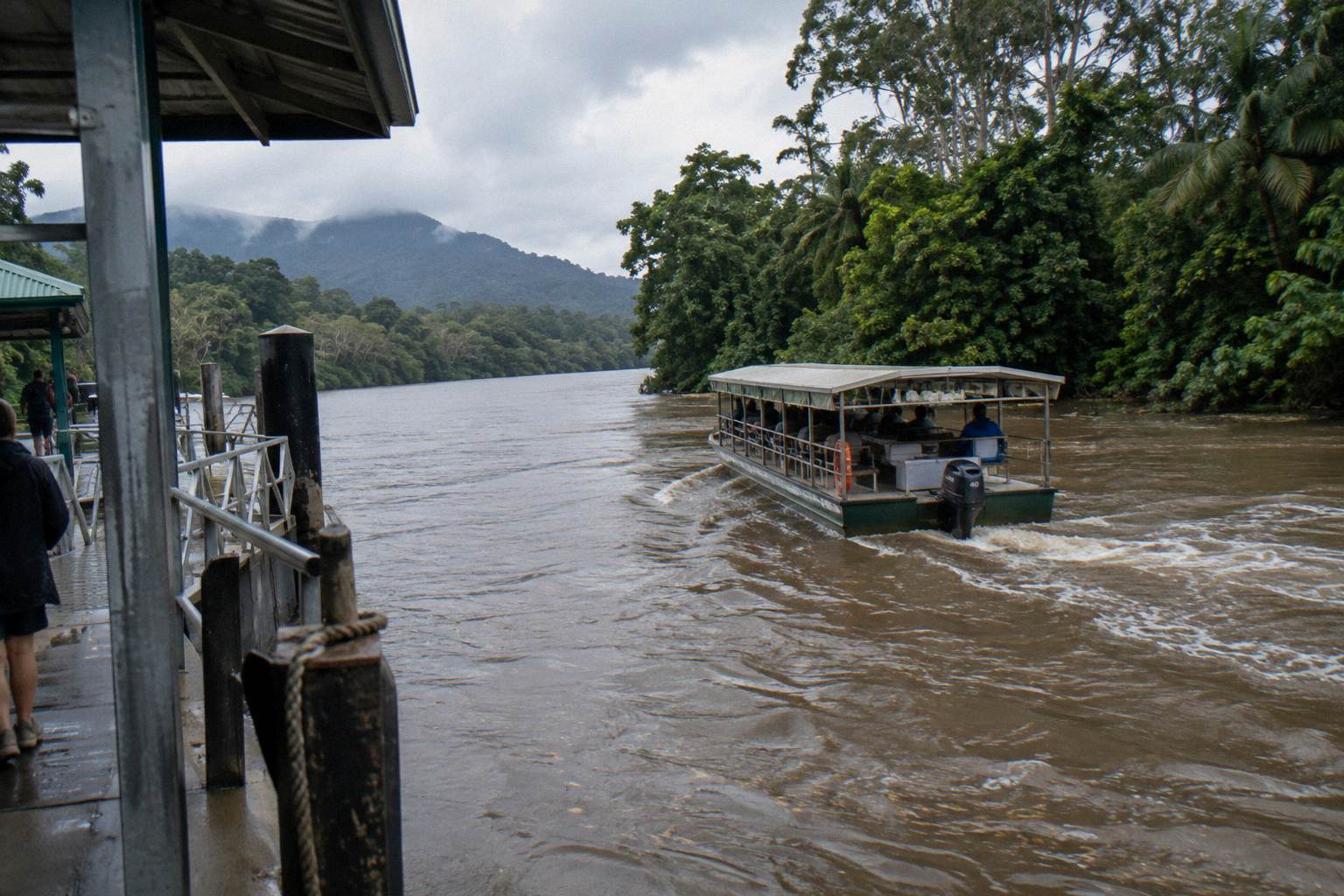
The reading that follows is simple. Book with the free cancellation window in mind, keep an eye on the forecast and the catchment, and if a sailing looks doubtful, contact the operator directly before travelling rather than walking down to the jetty on spec. Our page on whether you need to book the riverboat in advance covers the capacity side: 30 passengers maximum per sailing, five sailings a day.
One reassurance for the wet season specifically: the cruise is short, at 45 minutes, so the financial exposure per person is modest rather than a full day's budget. The operator's own adult fare for the cruise is A$30, rising to A$35 from 1 April 2027, and all amounts are Australian dollars, and the booking pages show their own prices. The bundled day trips from Cairns carry the bigger ticket values, and for those the 24 hour cancellation window does more work.
What To Expect On Board A Wet Day
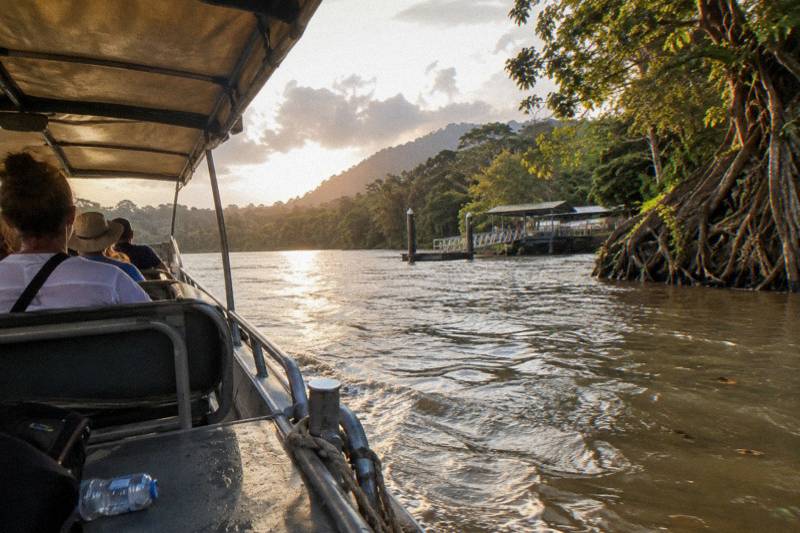
The cruise itself is the same 45 minute calm water trip in any season: commentary on the rainforest, river life and Kuranda history, a covered vessel, and a maximum of 30 passengers. The differences on a wet day are the stairs down to the jetty, the possibility of a livelier river, and greener, moodier rainforest, which many visitors genuinely prefer to the dry season light.
The jetty access is the fine print. There are a number of stairs down and back up, and the cruise is not wheelchair accessible. In rain those stairs deserve closed shoes and a little patience, and prams are usable per the listing. Our riverboat cruise accessibility guide covers the step-free questions in full.
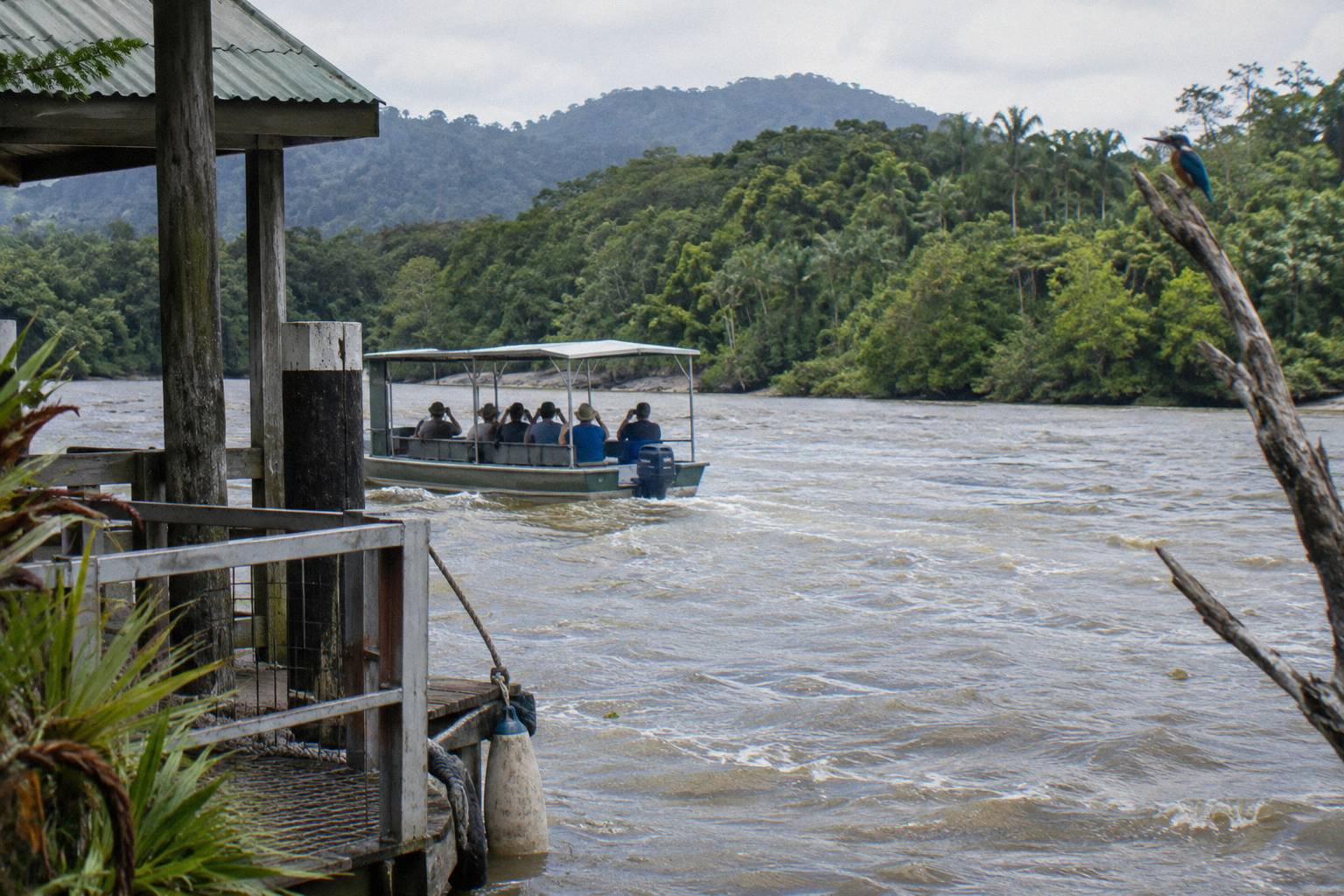
Wildlife behaviour shifts with the season too, and it is worth being precise about what the operator claims. The wildlife named on the operator's pages includes freshwater crocodiles, turtles, snakes, water dragons, fish, over 100 species of tropical birds, and cassowaries occasionally on the far side of the river. The operator's own caution stands: wildlife is wild and sightings are never guaranteed. The crocodiles on the Barron River guide separates the freshwater crocodile question from the estuarine crocodiles that live in the lower gorge, a distinction the park service makes and casual advice usually mangles.
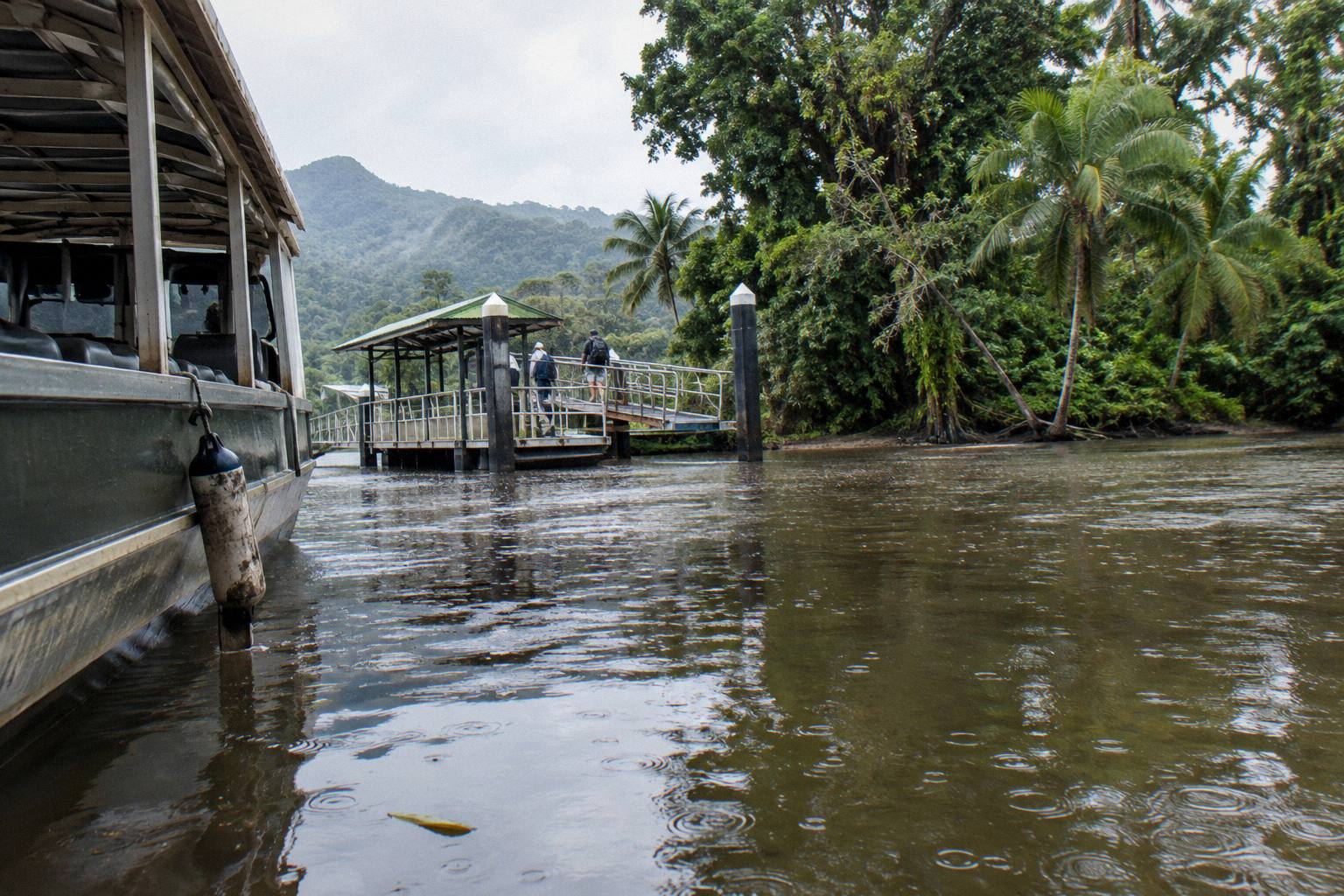
For packing, the wet season kit is short: a light rain jacket rather than an umbrella, which is awkward on a boat, footwear with grip for the stairs, a dry bag or zip lock for phones, and insect repellent for the humid months. Nothing exotic, and nothing the dry season visitor needs. The full list lives in what to bring on the Barron River cruise.
Wet Season Versus Dry Season: The Trade-Offs
The wet season trades comfort and schedule certainty for greener forest, fuller rivers and the best chance of a dramatic Barron Falls. The dry season trades that drama for reliable skies, easier stairs and lower humidity. Neither season is the correct answer, and the rainfall table shows why the differences are matters of degree rather than kind, with rain possible in every month.
| Factor | December to March | July to September |
|---|---|---|
| Rainfall at Cairns Airport | 193.8 to 436.1 mm per month | 26.9 to 34.8 mm per month |
| Barron Falls | Best chance of floodwater spectacle, never guaranteed | Flow varies with the seasons; a trickle is possible |
| Humidity and temperature | Mean maximum 31.5 °C in January, 9am humidity 72% annual average | Mean maximum 25.9 °C in July |
| Crowd character | Quieter village, greener forest, more local rain | Peak visitor season, clear skies |
| Booking flexibility | Free cancellation up to 24 hours matters most here | The same clause applies, less likely to be needed |
One framing that helps: the wet season does not switch the cruise off, it just adds a decision layer. In the dry season you pick a time and go. In the wet season you pick a time, watch the catchment, keep the cancellation window intact, and hold the plan lightly. Travellers who enjoy that kind of flexibility often get the region at its most beautiful for it.
Pairing The Cruise With Train And Skyrail In The Wet Months
The riverboat cruise is a separate product from every Cairns day trip: only the Barron River Riverboat Tour includes the cruise, and the four day trips do not, so the cruise is always your own add-on inside a Kuranda day. In the wet season, check the Queensland Rail closure dates and the Skyrail upgrade schedule before locking an itinerary, because both can change what is possible.
The four adjacent day trips each make different partners for a wet season day. The Kuranda Skyrail And Scenic Railway Day Trip, run by Down Under Tours, is 8.5 hours with Cairns hotel pickup, rated 4.3, and does not include the river cruise. The Small-Group Skyrail And Scenic Railway Day Trip, run by Infinity Fun Travel, is 7 hours with door-to-door pickup from Cairns City and the Northern Beaches up to Palm Cove, rated 4.8, and also excludes the cruise.
The Small-Group trip suits travellers who want a fixed plan moved around for them, which has real value when rain makes improvisation unappealing, and its pickup reach from the city through Palm Cove covers most visitor accommodation.
The Kuranda Army Duck And Rainforestation Day Trip, run by Tropic Wings, is a 10 hour day rated 4.5 from 442 reviews, built around Rainforestation Nature Park on the Kennedy Highway, and again the river cruise is not part of the ticket. The Self-Guided Scenic Railway And Skyrail Day Trip, 7 hours from central Cairns hotels, leaves the day's shape to you, with the same exclusion.
Whatever carries you up the range, the cruise itself is booked on its own, at its own fare, on the operator's jetty schedule. The order in which you fit the train, the cableway and the river cruise into one day is a question with its own answer, covered in the best order for train, Skyrail and the river cruise, and the wet season argues for keeping a buffer between the two big rides rather than a knife edge connection.
The Verdict On Booking A Wet Season Cruise
Book the riverboat cruise in the wet season if you want the greenest forest and the best falls odds and you can hold plans loosely. Skip it only if you need cast iron certainty, because the operator publishes no river conditions threshold and no weather refund rule. Use the free cancellation up to 24 hours before start, check the live listing close to travel, and contact the operator when in doubt.
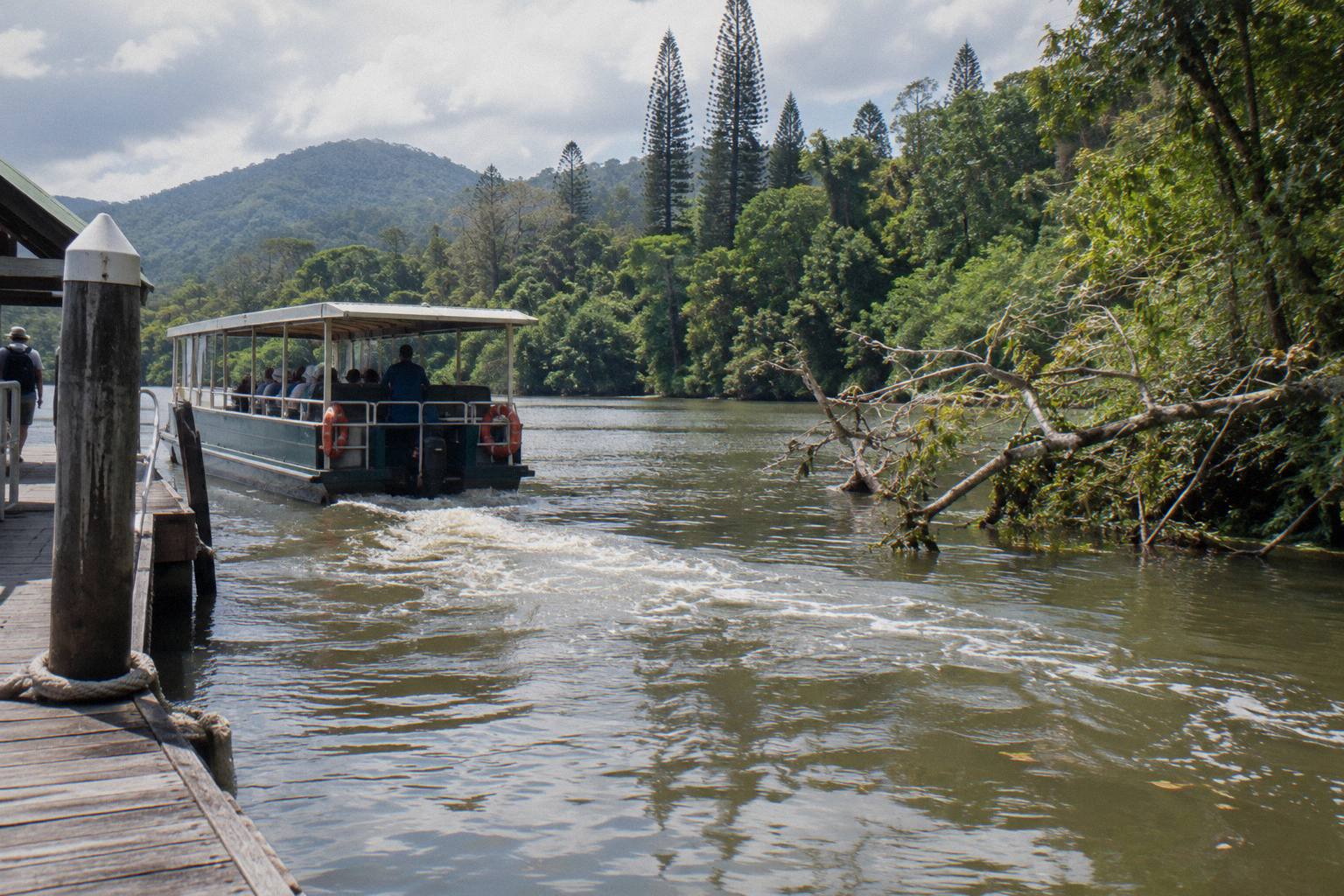
The upland Barron is a genuinely good river to be on, and in the wet season it is at its most alive: higher, darker, framed by forest at maximum green. The risks are real but narrow, a slippery stair, a cancelled sailing, a day of steady rain, and every one of them is manageable with timing and footwear rather than avoidance.
The five sailings a day mean you can slot the cruise wherever the weather leaves a gap, and the short duration means a shower can pass while you have a coffee in the village and still catch the next boat. If you can only visit between December and March, do not wait for a better season, because there is no month without rain in the averages table, only months with more of it.
Common Questions About The Wet Season Riverboat Cruise
Does The Riverboat Cruise Run In The Wet Season?
The operator publishes no wet season rule either way. Five set sailings a day, seven days a week, are scheduled at 10:45am, 11:45am, 12:30pm, 1:30pm and 2:30pm, and the only official wording is that tours are subject to river conditions and group bookings. Check the live listing and contact the operator for your date.
What Happens If It Rains On The Day Of My Cruise?
Rain alone does not decide a sailing, because the cruise depends on river conditions rather than the weather over the jetty. The vessel is covered and the cruise runs 45 minutes. If conditions look doubtful, contact the operator before walking down to the jetty.
Can I Cancel If The Weather Turns Bad?
Yes, up to a point: the Barron River Riverboat Tour and all four day trips carry free cancellation up to 24 hours before start. Inside 24 hours is a different matter, and the operator publishes no weather refund rule of its own.
Which Month Is The Wettest In Kuranda?
For the region, Bureau of Meteorology records for Cairns Airport show February wettest at 436.1 mm, March next at 424.3 mm and January at 404.8 mm. Kuranda itself is cooler and wetter than the Cairns coast, but no official Kuranda rainfall table is published.
Is Barron Falls Worth Seeing In The Wet Season?
The Queensland park service says that during the wetter months floodwaters regularly create a spectacular sight at Barron Falls, and that flow varies with the seasons. It is the season with the best chance of a full falls, but no given day is guaranteed.
Are Cyclones A Problem For A Kuranda Day Trip?
Cyclone season runs from 1 November to 30 April. Cyclones are infrequent, but a serious event can close the railway, the cableway and roads. Book with the free cancellation window in mind and watch official forecasts in the week before travel.