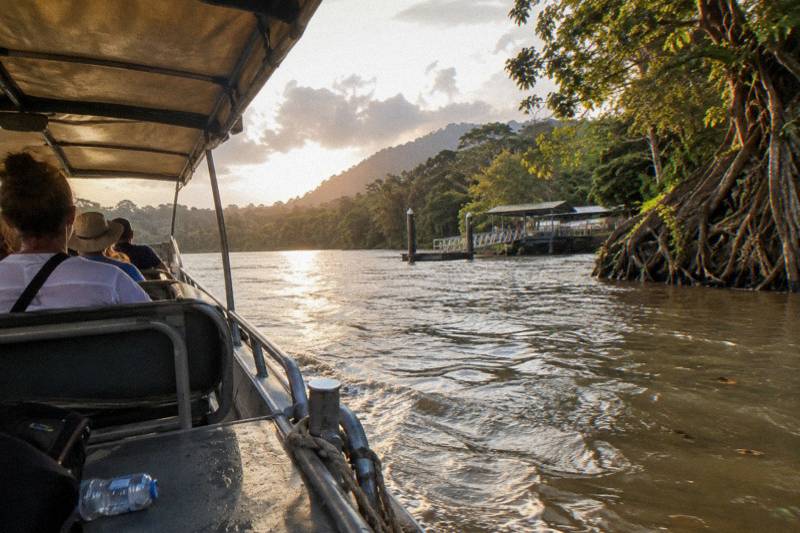
Can You See Crocodiles On The Riverboat Cruise?
The operator's own words on crocodiles in the Barron River at Kuranda, what else lives along the banks, and how to plan a cruise day around a sighting.
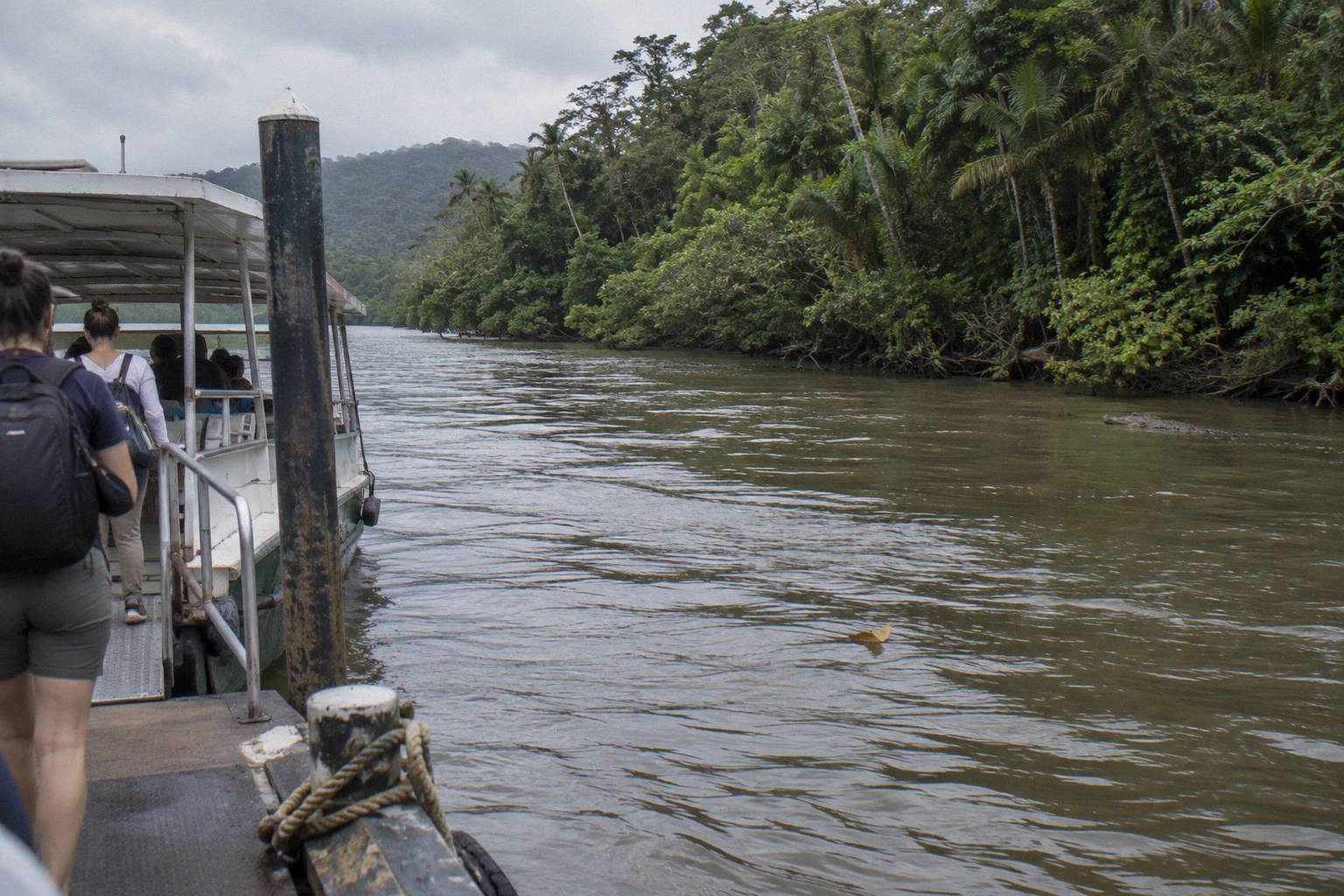
Wildlife expectation is the single biggest reason people book a seat on the Barron River Riverboat Tour, and the crocodile question comes up before almost anything else. The answer sits in two sentences from Kuranda Riverboat, the operator that has run calm-water cruises on this upland stretch of the Barron River since 1982: there are freshwater crocodiles in the river, and the operator cannot guarantee they will be visible. That caution is worth unpacking, because it tells you what kind of river this is, what a realistic cruise looks like, and how to build a Kuranda day that satisfies a wildlife itch even when the crocodile stays under the bank.
Yes, crocodiles are in the river, but no sighting is guaranteed. The operator's own wording is plain: "There are freshwater crocodiles in the river. We cannot guarantee that they will be visible." The 45-minute cruise runs on calm water through their habitat, and every departure carries the same odds. Booking the cruise buys you the river, the rainforest commentary and the chance, never a promised animal.
That framing is not marketing hedging. It is how a responsible operator describes wild animals on a wild river, and it is the only claim worth making about crocodile sightings. The cruise covers the quiet upland Barron River at Kuranda, a stretch hemmed by rainforest rather than farmland or beaches, and the animals that live there decide for themselves when to appear. Some passengers get a crocodile on the bank within minutes. Others complete all 45 minutes, hear the full commentary on the ancient rainforest, river life and Kuranda history, and never see one. Both outcomes are normal.
What you are actually buying is time on the water in a place most visitors never reach. You cannot drive to this part of the river: the jetty sits below the Kuranda Railway Station footbridge, reached on foot over the bridge and down the stairs, with red flags marking the departure point. The boat carries a maximum of 30 passengers, which keeps the pace quiet enough that birds, turtles and water dragons along the banks go about their business rather than fleeing.
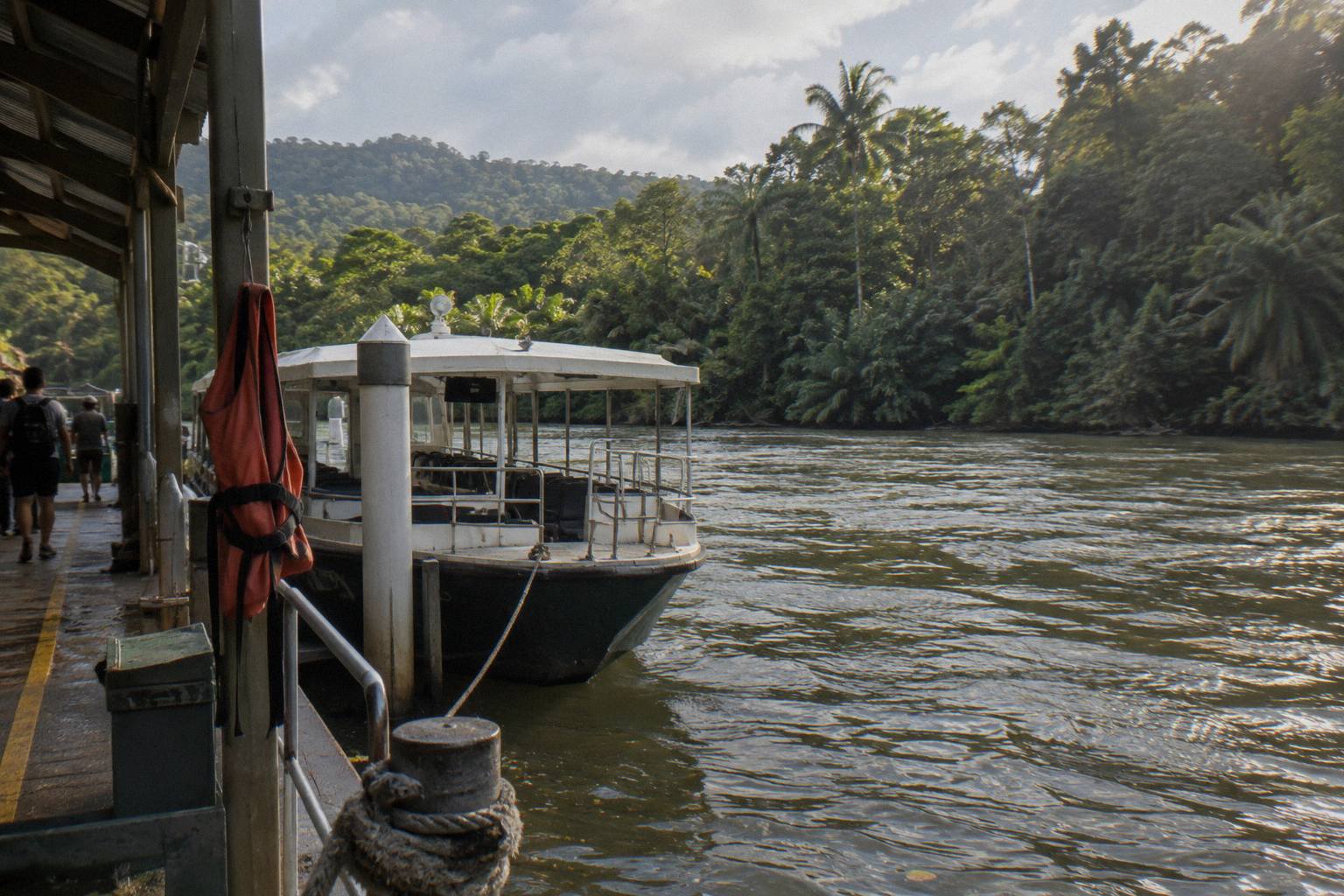
If the crocodile question is what brought you here, the cruise is the right product to be looking at, but it pairs naturally with a bigger Kuranda day.
The Barron River Riverboat Tour is the cruise itself: 45 minutes, rated 4.7 from 343 reviews, price on the listing, with 45-Minute Riverboat Cruise showing live departure times. The two day trips in that band, the Kuranda Skyrail And Scenic Railway Day Trip (4.3, 8.5 hours) and the Small-Group Skyrail And Scenic Railway Day Trip (4.8, 7 hours), do not include the river cruise; if a crocodile is the goal, the cruise is a separate add-on inside those days, at your own cost.
Which Crocodile Lives In The Barron River At Kuranda?
The operator identifies the crocodiles in this stretch of the river as freshwater crocodiles, and that is the only species claim to stand by. The Queensland Government notes that estuarine crocodiles occur between Gladstone and Cape York Peninsula and in the Gulf, and the park service places estuarine crocodiles in the lower section of Barron Gorge National Park. No official source extends that to the Kuranda stretch, so no more can be said.
The distinction matters enough that the Queensland Government publishes general Be Crocwise guidance covering crocodile country across the state, and that page is the reference to read before spending time near any Queensland waterway. It is general guidance for the whole state, not a statement about the Kuranda jetty, and no verdict on whether the upper river is safe or dangerous can be made, because no official source supports one.
For the species itself, the operator's identification can be checked against the basic reference for the freshwater crocodile, which is native to northern Australia. Nothing beyond that identification can be claimed: no size, no population count for the Barron, no behaviour description, and no incident history, because none of that appears in the operator's material or official pages.
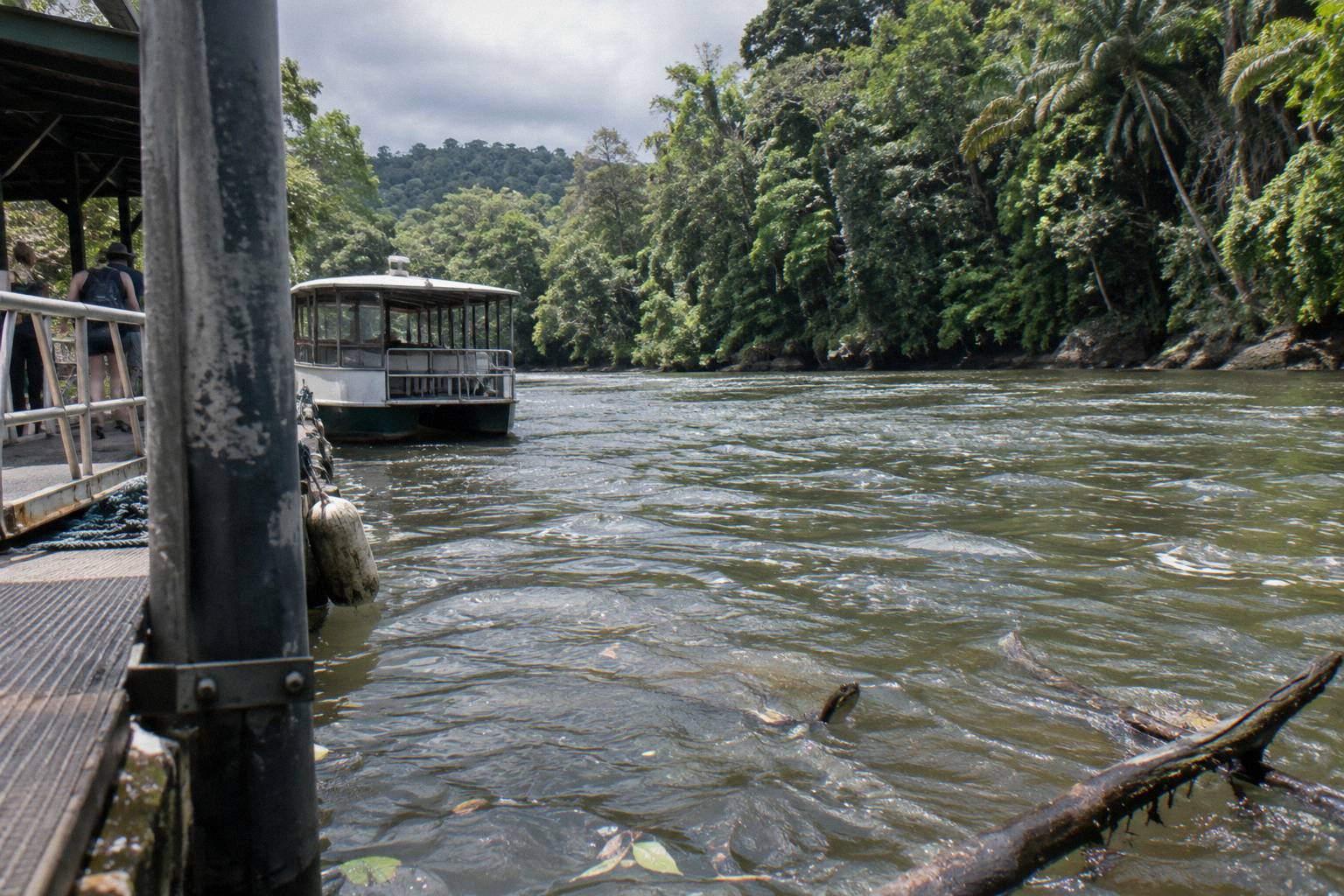
The geology of the river explains part of the story. The cruise runs on the upland Barron above the gorge, where the water moves slowly between rainforest banks. Downstream, the same river drops through Barron Gorge, and it is the lower section of that national park where the park service says estuarine crocodiles live. Two sections of one river, two different crocodile situations, and the cruise operates in the upper one.
What Does The Operator Actually Promise About Wildlife?
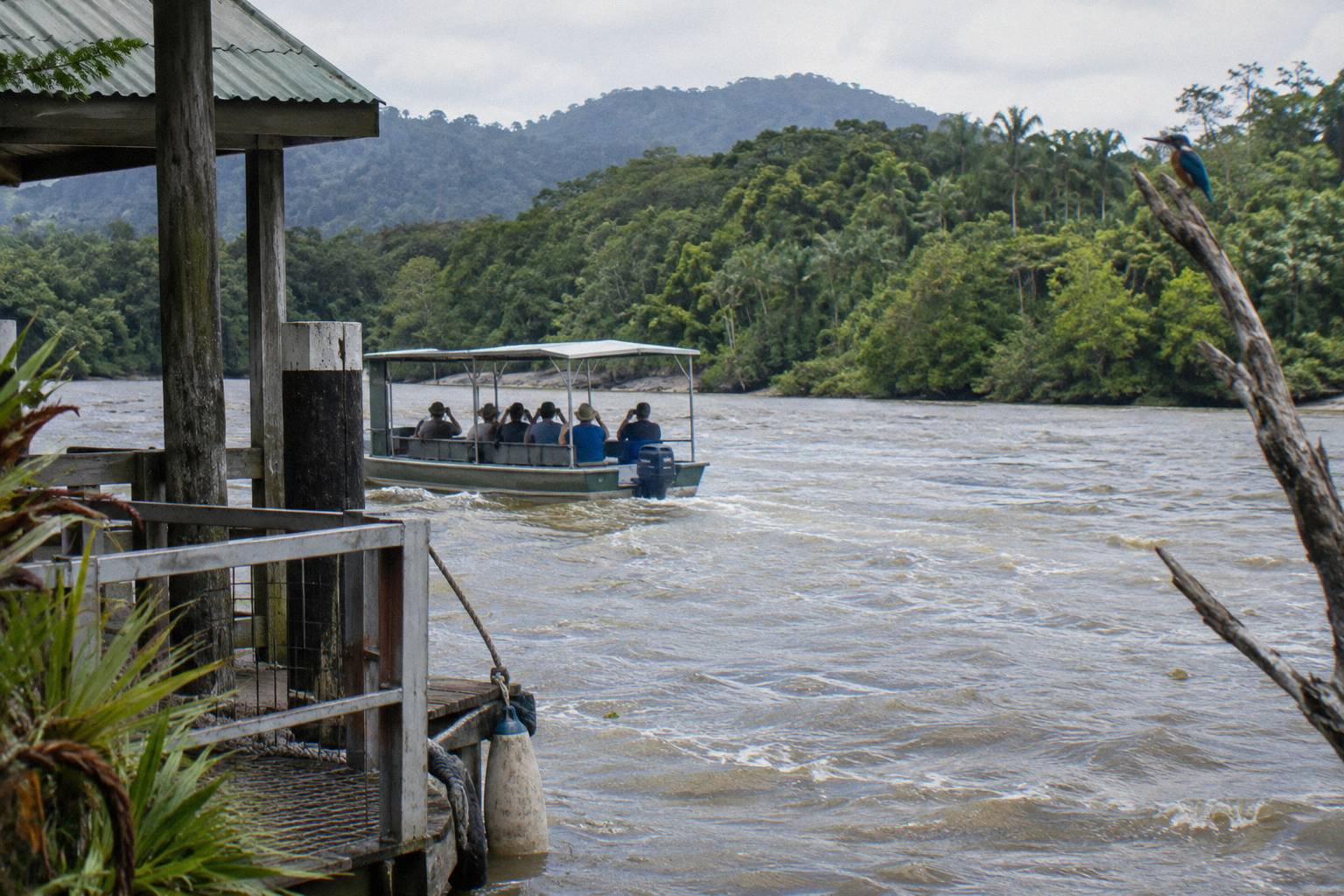
Nothing is promised, and that is deliberate. The operator's published line is: "There are freshwater crocodiles in the river. We cannot guarantee that they will be visible." The same page lists what the commentary covers, the ancient rainforest, river life and Kuranda history, and names the animals known from the river: freshwater crocodiles, turtles, snakes, water dragons, fish and over 100 species of tropical birds. Cassowaries are sometimes seen on the far side of the river.
Read that list carefully and a pattern emerges. The birds and the reptiles along the banks are described as present, the cassowary as occasional, the crocodile as present but not guaranteed. Every category carries a different likelihood, and a good cruise expectation sets all three at their own level. The 45 minutes on the water are wildlife-watching time in habitat, not a zoo visit with a feeding schedule.
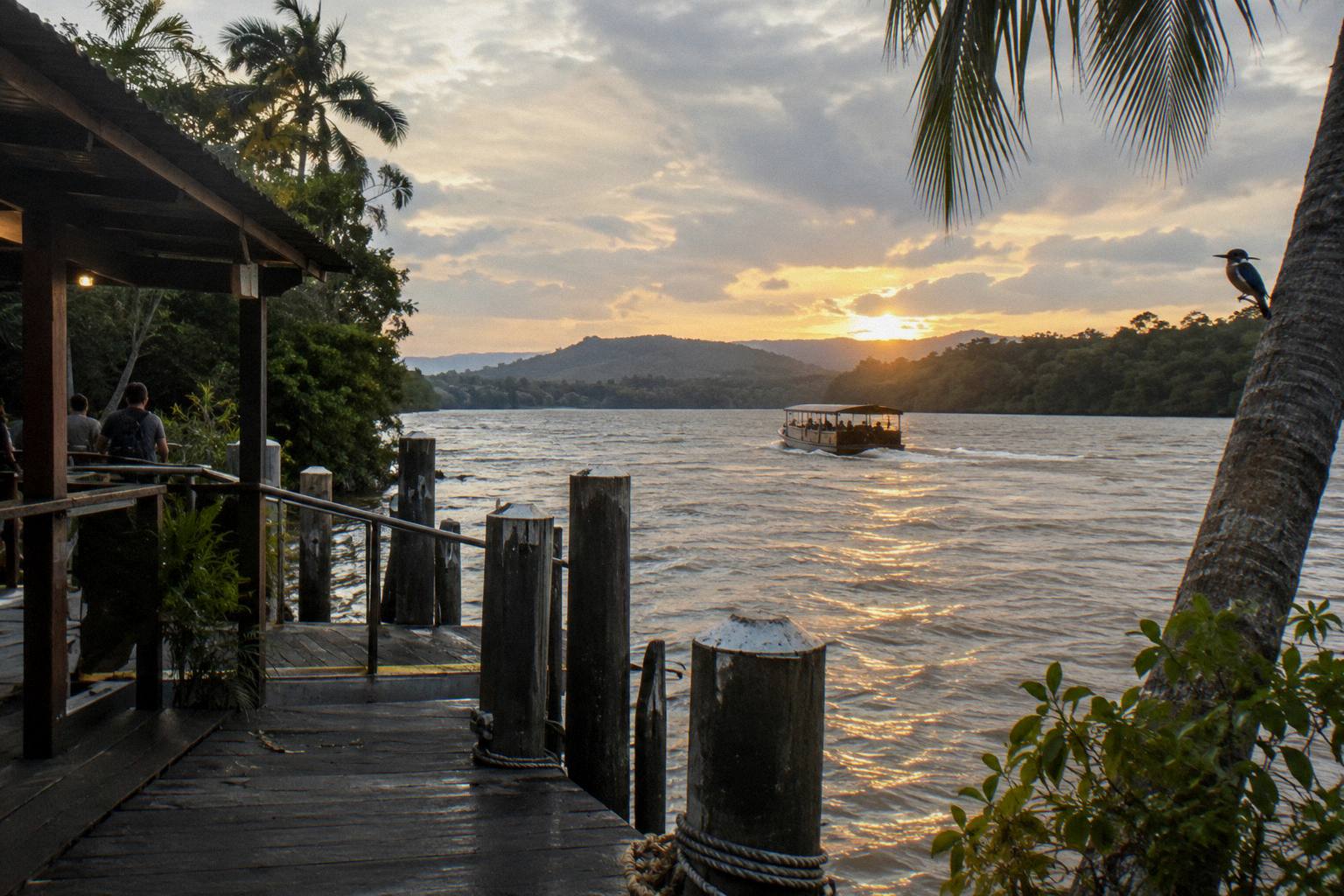
The cruise runs "five tours per day, seven days per week" at 10:45am, 11:45am, 12:30pm, 1:30pm and 2:30pm, and the operator notes that cruises outside those set times, including sunset departures, can be arranged by contacting them directly. Tours are also "subject to river conditions and group bookings", which is the operator's full published statement on when the boat does and does not go out; there is no published flood threshold or wet-season rule beyond that sentence.
What Other Wildlife Might You Spot From The Boat?
The operator's own list is the ceiling of what can be claimed: freshwater crocodiles, turtles, snakes, water dragons, fish and over 100 species of tropical birds, plus the occasional cassowary on the far bank. No other animal belongs on the list, because no source mentions one. The cruise's realistic strength is birdlife, with the crocodile as the wildcard.
Birds deserve more attention than they usually get in the booking decision. A river that the operator describes as holding over 100 tropical bird species, flowing through rainforest that is part of the Wet Tropics World Heritage Area, is a genuinely good birdwatching platform, and a 45-minute loop at calm-water speed passes a lot of bank. Passengers who arrive with binoculars tend to leave with the longest species lists.
The southern cassowary is the wildcard of the wildcards. The operator's cruise page says cassowaries are sometimes seen on the far side of the river, and the operator's package page words it as "occasionally a wild cassowary may be spotted." Two separate operator pages, two separate hedges, and the plain summary is that it happens, it is memorable when it does, and nobody can plan around it.
For readers weighing wildlife options, the comparison table keeps the claims straight:
| Wildlife claim | Who says it | How firm is it? |
|---|---|---|
| Freshwater crocodiles in the river | Operator | Present, visibility never guaranteed |
| Turtles, snakes, water dragons, fish | Operator | Named as river residents |
| Over 100 species of tropical birds | Operator | Described as the river's bird count |
| Cassowary on the far bank | Operator, two pages | "Sometimes seen" and "occasionally" |
Is A Crocodile Sighting Likely On A 45-Minute Cruise?
No number exists for this, and the operator publishes no sighting rate, so treat any percentage you read elsewhere with suspicion. What is known: the crocodiles are resident, the cruise crosses their habitat daily at five set times, the animals are wild, and the outcome varies departure by departure. Book the cruise for the river, treat the crocodile as a bonus.
That advice is not a consolation prize. The 45-minute format is short enough to slot between a train arrival and a Skyrail departure, and long enough to cover a real stretch of rainforest river that no road reaches. The commentary fills the whole trip, and the boat's 30-passenger cap keeps the experience quiet. If the crocodile surfaces, it is a highlight; if it does not, the cruise still delivers what it sold, which is the river itself.
Timing is the one lever a visitor controls. The five daily departures span 10:45am to 2:30pm, and the operator arranges cruises outside those times, including sunset, on request. Early and late daylight hours are the traditional favourites for river wildlife generally, but nothing in the operator's published material ranks one departure above another for crocodile sightings, so no ranking is offered here. If a quieter or later departure appeals, contacting the operator directly is the published route to arrange it.
The cost of adding the cruise to a Kuranda day is modest and has one firm figure: the operator's own adult fare for the cruise is A$30 until 30 March 2027 and A$35 from 1 April 2027 (all amounts are Australian dollars). That is the operator's own fare for the cruise alone; the booking page lists its own price. Children under four travel free and the child rate covers ages 4 to 15, per the operator's page.
How Does The Cruise Fit A Kuranda Wildlife Day?
The cruise is a standalone 45-minute product with no pickup, meeting at the jetty below the Kuranda Railway Station footbridge. The four bigger day trips from Cairns, the Skyrail-and-rail combinations, the Army Duck day and the self-guided option, do not include the river cruise in their tickets. To combine a crocodile chance with a full day, you book the cruise separately and slot it between your train and cableway legs.
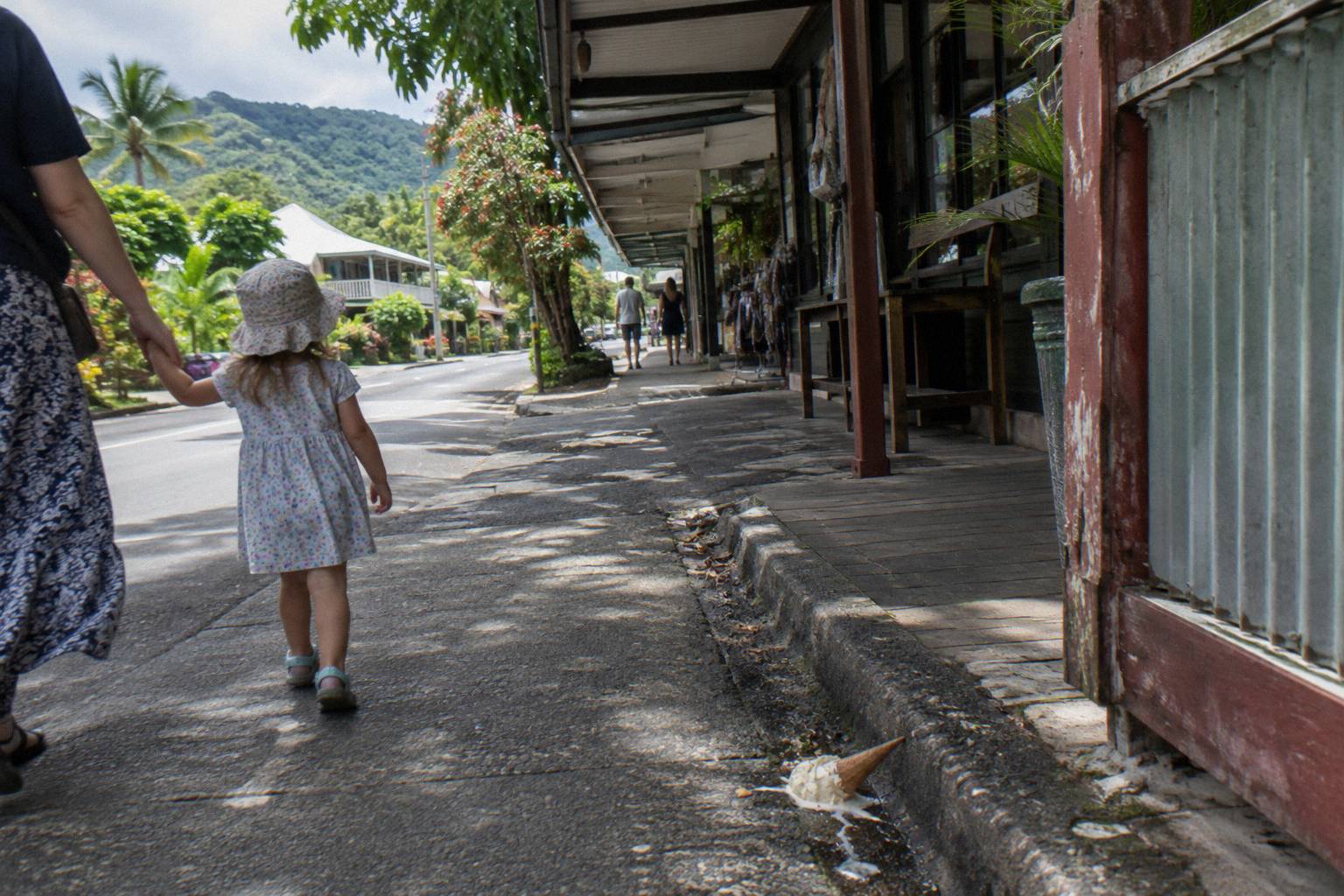
This is the planning point that catches the most people. A day trip ticket that says Skyrail and Scenic Railway covers exactly those two legs, plus whatever free time you carve out in Kuranda village itself. The riverboat jetty sits a short walk from the station end of the village, so the cruise slots neatly into the middle of the day, but it is always an add-on at the visitor's own cost, never part of a combined ticket.
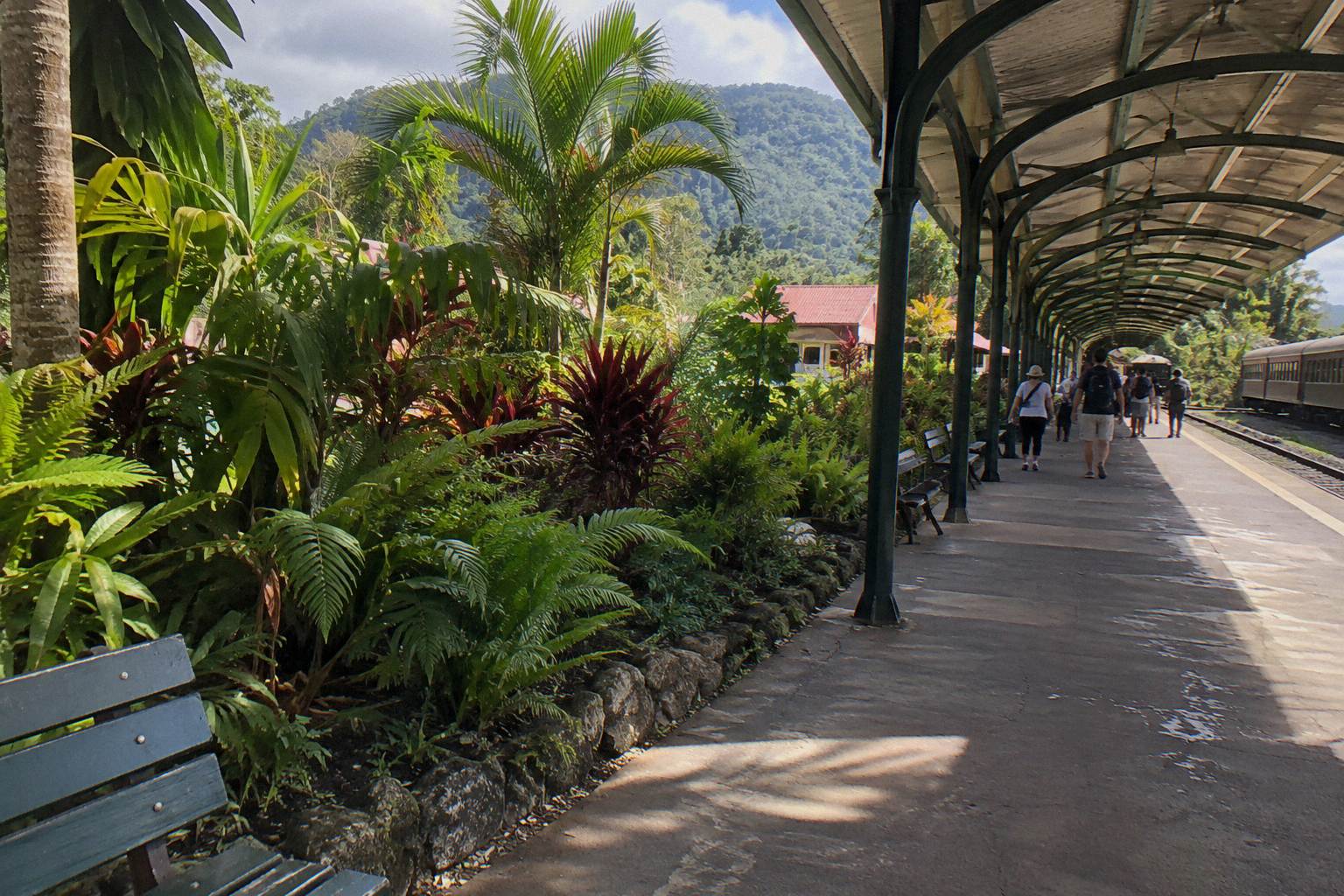
For travelers arriving from Cairns on the small-group format, the Small-Group Skyrail And Scenic Railway Day Trip (4.8, 7 hours, door-to-door service from Cairns City, the Northern Beaches up to Palm Cove, the airport and the cruise terminal) leaves village time in which the 45-minute cruise fits comfortably, if you book it yourself. The same logic applies to the larger Kuranda Skyrail And Scenic Railway Day Trip (4.3, 8.5 hours) and the Kuranda Army Duck And Rainforestation Day Trip (4.5 from 442 reviews, 10 hours), which adds Rainforestation's own wildlife and Army Duck components but still does not include the riverboat.
The realistic sequencing question is covered in detail in how to order a train, Skyrail and river cruise day, and the practical answer to the length of the whole visit is in how many hours you need with a riverboat cruise. For wildlife-focused readers, the deeper species background is in the site's Barron River cruise wildlife guide.
A rough shape for a wildlife-first day looks like this:
| Day element | Who runs it | Cruise included? |
|---|---|---|
| Barron River Riverboat Tour, 45 min | Kuranda Riverboat | It is the cruise |
| Skyrail And Scenic Railway Day Trip, 8.5 h | Down Under Tours | No, separate booking |
| Army Duck And Rainforestation Day Trip, 10 h | Tropic Wings | No, separate booking |
| Small-Group Skyrail And Rail Day Trip, 7 h | Infinity Fun Travel | No, separate booking |
| Self-Guided Scenic Railway And Skyrail, 7 h | Global Travel Services | No, separate booking |
Every one of the five carries free cancellation up to 24 hours before start on its live listing, which matters if you are watching weather or river conditions in the wetter months.
Does The Season Change Your Crocodile Chances?
No seasonal sighting claim is published by anyone, so none can be given. What the seasons do change, officially, is the river and the falls: Bureau of Meteorology averages put Cairns rainfall at 436.1 mm in February against 26.9 mm in August, and the park service notes that floodwaters in the wetter months regularly create a spectacular sight at Barron Falls. The cruise itself runs "subject to river conditions" year-round.
The wet season, roughly December to March by Cairns rainfall, swells the river and the gorge. That is the season the falls perform, and the season when river conditions most often shape the cruise schedule. The operator publishes no threshold and no seasonal closure, just the standing sentence that tours are subject to river conditions and group bookings, so the practical move in the wet months is to check the live listing close to your date, and rely on the free cancellation window up to 24 hours before start if plans shift.
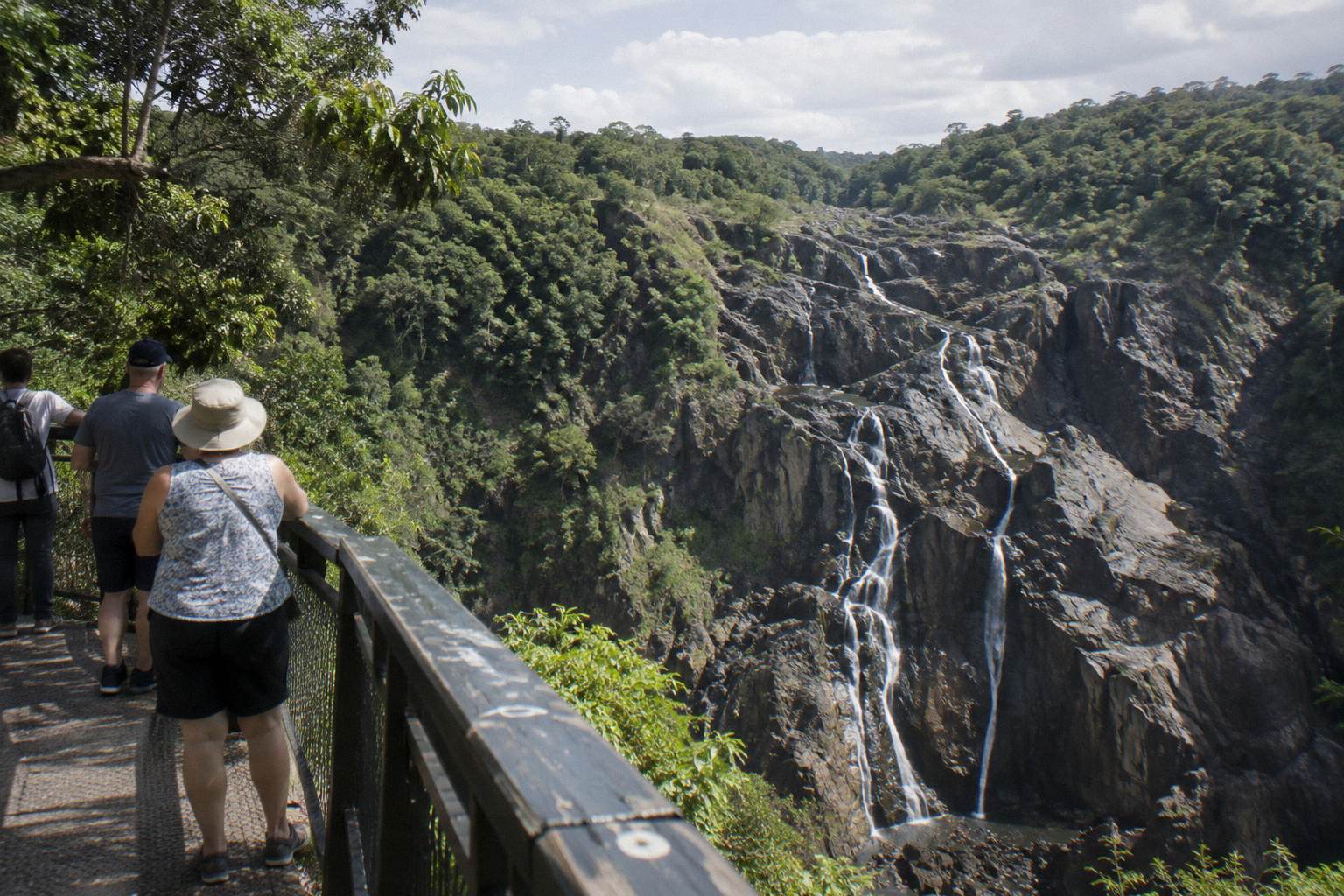
For a fuller treatment of the wettest months, including what the Bureau's numbers mean for a visit, the site's riverboat cruise in the wet season guide carries the detail, and the best time of year for a riverboat cruise weighs the whole calendar.
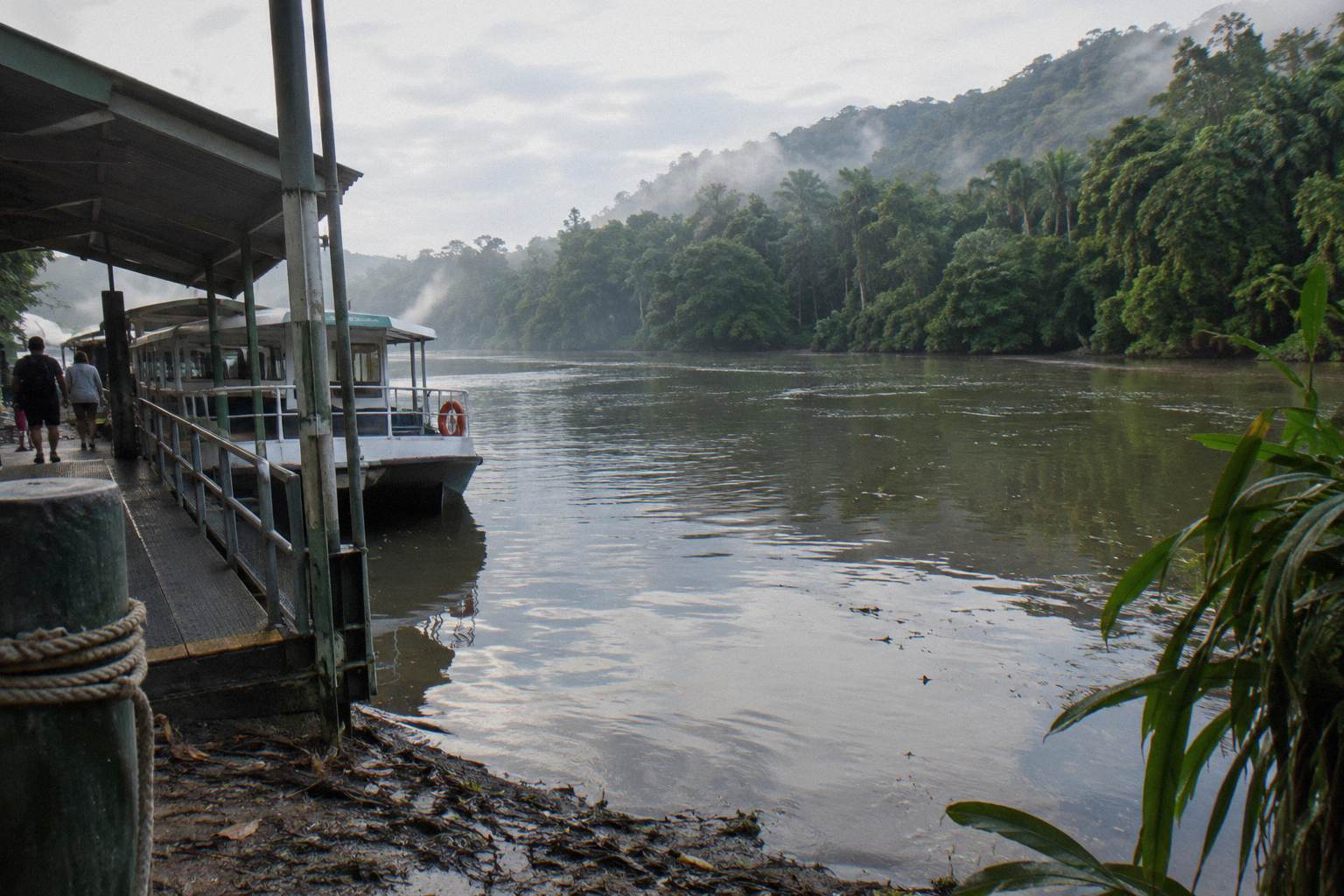
One seasonal trap deserves a direct flag: never promise yourself a roaring Barron Falls. Flow varies with the seasons, and the dry-season trickle is real. The same logic applies to the crocodile. In both cases the habitat guarantees the possibility and nothing more, and the travelers who enjoy this river most are the ones who book it for what it is.
Kuranda sits at about 340 metres on the range, cooler and wetter than the Cairns coast, so even a warm-season cruise can feel mild on the water, and layers are worth carrying. What to pack for the boat, from sun to rain gear, is covered in what to bring on the Barron River cruise.
Planning Around The Jetty And The Stairs
You cannot drive to the river. The jetty sits below the Kuranda Railway Station footbridge, reached by walking over the bridge and down a number of stairs, and the cruise is not wheelchair accessible. The five daily departures give you fixed anchors around which to arrange a train arrival, a market wander and a cableway departure, with the stairs down and back up counted in your timing.
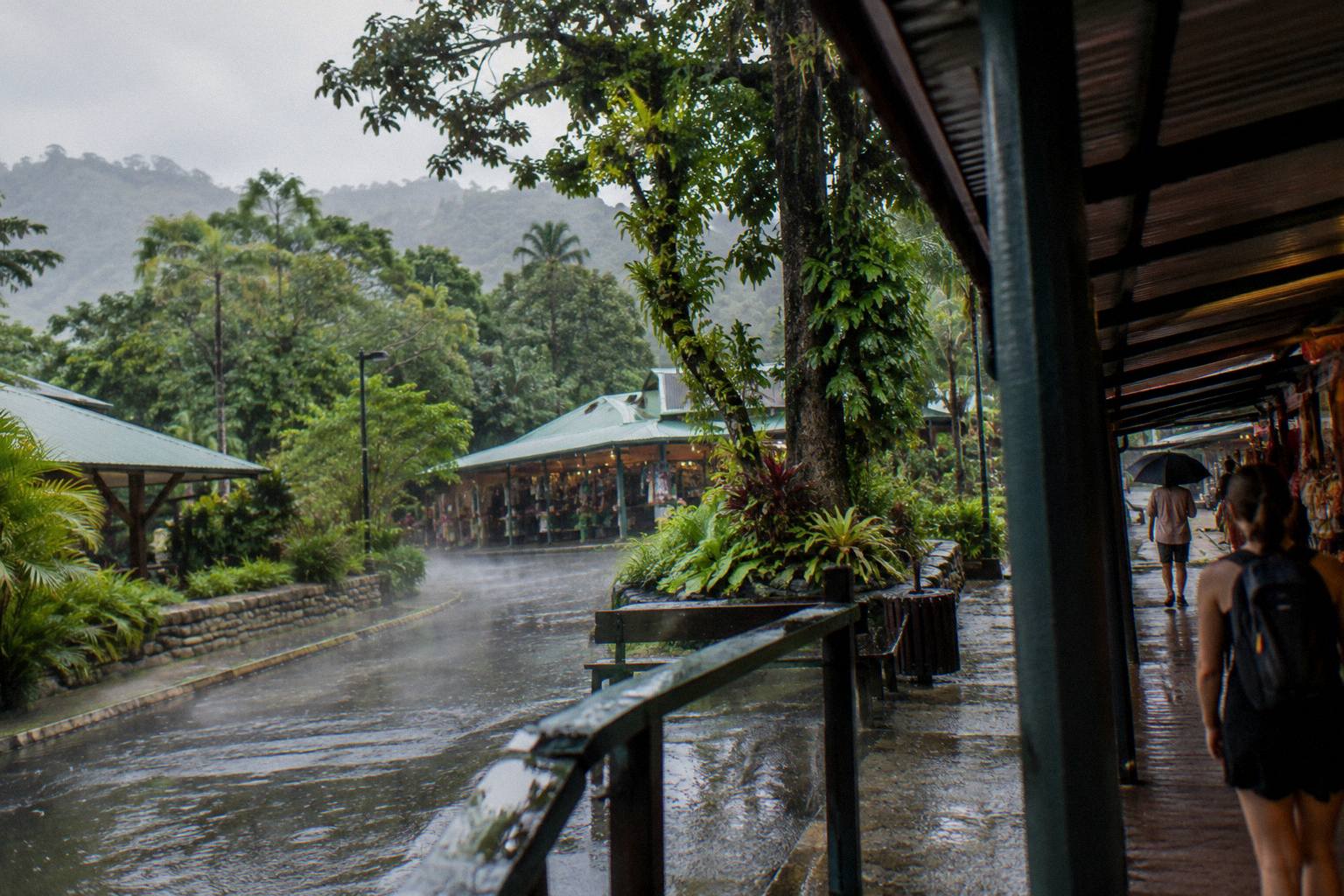
The stairs are the one physical fact that most changes itineraries, and the site's riverboat cruise accessibility guide treats it in full. For families, the cruise is suitable for all ages, with children under four free, and the riverboat cruise with kids guide covers the practical side. The broader question of reaching the village at all, by train, cableway or the limited bus, is laid out in getting to the riverboat from Cairns.
Squeeze the cruise between the village's two anchor attractions and the day holds together. Kuranda village planning advice generally allows four to six hours for a day trip, which comfortably fits a 45-minute cruise, the markets, and the walk or shuttle between the station and Skyrail terminals. If the crocodile is your priority, book the cruise first at your preferred time and build the train and cableway legs around it, because the cruise has five fixed departures while the village flexes around you.
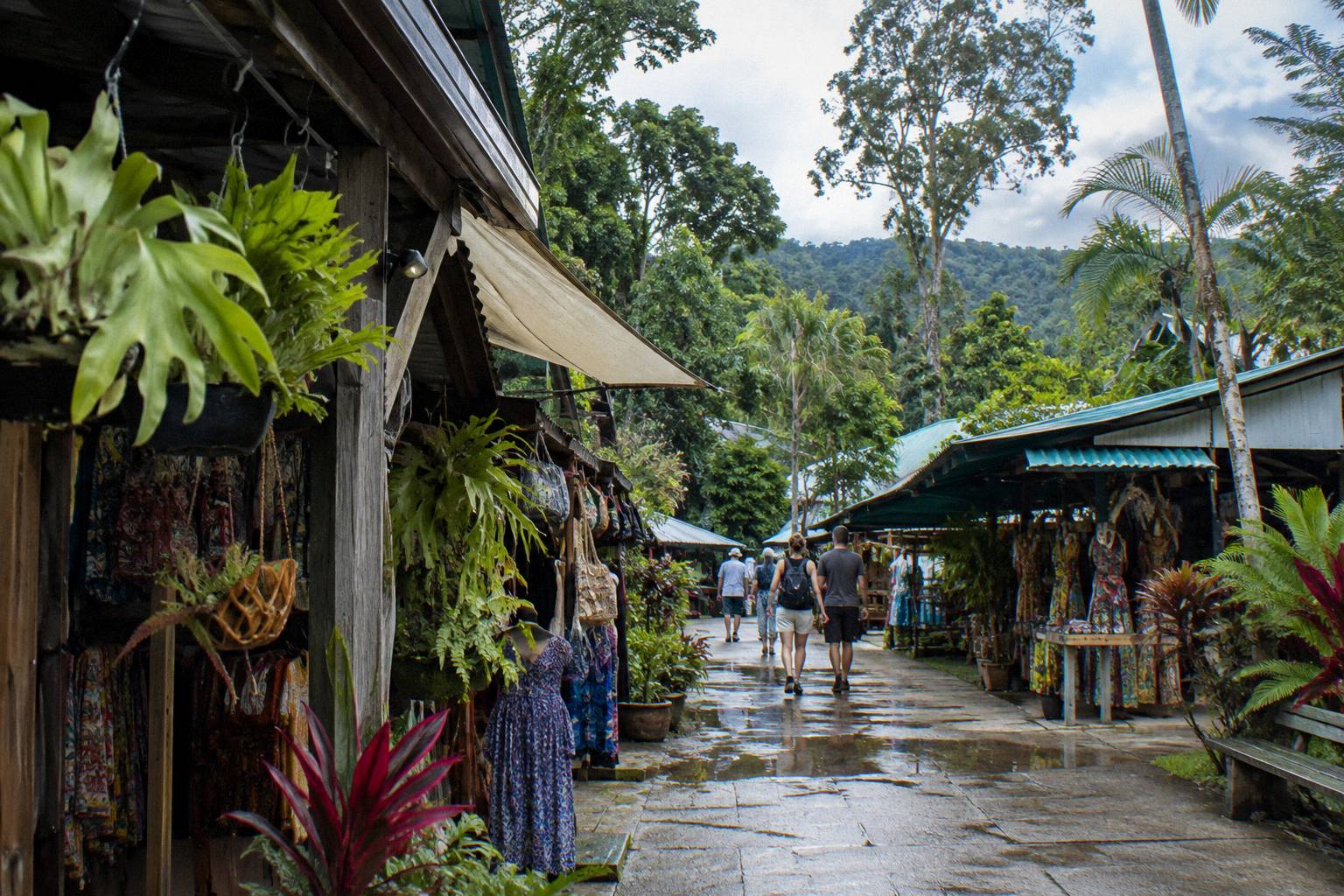
Before locking the day in, check two closure calendars: Queensland Rail's planned maintenance dates for the Kuranda Scenic Railway, and Skyrail's upgrade schedule, which closes the Kuranda line from July to November 2027 with shuttle buses in its place. Both operators flag their own dates, and both say dates are subject to change.
If you are still deciding how a crocodile-hopeful day should be built, these are the three products worth comparing side by side:
Whatever combination you choose, the cruise stands on its own: one operator, one jetty, five daily departures, and a river that decides the rest. That is the deal at Kuranda River Boat Cruises, and it is a good one.
Common Questions About Crocodiles On The Riverboat Cruise
Can You See Crocodiles On The Riverboat Cruise?
Crocodiles are in the river, but no sighting is guaranteed. The operator states: "There are freshwater crocodiles in the river. We cannot guarantee that they will be visible." Book the cruise for the river and rainforest, and treat a crocodile as a genuine possibility rather than a promise.
Are The Crocodiles In The Barron River At Kuranda Freshwater Or Saltwater?
The operator identifies the crocodiles in this stretch as freshwater crocodiles. Queensland Government guidance notes that estuarine crocodiles occur between Gladstone and Cape York Peninsula and in the Gulf, and the park service places them in the lower section of Barron Gorge National Park, but no official source extends that to the Kuranda stretch.
Does The Cruise Guarantee You Will See A Crocodile?
No. The operator explicitly cannot guarantee visibility, and no sighting rate is published. Wild animals on a wild river appear on their own terms.
What Other Animals Might You See On The Cruise?
Per the operator: turtles, snakes, water dragons, fish and over 100 species of tropical birds, and cassowaries are sometimes seen on the far side of the river.
Is It Safe To Cruise The Barron River With Crocodiles In It?
No safety verdict can be offered, because no official source supports one. The cruise runs on calm water with the operator's crew aboard, and Queensland's general Be Crocwise guidance applies near any waterway in the state.
Do The Kuranda Day Trips Include The Riverboat Cruise?
No. The Skyrail-and-rail day trips, the Army Duck day and the self-guided option do not include the river cruise. It is a separate 45-minute booking, met at the jetty below the railway station footbridge, at your own cost.