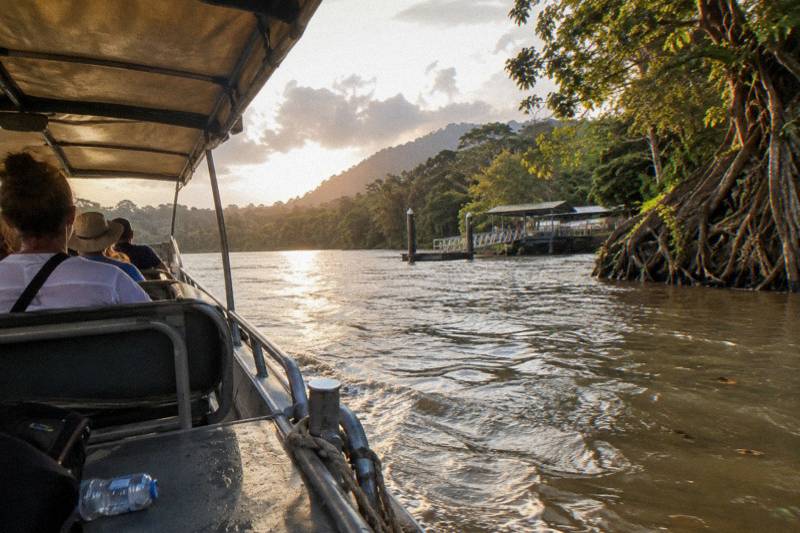
Ulysses Butterflies And Birds On A Rainforest River Cruise
The Ulysses butterfly is the insect most people picture when they think of Kuranda, but the river cruise's own wildlife list is about birds, crocodiles and river life. Here is what the operator actually names, what it promises, and what it does not.
Short answer
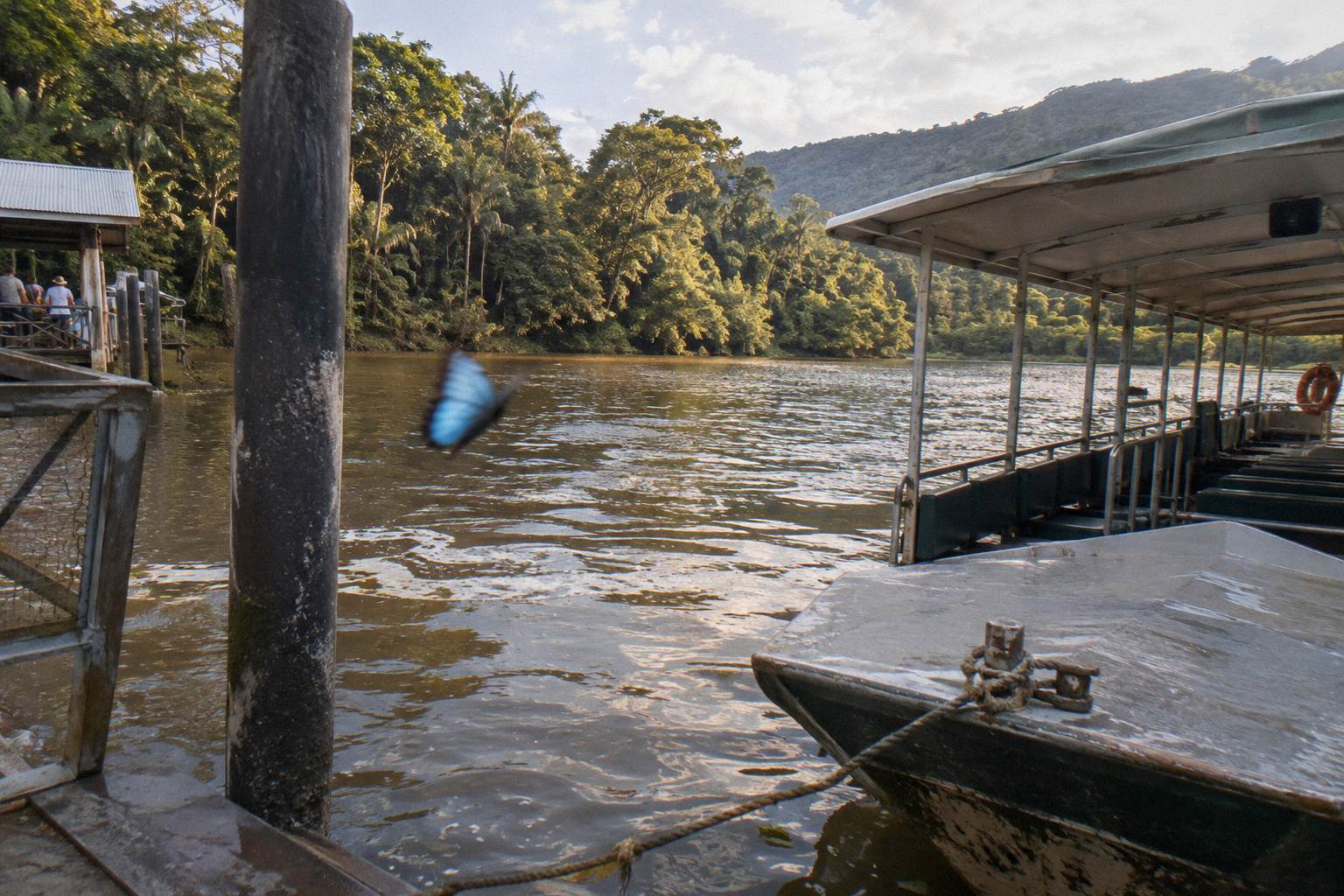
The Barron River Riverboat Tour is a 45-minute cruise rated 4.7 from 343 reviews, and the operator names freshwater crocodiles, turtles, snakes, water dragons, fish, over 100 species of tropical birds and occasional cassowaries. The operator does not list butterflies. The Ulysses butterfly may appear in the region but no cruise source names it.
The Ulysses butterfly is the creature people most often associate with Kuranda's rainforest, and it is a fair question whether the river cruise is a way to see one. The answer sits in the operator's own material. Kuranda Riverboat, established in 1982, runs calm water cruises on the upland Barron River, and its published wildlife commentary names birds, reptiles and river life, not butterflies. That gap between what visitors imagine and what the cruise actually offers is worth unpacking properly, because the cruise is genuinely rewarding for a nature-minded traveller, just not in the way the search term suggests.
Here is exactly what the operator names on the cruise, how the "over 100 species of tropical birds" claim should be read, what the operator says about cassowaries and freshwater crocodiles, and how the cruise fits with the wildlife parks and day trips around Kuranda. One booking detail catches people out: only one of the five trips sold here includes the river cruise, and it is not the big rainforest day trip most visitors assume it is. Kuranda River Boat Cruises exists to make that kind of decision clear before money changes hands.
What Wildlife Does The River Cruise Actually Name?
The operator's cruise page names freshwater crocodiles, turtles, snakes, water dragons, fish and "over 100 species of tropical birds", and adds that "cassowaries are sometimes seen too on the far side of the river". Butterflies do not appear anywhere on it. Every one of those animals is described as wild, and the operator states plainly that sightings cannot be guaranteed.
That list is the whole of the published wildlife claim, and it is worth reading closely. The commentary on board covers the ancient rainforest, river life and Kuranda history, so the animals are part of a narrative rather than a checklist the driver ticks off. The boat carries a maximum of 30 passengers on calm water, which means the pace is slow and the water is quiet enough to watch the banks without engine noise drowning everything out.
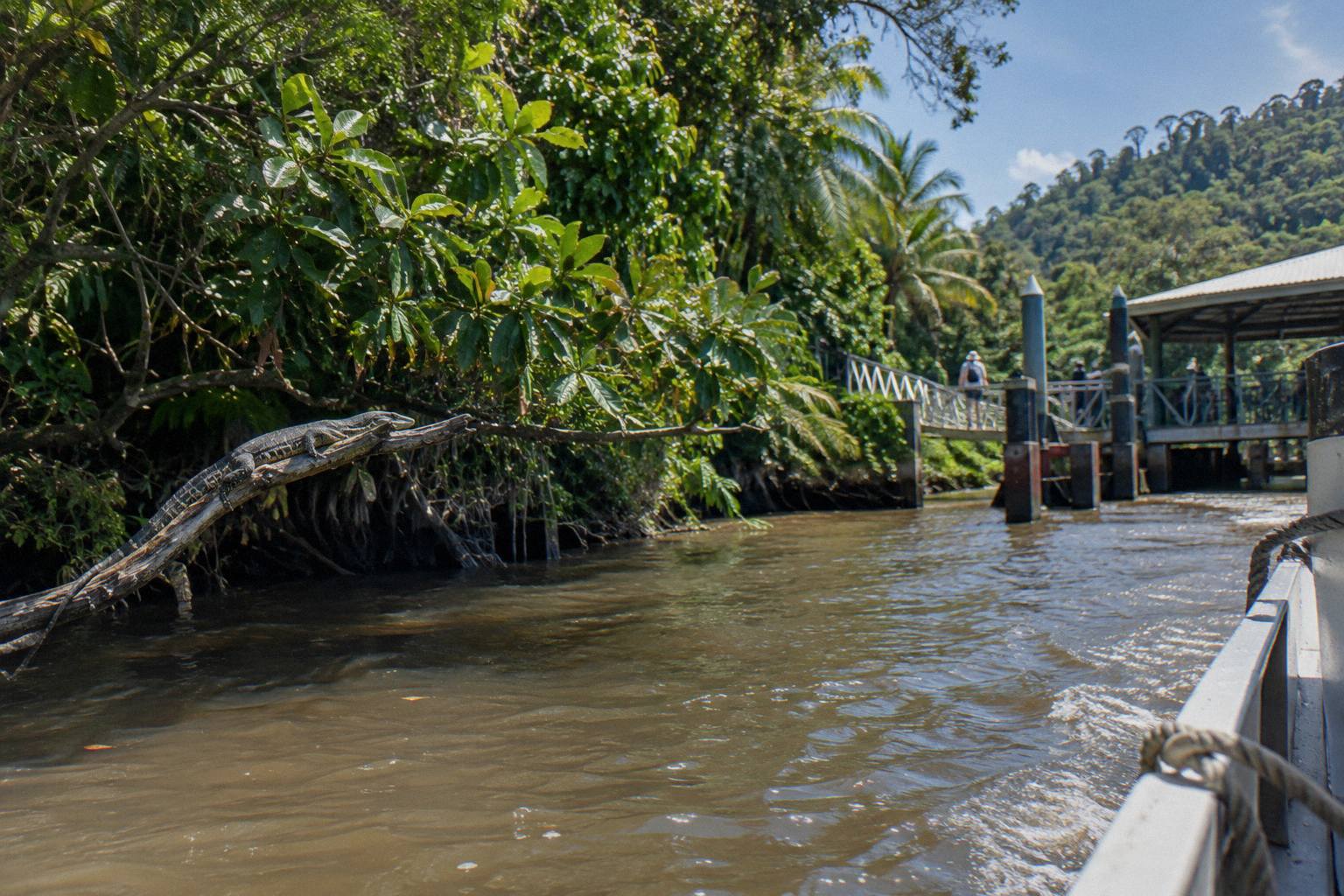
The table below is the complete set of animals the operator itself names, with the exact standing of each claim. Nothing has been added from other sources, because the operator's own wording is the only reliable basis for what a passenger might encounter.
| Wildlife named by the operator | Where the claim appears | Standing of the claim |
|---|---|---|
| Freshwater crocodiles | Cruise page | "We cannot guarantee that they will be visible" |
| Turtles | Cruise page | Named in commentary list, no guarantee |
| Snakes | Cruise page | Named in commentary list, no guarantee |
| Water dragons | Cruise page | Named in commentary list, no guarantee |
| Fish | Cruise page | Named in commentary list, no guarantee |
| Over 100 species of tropical birds | Cruise page | A regional species count used in commentary, not a per-cruise tally |
| Cassowaries | Cruise page and package page | "Sometimes seen" and "occasionally a wild cassowary may be spotted" |
The crocodile line deserves its own attention. The operator's exact words are "There are freshwater crocodiles in the river. We cannot guarantee that they will be visible", which is about as far from a theme-park promise as wording gets. Our companion piece on crocodiles on the Barron River goes deeper on what official sources say about the different stretches of the gorge, and it is worth reading if crocodiles are the reason you are considering the trip at all.
For a broader picture of the animals on this stretch of water, the Barron River cruise wildlife guide covers the same operator list in more detail. The short version is simple: this is a wild river, and the cruise sells quiet observation, not guaranteed sightings.
Is The Ulysses Butterfly Part Of The Cruise?
No cruise source, operator page or listing names the Ulysses butterfly. The species exists in the region and can be linked once as a fact, but no published material for the Barron River cruise describes butterflies of any kind, so a visitor who books expecting one is booking on hope rather than on anything the operator has written.
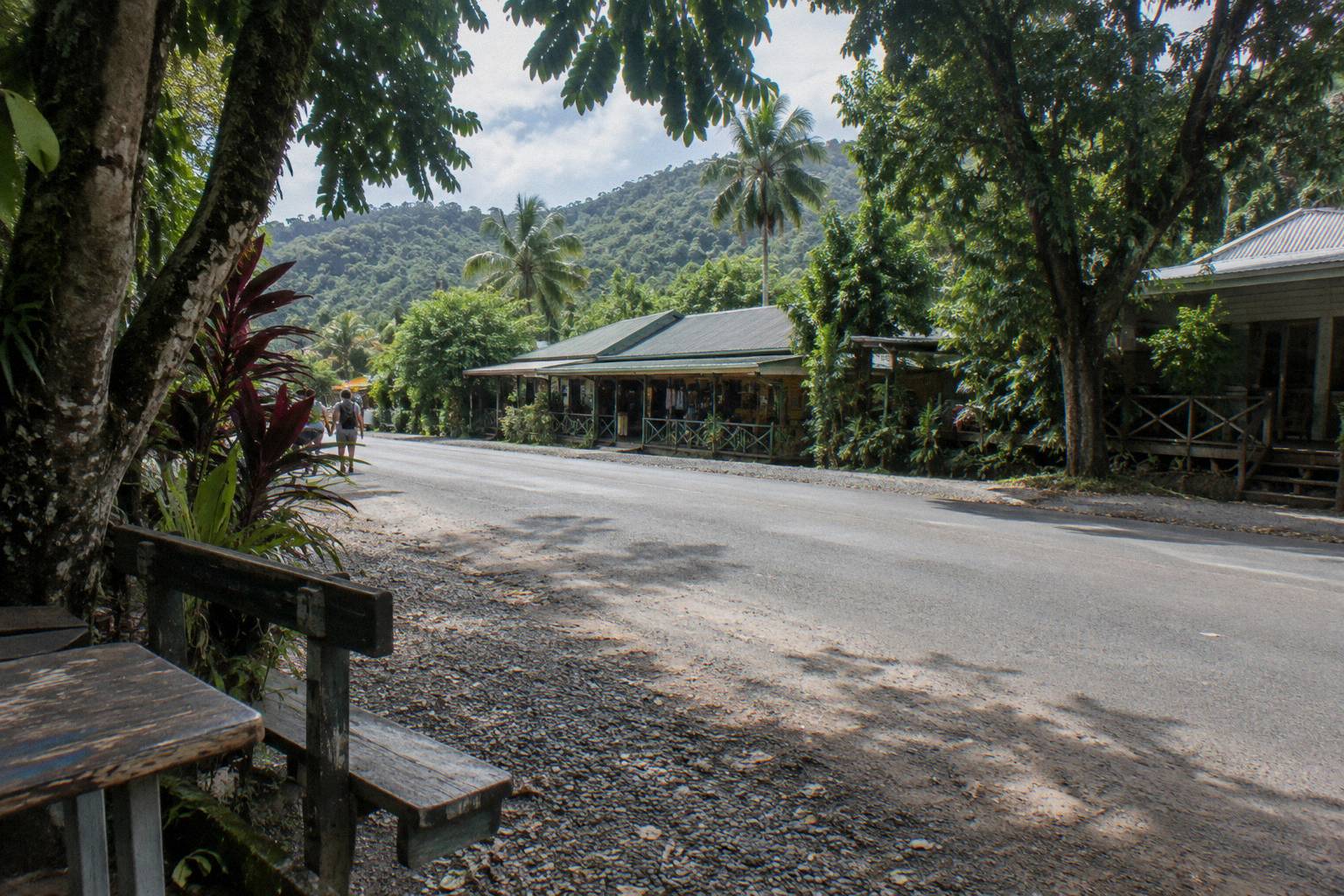
The Ulysses butterfly is a real rainforest swallowtail of north-eastern Australia, and Kuranda sits inside its range. That much is safe to say. What is not safe is to assume that the cruise is a way to see one, because the operator's commentary list, reproduced in full above, does not include butterflies at all. The butterfly's fame in Kuranda comes from the village's general rainforest identity, not from anything specific to the river cruise.
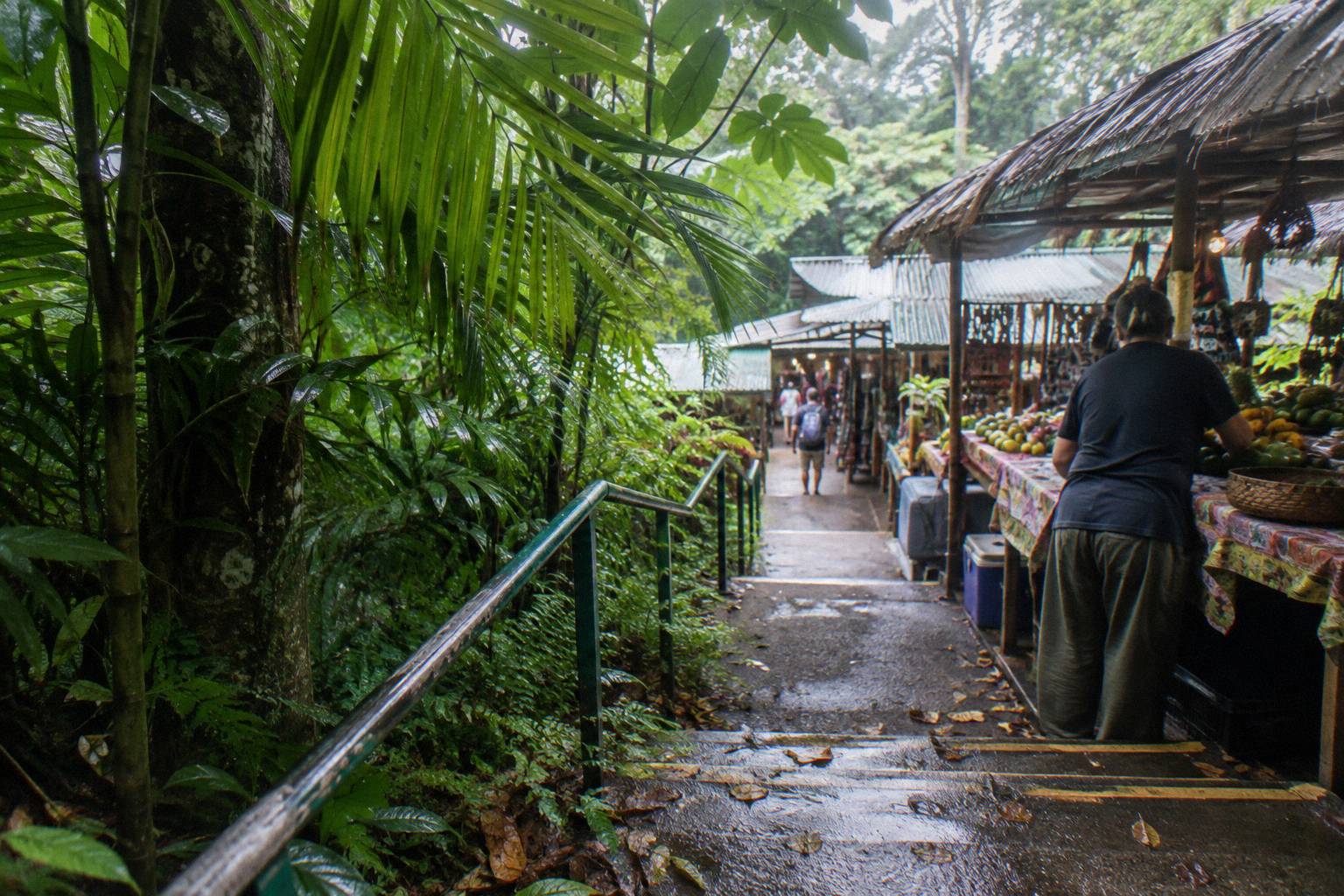
A nature-minded reader should treat the butterfly as a possible bonus of being in the Wet Tropics rather than a product feature. The Wet Tropics World Heritage Area, listed in 1988, stretches about 450 km from Cooktown to Townsville across 894,420 hectares, and the operator's own wet-tropics page credits it with more than 3,000 vascular plant species, though that figure is the operator's claim rather than a park-service number. A region that large and that old supports enormous insect diversity, and a slow morning on the water puts you inside it. None of that changes the fact that the cruise does not advertise butterflies.
If a butterfly sighting is the goal, the practical move is to spend time in the village and its walking tracks around the cruise, not to choose the cruise for the butterfly. Kuranda's short walks, including the Jumrum Creek and Riverbank routes named by the village's own tourism site, run through rainforest where insects are at least as likely as on the water. Time the day generously, keep the 45-minute cruise as the anchor, and let the rest happen as it happens.
Three of the options above pair naturally with a wildlife day in Kuranda, and each is covered in detail above. The one detail to hold on to is that the two day trips in that band do not include the river cruise, so the cruise is always its own booking at the visitor's own cost.
Which Trips Include The River Cruise?
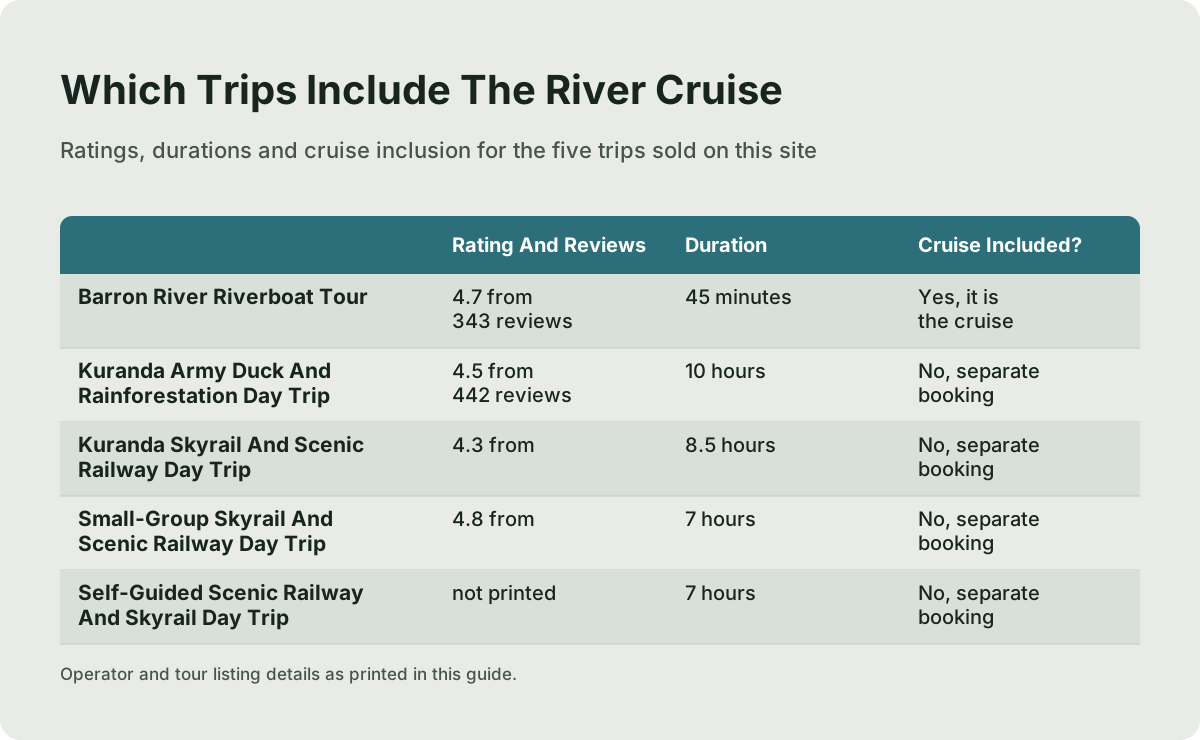
Only the Barron River Riverboat Tour includes the river cruise, because it is the cruise: a 45-minute trip rated 4.7 from 343 reviews, meeting at the jetty below the Kuranda Railway Station footbridge. The four day trips, including the Rainforestation trip, do not include it, and no combined ticket covering a day trip plus the cruise exists.
This is the single most common booking misunderstanding for Kuranda, so it deserves a table of its own. The five trips come from different operators, and only one of them is the cruise itself. The other four are full-day itineraries built around train, cableway or rainforest attractions, and each one leaves the river cruise out.
| Trip | Operator | Rating and reviews | Duration | River cruise included? |
|---|---|---|---|---|
| Barron River Riverboat Tour | Kuranda Riverboat | 4.7 from 343 reviews | 45 minutes | Yes, it is the cruise |
| Kuranda Army Duck And Rainforestation Day Trip | Tropic Wings Cairns Tours & Charters | 4.5 from 442 reviews | 10 hours | No, separate booking |
| Kuranda Skyrail And Scenic Railway Day Trip | Down Under Tours | 4.3 | 8.5 hours | No, separate booking |
| Small-Group Skyrail And Scenic Railway Day Trip | Infinity Fun Travel | 4.8 | 7 hours | No, separate booking |
| Self-Guided Scenic Railway And Skyrail Day Trip | Global Travel Services | check this on the booking page before you go | 7 hours | No, separate booking |
Free cancellation up to 24 hours before start applies to all five trips, which matters when you are stacking two separate bookings, a day trip plus a cruise, on the same day. If the train runs late or the weather turns, each booking stands on its own terms. The operator's own adult fare for the cruise is A$30 until 30 March 2027 and A$35 from 1 April 2027, amounts in Australian dollars.
The cruise itself runs to a fixed rhythm: five sailings a day, seven days a week, at 10:45am, 11:45am, 12:30pm, 1:30pm and 2:30pm, with cruises outside those times, including sunset departures, arranged by contacting the operator directly. Tours are subject to river conditions and group bookings, and the operator publishes no flood or wet-season threshold, so flexibility on timing is part of the deal.
If your wildlife day leans toward rainforest creatures rather than river creatures, the Rainforestation day trip compared with a river cruise works through that exact trade-off. Rainforestation Nature Park sits on the Kennedy Highway about 5 km past Henry Ross Lookout, opens seven days from 9am to 4pm with its cafe to 3pm, and the day trip that visits it runs 10 hours with Cairns accommodation pickup.
One note on that box: the Army Duck trip is a strong fit for a wildlife-focused day, but the cruise still needs its own booking if you want both. Check availability on both listings before locking in train or Skyrail times, because the cruise's five daily sailings are the fixed points a Kuranda day has to bend around.
What Does "Over 100 Species Of Tropical Birds" Mean?
The phrase is a count of bird species recorded in the region, not a promise of what any single 45-minute cruise will produce. The operator uses it in commentary to describe the river's birdlife, and a passenger should read it as context for what lives along the Barron, not as a per-trip sighting target.
Bird counts work this way everywhere in wildlife tourism. A region can hold a hundred species across a year while any given morning shows a fraction of them, because birds move with the seasons, the time of day and the weather. The Wet Tropics is a place where such counts get large, and the cruise's calm-water format, small boat, engine low, banks close, is a genuinely good way to watch birds without disturbing them. No source can convert a regional list into a guarantee.
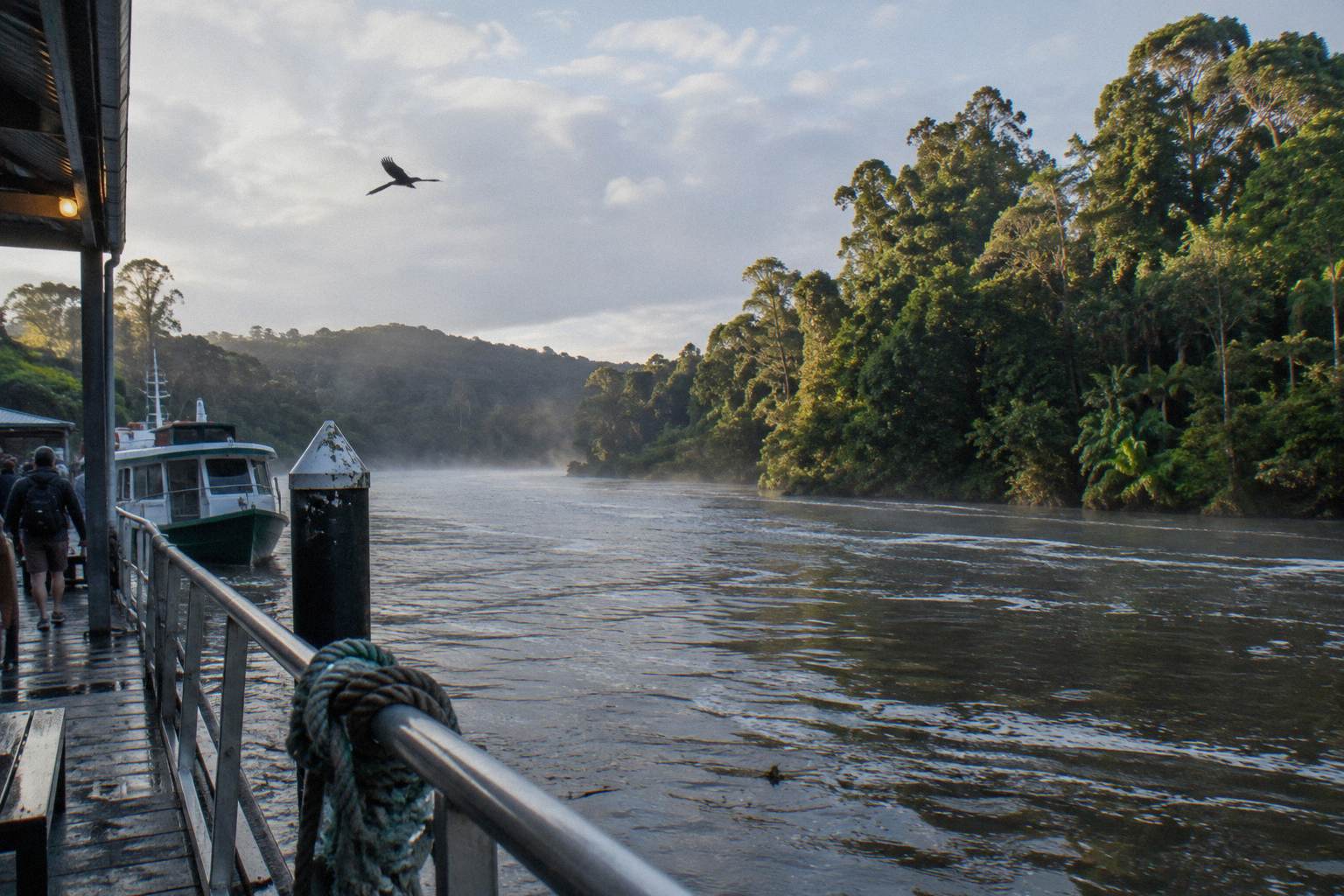
Timing matters more than most visitors expect. The five daily sailings run from 10:45am to 2:30pm, and the middle of the day is not peak bird activity in the tropics. Early and late in that window tend to be the better bets, and the operator's willingness to arrange cruises outside the set times by direct contact opens the door to softer light if your group can organise it. The cruise is suitable for all ages, children under four travel free, and binoculars are worth carrying if birds are your main interest.
For readers deciding how a bird-watching day should be ordered, the guide to the best order for train, Skyrail and the river cruise covers scheduling in detail, and the question of the best time of day for the riverboat cruise goes straight to the light-and-wildlife question. Both are worth a read before you fix your sailing time.
Cassowaries, Crocodiles And What The Operator Promises
This section matters because search results for Kuranda wildlife are full of certainty, and certainty is exactly what the operator declines to give. Freshwater crocodiles live in the river, per the operator's own page, and that is the full extent of the claim. The southern cassowary, the region's other headline animal, gets even more cautious wording: the operator's package page says only that "occasionally a wild cassowary may be spotted". The Queensland government's Be Crocwise guidance covers crocodile country generally, and our page on whether a riverboat cruise is safe around crocodiles treats the safety side separately from the sighting side. The two questions get confused constantly, and they should not be.
A visitor who builds a day around a cassowary sighting is setting up disappointment. What the cruise does offer is a chance to be on the water in a World Heritage-listed rainforest with a commentary about its history and ecology, run by an operator working the same river since 1982.
A practical checklist helps here. Before booking, in a support email or in the live listing's questions, these are the things a nature-minded reader can legitimately ask:
| Question to ask | Why it matters | Where to ask |
|---|---|---|
| Have recent cruises been seeing crocodiles or cassowaries? | The operator knows current river conditions better than any listing | Operator contact, tours@kurandariverboat.com.au |
| Which of the five daily sailings suits wildlife watching? | Light and activity vary across the day | Operator or live listing |
| Can a time outside the five set sailings be arranged? | Sunset and other cruises are arranged by contact, not on the standard listing | Operator directly |
| Is the river level affecting the route? | Tours are subject to river conditions | Operator directly |
| Does the Explorer Package suit a bird-focused day? | It pairs the cruise with Koala Gardens and Birdworld, check the price on the booking page | Operator's package page |
That last row introduces something distinct: the operator's own Explorer Package bundles the cruise with Kuranda Koala Gardens and Birdworld Kuranda, with unlimited time at both attractions after the cruise and the same five sailing times. Check the price on the booking page before you go. It is the operator's own product rather than one of the five trips, but for a wildlife day it is worth knowing. Details are on the operator's Explorer Package page.
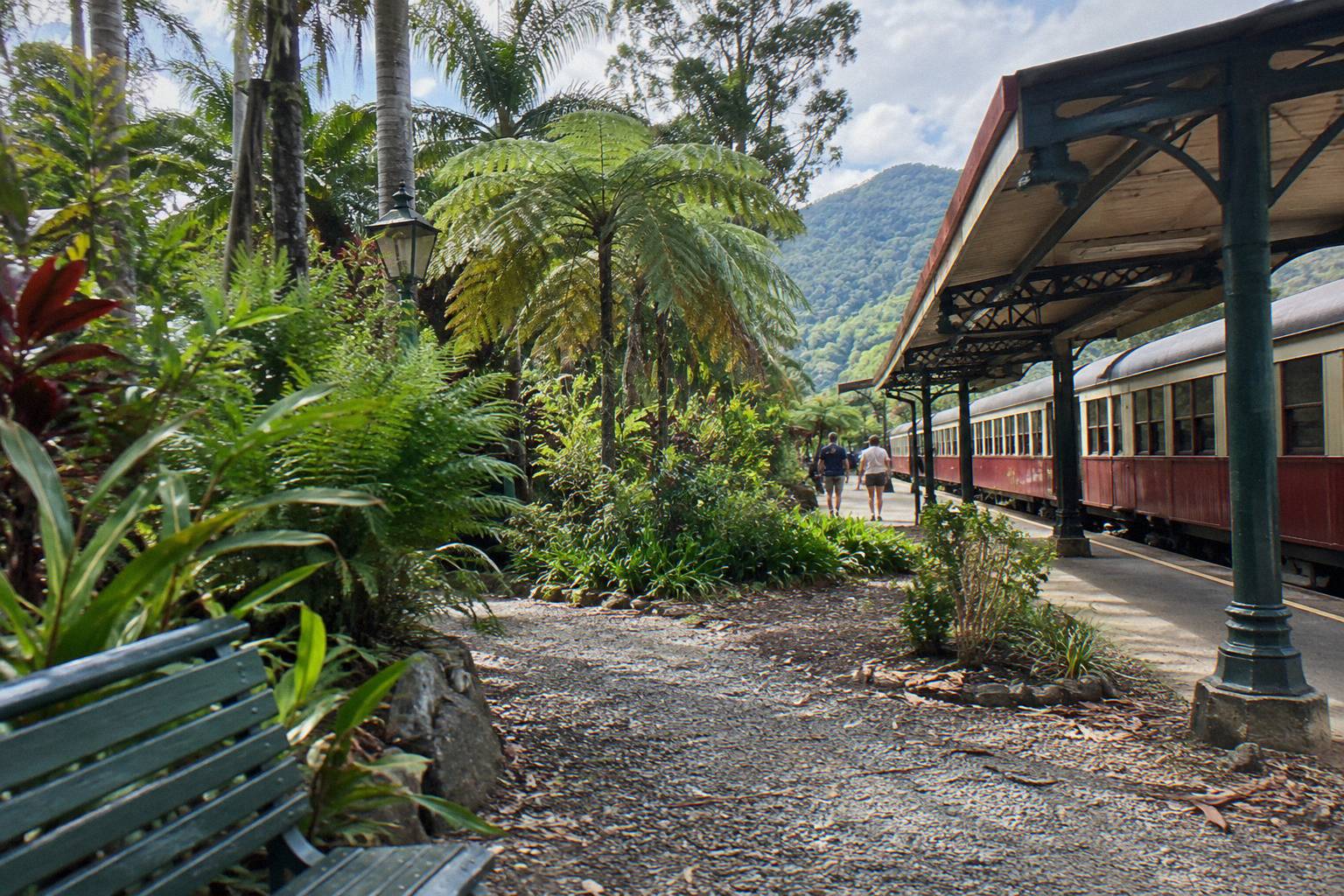
Wildlife Parks Around The Cruise
Kuranda Koala Gardens and Birdworld Kuranda both sit in the Heritage Markets near the village centre, open daily except where noted, and Birdworld holds over 350 birds including a southern cassowary. The operator's Explorer Package pairs both with the cruise. These parks are the reliable half of a Kuranda wildlife day, where the cruise is the wild half.
There is a trade-off at the heart of a Kuranda wildlife day that is worth saying plainly. The cruise offers wild animals with no guarantees, and the parks offer guaranteed animals with no wildness. A visitor who wants certainty of seeing a cassowary, or a koala, gets it at the parks. A visitor who wants the possibility of a wild cassowary on a rainforest river takes the cruise. Most nature-minded visitors are best served by both, and the geography cooperates, because the parks are a short walk from the village and the cruise jetty is below the railway station footbridge.
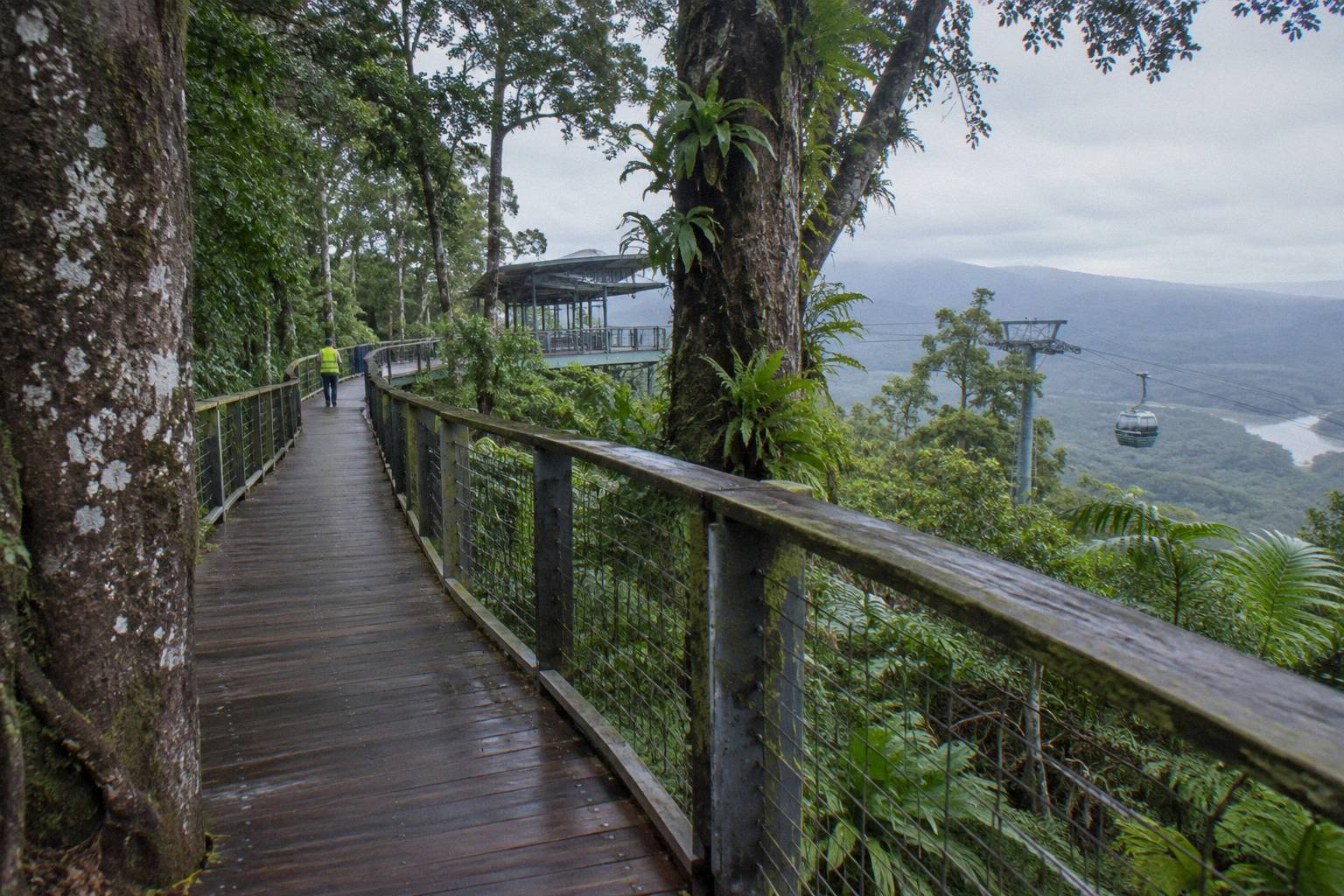
The hours are stable and worth planning around. Koala Gardens opens daily except Christmas Day, 9:30am to 4pm. Birdworld opens daily 10am to 4pm. The Heritage Markets around them run Wednesday to Sunday, 10am to 3:30pm, a 15-minute walk from the station and Skyrail terminal. Fit a cruise sailing around the parks' closing times and the day assembles itself: cruise in the middle of the day, parks before or after, markets whenever they are open. Our guide to wildlife parks and the riverboat maps the same logic in more detail.
Rainforestation Nature Park is the third wildlife option near Kuranda, and the Kuranda Army Duck And Rainforestation Day Trip is the 10-hour way to reach it from Cairns with pickup from your accommodation. The park is open seven days, 9am to 4pm, with its cafe to 3pm, and visitor information is on the official Rainforestation visitor info page. Remember the standing rule: that trip does not include the river cruise, and the two are always separate bookings.
The Small-Group trip above suits visitors who want the train-and-cableway journey in a smaller vehicle, door-to-door from as far as Palm Cove, the airport or the cruise terminal, in a 7-hour day rated 4.8. It also does not include the cruise, so add a sailing separately if the river is on your list.
Planning Around Seasons, Closures And River Conditions
The cruise runs five sailings daily, but its wildlife changes with the seasons, and the surrounding transport network has fixed closure dates: the Kuranda Scenic Railway stops on set maintenance dates, the Din Din Barron Falls lookout track closes 23 November to 4 December 2026, and the Skyrail Kuranda line closes July to November 2027. All dates are subject to change.
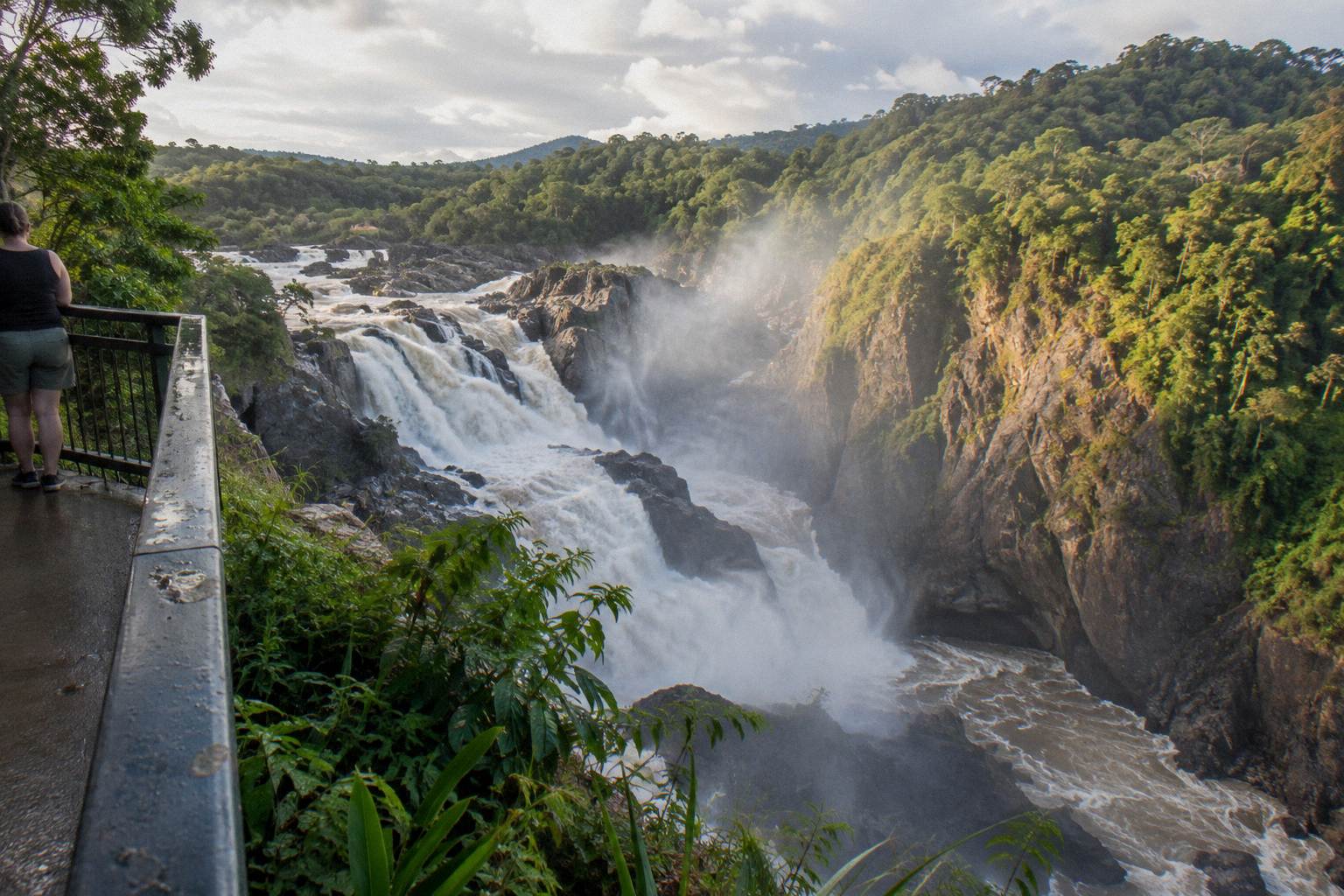
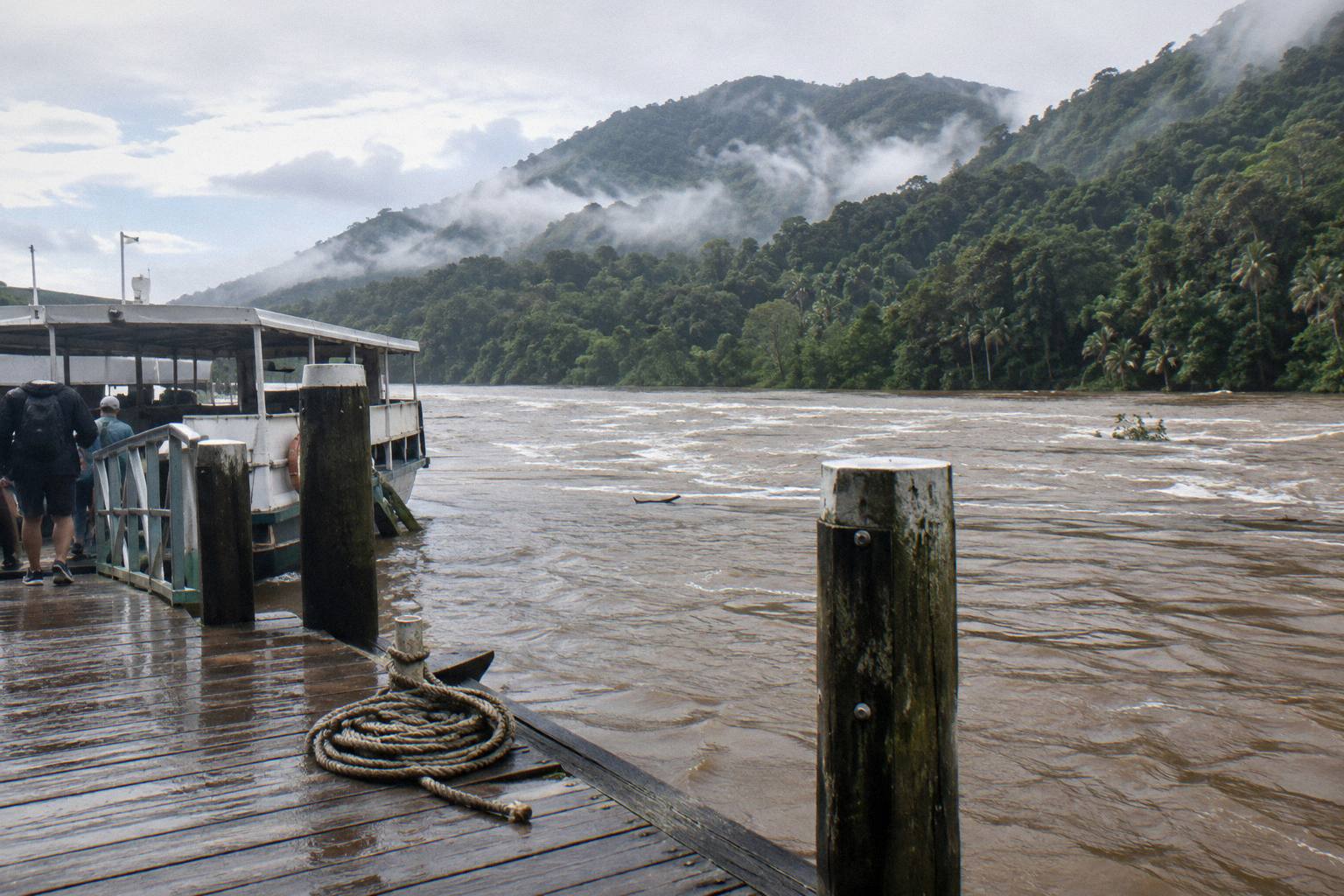
Season shapes what the river shows. Cairns records 2,019.1 mm of rain annually, with the wet season from December to March and February the wettest month at 436.1 mm, while August averages just 26.9 mm, and Kuranda, at about 340 m on the range, is cooler and wetter than the coast. More water in the river changes the look of the gorge and the behaviour of everything living in it. Our guide to the riverboat cruise in the wet season and the one on the best time of year for a riverboat cruise cover the planning side in depth.
The fixed dates are the ones that wreck itineraries, so they belong in one place. The Kuranda Scenic Railway runs no services on 1 to 3 December 2026 and on 10 to 14 May, 7 to 11 June, 11 to 15 October and 1 to 5 November 2027, plus Christmas Day, with fares rising about 3.4% from 1 April 2027. Skyrail operates normally from Smithfield to Kuranda from 4 November 2026 to mid 2027, but from July to November 2027 the Kuranda line, Red Peak to Kuranda, closes for its gondola upgrade and round trips run to Red Peak only, with shuttle buses covering the gap. The Din Din Barron Falls lookout track and day-use area close for planned maintenance from 23 November to 4 December 2026, though the railway platform lookout stays open via the train.
The infographic above lines up the two fixed reference points of a Kuranda wildlife day: the rain the region actually gets, month by month, and the five sailing times the cruise runs to every day. Neither is a promise about animals, but together they define the window you will be watching in.
What A Wildlife Day In Kuranda Could Look Like
A realistic shape is a train or Skyrail up in the morning, a midday cruise sailing, the wildlife parks or short walks in the afternoon, and the other transport mode back down, with 4 to 6 hours in Kuranda as the village's own tourism body advises. The cruise slots into the middle because its sailings and the parks' hours overlap neatly between 10:45am and 2:30pm.
The village's FAQ suggests 4 to 6 hours for a day trip, and many visitors take the train one way and Skyrail the other. Layer the cruise into that skeleton by fixing one of the five sailings first, since those times are the least flexible element, then working outward. A 12:30pm sailing, for example, leaves a clear morning for the rail journey up and the markets, and a clear afternoon for Birdworld or a short walk before the return leg. Our piece on how many hours you need with a riverboat cruise does this arithmetic for several arrival times.
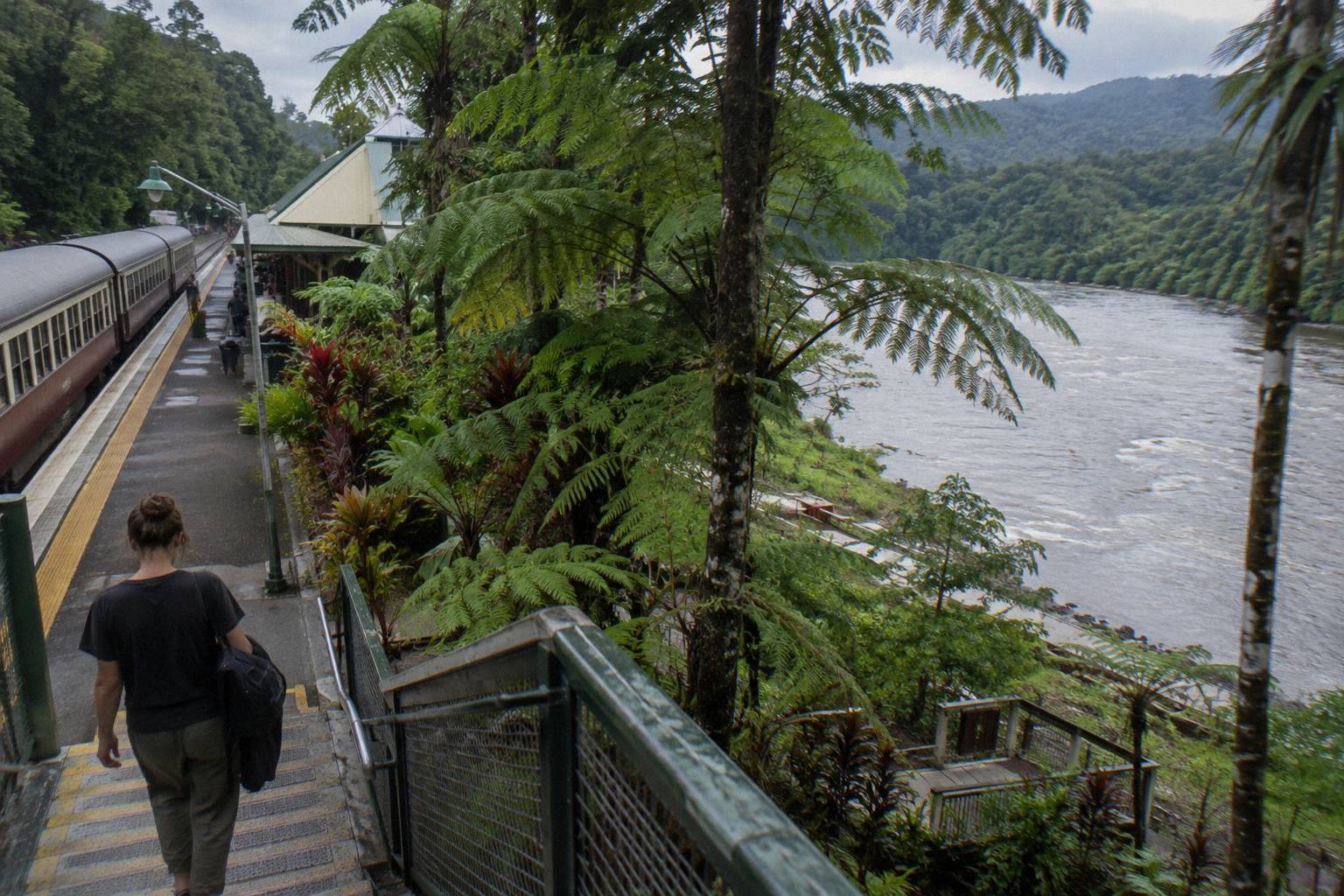
Getting to the jetty is its own small task. You cannot drive down to the river; the operator is explicit about that. Park in the village, walk across the Kuranda Railway Station footbridge and down the stairs to the jetty with the red flags. There are a number of stairs down and back up, the cruise is not wheelchair accessible, and anyone with mobility questions should read our riverboat cruise accessibility guide before booking. Prams are reported as usable, though that comes from listing text rather than the operator's own page.
Bring the ordinary tropical kit: hat, water, light rain jacket in the wet season, and binoculars if birds are the point. What to carry is covered in what to bring on the Barron River cruise. Book the cruise ahead if your day is pinned to train departures, because the 30-passenger cap and the fixed sailing times are the two constraints that bite; the question of whether you need to book the riverboat in advance is treated in full there.
Questions Worth Asking Before You Book Any Of It
Ask the operator about current sightings and river conditions, check what each trip includes on the booking page, and confirm the closure dates against your travel window. All five trips carry free cancellation up to 24 hours before start, which is the safety net that makes stacking separate bookings reasonable.
The checklist below compresses everything into a decision table. Work down it before you pay for anything, because each row catches a real failure mode in how people book Kuranda.
| Decision | What to confirm | Where to look |
|---|---|---|
| Cruise or butterfly expectation | The operator names no butterflies anywhere | H2 2 above |
| Cruise inside a day trip | Only the Barron River Riverboat Tour includes it | H2 3 above |
| Sailing time | Five set times, 10:45am to 2:30pm, others by contact | H2 3 and 6 above |
| Wildlife certainty | Nothing is guaranteed, parks are the certain option | H2 5 and 6 above |
| Travel window | Rail, Skyrail and lookout closure dates | H2 7 above |
| Money | A$30 adult cruise fare to 30 March 2027, then A$35; all else price on the listing | H2 3 above |
| Cancellation | Free up to 24 hours before start, all five trips | H2 3 above |
The Barron River Riverboat Tour is the cruise itself: 45 minutes, 4.7 from 343 reviews, meet at the jetty, see the Barron River Riverboat Tour page for the full detail, and check availability once your day shape is fixed. For the rainforest-focused alternative, the Army Duck and Rainforestation day trip runs the 10-hour version with Cairns pickup, cruise not included.
The cruise above is the anchor booking for a wildlife day: short, fixed times, wild animals named but not promised. Everything else arranges itself around those 45 minutes.
Common Questions About Ulysses Butterflies And Wildlife On The River Cruise
Will I See An Ulysses Butterfly On The Barron River Cruise?
No cruise source names the Ulysses butterfly. The operator's published wildlife list covers freshwater crocodiles, turtles, snakes, water dragons, fish, over 100 bird species and occasional cassowaries, with no butterflies mentioned at all.
Can You See Crocodiles On The Riverboat Cruise?
The operator says there are freshwater crocodiles in the river and that it cannot guarantee they will be visible. They are wild animals, and the operator's wording is deliberately cautious.
Does The Army Duck And Rainforestation Day Trip Include The River Cruise?
No. The 10-hour Rainforestation trip, rated 4.5 from 442 reviews, does not include the river cruise. Only the Barron River Riverboat Tour includes it, because it is the cruise, and the two must be booked separately.
What Birds Will I See On The Cruise?
The operator's commentary references over 100 species of tropical birds recorded in the region, not a per-cruise tally. Actual sightings depend on season, time of day and weather, and no species is promised.
Are Cassowaries Guaranteed On The Cruise?
No. The operator says cassowaries are sometimes seen on the far side of the river and that occasionally a wild cassowary may be spotted. Birdworld Kuranda, in the Heritage Markets, holds over 350 birds including a southern cassowary if certainty matters.
How Much Does The River Cruise Cost?
The operator's own adult fare is A$30 until 30 March 2027 and A$35 from 1 April 2027, amounts in Australian dollars.